
SmallRig Full Cage
4.5Editor score
Full-cover aluminum protection
One-touch tool-free setup
Portrait and landscape switching
Our DJI Osmo Nano Camera Cage guide compares protection, mounting options, portability, access, and grip across ten cages for compact everyday filming setups.
A DJI Osmo Nano Camera Cage adds protection, mounting flexibility, and a steadier way to handle an otherwise compact camera module. The right cage should preserve access to controls, support portrait and landscape shooting, and work with tripods, selfie sticks, lights, microphones, or magnetic accessories without adding unnecessary bulk.
This guide compares ten cages using the supplied product details, focusing on materials, protection, locking mechanisms, mounting points, module compatibility, orientation changes, and the ease of reaching buttons, ports, and displays. It covers full-body frames, open protective cages, split designs, expansion adapters, and an integrated handle grip.
Each review explains the product's strongest use case and any compromises visible in its specifications. The SmallRig Full Cage leads as a feature-rich all-around option, the aluminum protective frame stands out for security and access, and the JJC expansion adapter offers a compact mounting approach. Prices and availability change, so confirm current listings before buying.
4.5Editor score

5.0Editor score

4.6Editor score
The comparison highlights each cage's protection style, material, mounting hardware, orientation support, and intended shooting setup, from protected full-body frames to lightweight expansion adapters.


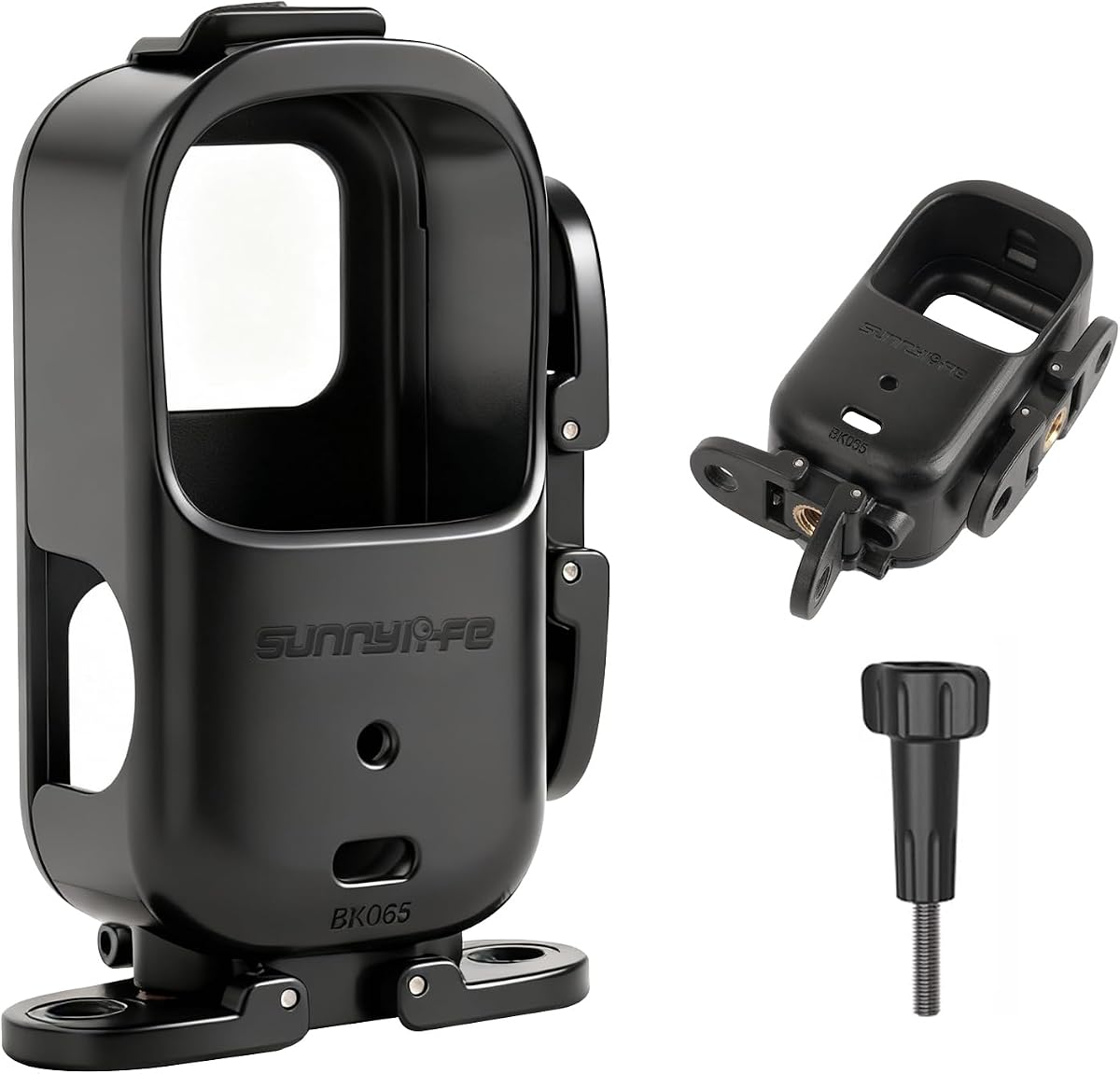

The SmallRig Full Cage for DJI Osmo Nano is a full-cover protective frame made from aluminum alloy, with internal silicone pads intended to cushion the camera while it is enclosed. Its 4.5 rating reflects a well-rounded design that combines impact protection, quick installation, orientation changes, and several mounting options without appearing focused on only one creative workflow.
We may earn a commission when you buy through this link, at no additional cost to you.
The side-mounted one-touch lever is one of its most practical details. It allows the cage to be installed or removed without a separate tool, while strategic cutouts support SD card changes and attachment to a selfie stick without taking the entire cage off. The frame also includes a cold shoe and a 1/4-inch-20 threaded hole, making it possible to add a microphone, LED light, or other compact accessory.
Portrait-to-landscape switching is another strength for social-video work. SmallRig also describes magnetic mounts and optimized balance for stable low-angle shots, plus compatibility with a broader range of mounting scenarios. The trade-off is that this is a more substantial, ecosystem-focused design than a bare minimalist frame, and some users may find a full cage unnecessary when the camera is used in a highly protected environment.
This is an appealing choice for creators who want one cage to handle travel, vlogging, low-angle work, and accessory mounting. It may be especially attractive to users already interested in the wider SmallRig accessory system, including mounts, adapters, and cases. For buyers seeking a polished balance of protection, access, and expansion potential, it remains a particularly complete option.
The aluminum shell and internal silicone pads create a more substantial barrier than a light open frame. At the same time, the unlocking lever and access cutouts are intended to keep common camera tasks from requiring complete disassembly.
A cold shoe, a 1/4-inch-20 hole, magnetic support, and rapid orientation changes let the cage adapt to handheld filming, accessories, low angles, and mounted shooting. That versatility makes it more useful than a simple protective shell.
We may earn a commission when you buy through this link, at no additional cost to you.
The Coyktonty Protective Cage is a lightweight aluminum alloy frame designed specifically for the DJI Osmo Nano series. With a 4.6 rating, it presents a compelling middle ground between simple protection and extensive accessory support, using internal foam cotton to support the camera and improve stability.
We may earn a commission when you buy through this link, at no additional cost to you.
Its cold shoe interface provides a straightforward way to connect a microphone or supplementary light, while support for a magnetic adapter adds flexibility for compatible selfie sticks and other mounting solutions. The frame is also designed for horizontal and vertical shooting, which helps when changing the format of social-media clips or mounted footage.
Compared with the SmallRig full cage, this option presents a more streamlined design and does not emphasize a broad collection of interchangeable mounts. The supplied information also gives less detail about the exact locking mechanism and accessory ecosystem. Buyers who want simple cold-shoe support, magnetic compatibility, and a protective aluminum structure may find those trade-offs entirely reasonable.
The Coyktonty cage is best suited to users who want a straightforward protective frame with enough mounting flexibility for tripods, selfie sticks, lights, and microphones. It is less elaborate than an entire rig but potentially more convenient for creators who value portability and quick changes between shooting orientations.
The frame combines a rigid aluminum structure with internal foam cotton. This pairing is aimed at guarding the camera against everyday impact while keeping the enclosure relatively light and easy to carry.
The cold shoe supports compact additions such as microphones and lights, while magnetic adapter compatibility broadens the available mounting choices. Portrait and landscape support makes the cage suitable for frequently changing formats.
We may earn a commission when you buy through this link, at no additional cost to you.
The Aluminum Alloy Protective Frame Cage combines a precise 1:1 molded fit with two forms of security: a closed lock and a knob safety lock. Its 5.0 rating is supported by a feature set focused on preventing accidental drops or shifting, especially important for travel, riding, and other active shooting situations.
We may earn a commission when you buy through this link, at no additional cost to you.
A major convenience is the cutout that permits direct battery replacement without removing the cage. Buttons and touchscreen functions remain accessible, while the bottom magnetic quick-release connection and two 1/4-inch threads provide several ways to position the camera. A cold shoe also makes room for compatible lights, a DJI microphone, or other accessories.
The cage is designed to work in both vertical and horizontal orientations, making it more adaptable than a fixed-orientation mount. Its downside is bulk relative to a small expansion adapter, and the package includes only the aluminum cage, screws, and lanyard rather than a complete set of mounting accessories. Still, its focus is protection, and the locking details support that goal.
This is the strongest recommendation for users who prioritize secure retention, broad access, and multiple mounting positions. It is particularly well suited to creators who regularly use tripods, selfie sticks, or compact accessories and want the camera protected without constantly removing its frame.
The closed lock and knob safety lock provide two retention mechanisms intended to resist accidental movement or drops. That makes the cage a sensible choice for travel, off-road riding, and other situations where firm security matters more than minimal size.
A dedicated battery-opening cutout allows power changes without removing the cage. Full button and touchscreen access reduces the need to take the frame off during ordinary operation.
We may earn a commission when you buy through this link, at no additional cost to you.
The Osmo Nano Metal Cage 2-in-1 combines an aluminum alloy cage with a separate silicone protective cover. The 5.0 rating reflects the appeal of this two-layer approach, which can be used together for broader protection or separately when a lighter setup is more appropriate.
We may earn a commission when you buy through this link, at no additional cost to you.
The aluminum section is described as shock-absorbing and impact-resistant, while the silicone cover is soft, comfortable to handle, and resistant to deformation. Importantly, the cage is designed not to obstruct interfaces or interfere with other accessories, allowing the camera to remain functional while protected.
This combination differs from conventional full metal frames because it gives the buyer two protective roles in one package. The trade-off is having another piece to carry and the need to decide which layer or combination suits the situation. The supplied details also do not emphasize a cold shoe or 1/4-inch-20 mount, so it may be less compelling for elaborate accessory rigs.
The set is a practical choice for users who want flexible protection for storage, travel, and daily handling. It is especially appealing if the camera is carried in a bag alongside other gear and benefits from both scratch protection and a more rigid external frame.
The metal cage handles impact protection, while the silicone cover focuses on preventing scratches and everyday contact damage. Using both creates a more comprehensive barrier than relying on either material alone.
The aluminum frame is designed around the camera's interfaces, avoiding the kind of obstruction that can make a protective cage frustrating to use. It is designed to coexist with compatible accessories.
We may earn a commission when you buy through this link, at no additional cost to you.
The Handle Grip Cage Case is the only option in this list centered on an integrated, DSLR-like handhold. Its 3.4 rating is the lowest among the selected products, but the design addresses a distinct need: stable handling for street photography, travel shots, and extended handheld recording.
We may earn a commission when you buy through this link, at no additional cost to you.
The one-piece construction combines the grip and cage, eliminating assembly between separate handle and frame pieces. A flip cover shields the camera from scratches and bumps, while the widened finger groove is intended to reduce fatigue. A built-in cold shoe accepts microphones, LED lights, and similar accessories.
Its most distinctive feature is the flat base, which lets the setup rest steadily on a table for low-angle or tripod-free shots. The trade-off is that an integrated handle is inherently larger than a minimalist frame or magnetic adapter. The lower rating also suggests that buyers should examine the current customer feedback carefully, especially regarding fit and handling preferences.
This product makes the most sense for creators who prioritize a secure, comfortable grip over the smallest possible cage. It could be particularly useful for street-style filming, vlogging, and scenes where a traditional handle is easier to control than a bare modular camera module.
The enlarged handle gives users a conventional grip instead of relying on fingertips around a small camera body. Its integrated construction also avoids the assembly steps required to attach a separate handle to a standard cage.
A flat base keeps the camera stable when placed on a level surface. This is useful for low-angle compositions that would otherwise require another support system.
We may earn a commission when you buy through this link, at no additional cost to you.
The iDaPro Camera Cage is a 35-gram aluminum frame engineered specifically around the DJI Osmo Nano's Main Camera Module. Its 3.9 rating puts it in the middle of the group, but the minimalist construction targets users who want a protective frame without turning the compact camera into a bulky rig.
We may earn a commission when you buy through this link, at no additional cost to you.
The product is designed around precise clearances so the camera's magnetic quick-attach system continues to function with the cage installed. According to the supplied details, it can connect to selfie sticks, chest mounts, and other magnetic accessories without requiring removal. Cutouts preserve access to the shutter button, ports, and the Magnetic quick-release connector.
Despite its small footprint, the frame includes an integrated cold shoe and a 1/4-inch-20 threaded hole for tripods, gimbals, and quick-release plates. Raised bezels add protection around the lens area. The limitation is its stated focus on the Main Camera Module, which may provide less coverage than a full-body cage or two-piece protective system.
This is a good fit for travel, hiking, sports, and everyday carry where low weight and preserved magnetic functionality matter. Buyers seeking a full enclosure should consider the SmallRig or aluminum protective frame instead, while minimalist users may find this cage's focused coverage preferable.
At a stated 35 grams, the cage is designed to preserve the Nano's portable character. Its clearances allow magnetic accessories to remain usable, avoiding the need to remove the frame for every connection.
Raised lens-area bezels help guard a particularly exposed section of the main module. The anodized black finish is also described as resistant to scratches and fingerprints during regular handling.
We may earn a commission when you buy through this link, at no additional cost to you.
The Detachable Aluminum Frame Cage uses a split-type construction that allows the DJI Osmo Nano's two main units to be used separately with accessories. Its 4.3 rating reflects a modular approach designed for creators who want to change the camera configuration rather than keep both modules permanently enclosed.
We may earn a commission when you buy through this link, at no additional cost to you.
The open frame gives unobstructed access to the touchscreen, buttons, and ports. Its geometry is also intended to improve air circulation, which may help manage heat during longer recording sessions. A one-touch quick-release mechanism lets users move quickly between protected and bare-camera configurations.
Both modules can be expanded individually, and the frame includes a standard 1/4-inch screw thread and a cold shoe. These features support tripods, selfie sticks, microphones, and LED lights. The compromises are that an open frame shields less than a full cover and the detachable pieces create more items to organize.
This cage is best for modular creators who separate the Nano's camera and display units for different framings or shooting styles. It is less suitable for someone seeking maximum all-around shielding, but it offers excellent flexibility when workflow matters more than complete enclosure.
Independent use of the two main units lets creators combine only the parts needed for a particular composition. The quick-release mechanism is designed to make that change fast when filming conditions evolve.
The open construction is intended to promote airflow around the modules during extended recording. It also leaves buttons, the display, and ports readily reachable, although it provides less physical shielding than a closed cage.
We may earn a commission when you buy through this link, at no additional cost to you.
The JJC Upgrade Osmo Nano Cage is a compact expansion adapter designed for the DJI Osmo Nano and Xtra Atto. Its 4.6 rating and stated weight of only 23 grams make it an attractive choice for creators seeking a small mounting aid rather than a heavy protective frame.
We may earn a commission when you buy through this link, at no additional cost to you.
The cage adds a cold shoe on top and one side for accessories such as LED lights or microphones. Its rear 1/4-inch-20 thread and quick-release mount support tripods, selfie sticks, and two-finger adapters. An embedded rear magnet is designed to provide stable attachment, while the hollow front allows compatible JJC lens-cap products to remain usable.
Its distinctive benefit is probe-lens positioning. When paired with a 1/4-20 extension rod, it can place the camera in narrow spaces, near handmade models, close to the ground, or at otherwise difficult-to-reach locations. The extension rod is not included, and the frame offers less impact enclosure than a full metal cage.
For travel, miniature-scale imagery, or creative low-angle work, the JJC cage is especially useful. It should be chosen for expansion and compactness, not maximum physical protection, making it a specialized yet highly capable alternative among these ten options.
A 1/4-20 extension rod can move the camera into confined spaces or close to small subjects. This creates probe-style compositions without requiring a large support rig.
Top and side cold shoes, a rear thread, and a magnetic back provide several attachment paths in a 23-gram package. The design also avoids obstructing buttons, ports, microphones, buzzers, and rear magnetic functions.
We may earn a commission when you buy through this link, at no additional cost to you.
The Horizontal Vertical Mount Case focuses on changing the Osmo Nano's shooting orientation and connecting it to a wide variety of supports. Its 3.8 rating reflects a specialized design, but that focus is useful for social media, action recording, and creators who regularly rotate between portrait and landscape framing.
We may earn a commission when you buy through this link, at no additional cost to you.
Dual-mode adaptable connectors allow the camera to switch orientation, and the connectors can fold for vertical shooting. The frame can work with listed accessories including a selfie stick headband, chest strap, backpack clip, magnetic neck mount, visor bracket, car suction cup, bike clip, tripod, extension pole, and other compatible supports.
An easy-opening safety lock secures the frame around the camera body. The design adds relatively little bulk, which is valuable when portability matters. However, it is framed more as a mounting adapter than a heavy-duty protective cage, and its lower rating gives prospective buyers a reason to examine the fit and connector arrangement closely.
Choose this mount for a broad accessory ecosystem and frequent orientation changes. It is less compelling for users seeking aluminum impact protection, but it can simplify the transition from conventional landscape filming to vertical social content.
The dual-mode connectors support quick movement between horizontal and vertical shooting. Folding the connectors in vertical mode helps keep the setup compact and visually unobtrusive.
Compatibility with body, vehicle, cycling, neck, headband, tripod, and pole accessories gives the mount a broad range of possible uses. Verify the connection type of any accessory before assembling the final rig.
We may earn a commission when you buy through this link, at no additional cost to you.
The Aluminum Split Protective Frame Cage combines a precision-machined aluminum build with a two-piece design that can function as a full set or with the main body alone. Its 5.0 rating makes it one of the strongest-rated products here and reflects a versatile approach to protection.
We may earn a commission when you buy through this link, at no additional cost to you.
The open-frame layout leaves the touchscreen, buttons, and charging port accessible while supplying structural protection around the camera. A cold shoe supports video lights and other compact accessories, and a 1/4-inch threaded hole allows connection to tripods or selfie sticks.
The quick-release construction is designed to make installation and removal quick, while support for horizontal and vertical orientations broadens its use for mounted and handheld footage. The main trade-off is that a split frame creates more pieces to manage, and its open construction does not offer the same all-around coverage as a full-cover aluminum cage.
This cage is well suited to users who want a durable aluminum structure with the freedom to use one section independently. It works particularly well for creators who alternate between protected shooting and bare-camera configurations without wanting to give up standard mounting points.
The split construction gives users a choice between enclosing the camera with both sections or operating with the main frame alone. That makes it adaptable to changing protection and handling needs.
Precision-machined aluminum provides structural strength without relying on a bulky plastic shell. The cold shoe and threaded hole support compact lights, tripods, and selfie sticks.
We may earn a commission when you buy through this link, at no additional cost to you.
The right cage depends on whether protection, compactness, modularity, accessory support, or handling is your priority. Consider the camera modules you use, the accessories you connect, and how often you need fast access to controls and power.
Cages range from complete protective enclosures to open frames, compact expansion adapters, split designs, and integrated handles. A full-cover style offers more shielding, while an open frame usually preserves the Nano's small profile and makes button, screen, and port access easier. Expansion adapters are useful when the primary goal is attaching the camera to unusual positions, while a handle changes the entire way the camera is held.
In short, match the cage shape to your shooting style rather than choosing solely by appearance.
The DJI Osmo Nano uses a modular arrangement, and not every cage supports both main units in the same way. Some products are precision-engineered for the Main Camera Module, while others are split into two pieces that can be detached or expanded independently. Other designs are intended to work with the camera body as a complete setup. This distinction matters if you often separate the display and camera components.
Confirm whether the cage supports the exact modules and configurations you use before purchasing.
Aluminum alloy is the dominant material among the stronger protective options because it combines rigidity with low weight. Internal silicone pads or foam can add cushioning, while a separate silicone cover can help protect against scratches. Open frames improve visibility and airflow but generally provide less impact protection than full-cover cages. Handled designs add grip but naturally occupy more space.
Prioritize aluminum for active use, silicone for scratch reduction, and full coverage when accidental impacts are the main concern.
A cage can be easy to install and still fail to keep the camera secure if its lock is poorly suited to movement. Dual-lock cages provide a closed lock and an additional safety knob, while magnetic quick releases emphasize speed. Flip covers and hinged structures protect the camera while also serving as part of the handle or shell. The key is to balance quick removal with positive retention.
For travel, riding, and active shooting, favor a positive safety lock; for fast creative changes, prioritize a secure quick release.
Cold shoes support microphones and LED lights, while 1/4-inch-20 threads accommodate tripods, extension rods, gimbals, and many quick-release plates. Magnetic attachment is important when using chest mounts, neck mounts, or magnetic selfie sticks. Some cages also support one another through proprietary adapters or a broader accessory ecosystem. List the accessories you already own and confirm that every required connection is present.
A cage with only one mounting type may be limiting, so identify both your existing equipment and your likely future additions.
Useful cutouts keep the shutter, touchscreen, buttons, ports, charging connection, and battery reachable. The aluminum protective frame in this list includes a dedicated battery-replacement cutout, while the JJC design avoids blocking multiple controls and magnetic functions. Check whether the cage requires removal for routine tasks, especially if you record for long periods or change batteries often.
The best cage protects the camera without slowing down recording, menu changes, or battery swaps.
Portrait shooting is essential for many social formats, and horizontal shooting remains important for conventional video. Cages with explicit orientation support, dual-mode connectors, or rotating configurations make transitions easier. Confirm that the camera can be positioned in the desired orientation and still reach its mounting point without a separate adapter.
Choose a design that supports both orientations if your content regularly moves between vertical and horizontal formats.
The camera's portability is one of its main strengths, so a large cage can undermine that benefit. The iDaPro and JJC options emphasize low weight, while the integrated Handle Grip Cage prioritizes a secure, familiar hold. Consider how the camera will be carried, whether one hand is sufficient, and whether a tabletop base would be useful for low-angle compositions.
For pocketability, favor a compact frame; for stable handheld footage or table shots, consider the added size of a dedicated grip.
Before installing a cage, confirm that the camera and the relevant cage sections are clean and dry. Compare each part with the supplied configuration instructions, then attach the camera to the cage while the camera is powered off. Engage the locking mechanism gradually, checking that the frame sits flush and that no button, port, or lens area is obstructed.
For mounted shooting, attach the cage to its support before powering on the camera. Tighten threaded connections by hand, secure cold-shoe accessories, and check magnetic mounts for a firm connection. When changing orientation, follow the cage's specific procedure and avoid forcing the camera or connector into an incorrect position. Test stability before recording.
After use, remove the camera and wipe the aluminum, silicone, and foam areas with a soft, dry cloth. Do not use harsh liquids, and keep moisture or debris away from the locking parts. Store the cage in a dry protective area, inspect screws and latches periodically, and confirm that the camera's heat-management areas remain clear during extended recording.
No. Some cages are designed specifically for the Main Camera Module, while others use a split design that allows the camera's two main units to be separated. The SmallRig, Coyktonty, horizontal and vertical mount, and JJC products are described as compatible with the Osmo Nano, but module coverage differs. Check the product dimensions, included parts, and intended configuration before ordering.
It depends on the cage and the magnetic connection involved. The iDaPro cage is specifically designed to preserve the camera's magnetic quick-attach function, while the Coyktonty cage supports a magnetic adapter and the JJC cage uses a strong rear magnet. Other cages may use different mounting methods. Confirm that the cage does not block the particular magnetic surface or connector your accessory requires.
A full cage wraps more of the camera and generally offers stronger protection from impacts and scratches. An open frame leaves more of the camera exposed but usually improves access to controls, supports easier airflow, and adds less bulk. The right choice depends on whether your priority is rugged protection or a lightweight, immediately accessible shooting configuration.
Many models include a cold shoe mount for compatible accessories. The SmallRig, Coyktonty, aluminum protective frame, handle grip, iDaPro, detachable frame, JJC, and aluminum split frame all list cold-shoe support. The horizontal and vertical mount case emphasizes other adapters rather than a cold shoe. Always check the accessory's dimensions, attachment standard, and whether it could interfere with controls or cooling.
That depends on the design. The Aluminum Alloy Protective Frame Cage includes a special cutout for direct battery replacement without removing the cage. Other frames may require the camera to be released first. If frequent battery changes are part of your workflow, look specifically for a battery-access cutout or a detachable frame that can be opened quickly.
Most of the selected products explicitly support horizontal and vertical shooting, including the SmallRig, Coyktonty, JJC, horizontal and vertical mount case, and aluminum split frame. Other designs accommodate vertical or horizontal use as part of their described configurations. Confirm the orientation method and ensure that the chosen tripod, light, or selfie stick connection remains properly positioned after rotation.
A full enclosure can potentially restrict airflow, which is why open-frame designs emphasize ventilation. The Detachable Aluminum Frame Cage specifically promotes air circulation and leaves the touchscreen, buttons, and ports accessible. For long recording sessions, use a design with adequate openings, avoid blocking vents, and follow the camera manufacturer's recommended operating practices.
An integrated handle is useful when you want a stable, conventional grip, easier low-angle table shots, and fewer separate components. The Handle Grip Cage Case is designed for those benefits, but it occupies more space than a compact frame. Choose a minimalist cage for portability and a handled option for a steadier, more familiar grip.
The Aluminum Alloy Protective Frame Cage is the leading recommendation for creators who want strong retention, convenient battery access, and multiple mounting positions. The SmallRig Full Cage is the most complete all-around system, while the JJC Upgrade Osmo Nano Cage stands out for compact expansion, probe-style positioning, and very low weight.
Your priorities should determine the winner. Choose a full or split aluminum cage for protection and accessory support, an open frame for ventilation and immediate access, an expansion adapter for unusual shooting positions, or the integrated handle when stable handheld operation matters most. Verify module fit, orientation, and accessory compatibility before completing a purchase.
Ratings and product configurations can evolve, and prices and availability frequently change. Review the current listing, customer feedback, included parts, and compatibility notes at the time of purchase to ensure the selected DJI Osmo Nano Camera Cage meets your particular shooting setup.