
ULANZI Camera Tripod, Mini Flexible Phone Stand w Hidden Phone Holder
4.5Editor score
Flexible wrap-around tripod legs
Hidden smartphone holder
Vertical and horizontal rotation
Universal quarter-inch mounting
An octopus tripod for wildlife photography is a compact, flexible support that can wrap around branches, fences, and natural perches while keeping a camera or phone steady. Unlike a conventional tripod, it excels in places where spreading three long legs would be awkward, disturb vegetation, or offer no level footing.
The products compared here include true flexible octopus stands plus specialized tripods, monopods, and gimbal-head systems that serve similar wildlife and long-lens support roles. We evaluated the supplied specifications for stability, payload, reach, portability, mounting flexibility, outdoor construction, and suitability for discreet field work.
Each review explains what the product does best, where its design has limitations, and which photographer it suits. The flexible stands provide unconventional placement options, while the larger systems emphasize telephoto control, load capacity, and dependable tracking; current prices and availability can change at any time.
4.5Editor score

5.0Editor score

4.4Editor score
As an Amazon Associate we earn from qualifying purchases.
This side-by-side comparison shows how the ten options divide between flexible wrap-around supports, portable conventional tripods, wildlife-focused heads, and long-lens monopods. The differences in payload, reach, camouflage, and mounting hardware matter more than the shared label when choosing field equipment.




The Fotopro Green Carbon Fiber Tripod with Monopod for Wildlife Cameras has a supplied customer rating of 5.0 and stands out as the most purpose-built option in this group for photographers who work around birds and game. Its forest green finish is more than an aesthetic detail: the color is intended to reduce glare and avoid the conspicuous silhouette created by conventional black equipment in blinds and at treelines.
We may earn a commission when you buy through this link, at no additional cost to you.
The tripod weighs 2.2 pounds, folds to 14.2 inches, and uses a carbon fiber construction that makes it practical to carry during long walks. One leg can be removed to create a field monopod, while the stated 8 kg load plate is suitable for telephoto lenses and spotting scopes. Silent twist locks, gripping rubber feet, and a maximum height of 60 inches give it a convincing advantage for quiet, ground-level wildlife sessions.
It is not literally an octopus stand, and buyers seeking flexible legs that curl around a branch will not find that feature here. The conventional three-leg layout also demands a reasonably even patch of ground. Even so, those limitations are reasonable because the tripod compensates with a discreet finish, low weight, and a monopod mode that expands its usefulness in difficult terrain.
Choose this model for serious wildlife work involving long lenses, especially when visibility, pack weight, and quiet operation matter. It is the strongest all-around recommendation here for a photographer who wants a dedicated field tripod rather than a phone stand or a full professional carbon fiber system.
The forest green coating is particularly useful when the tripod remains in the frame or sits near a hide. It avoids the bright reflection often produced by black or silver hardware and blends more naturally with foliage, shaded soil, and woodland backgrounds.
Removing a leg converts the support into a monopod, which can be valuable on steep trails or narrow tracks where spreading all three legs is impractical. The same setup then supports more conventional tripod work at a shooting location.
We may earn a commission when you buy through this link, at no additional cost to you.
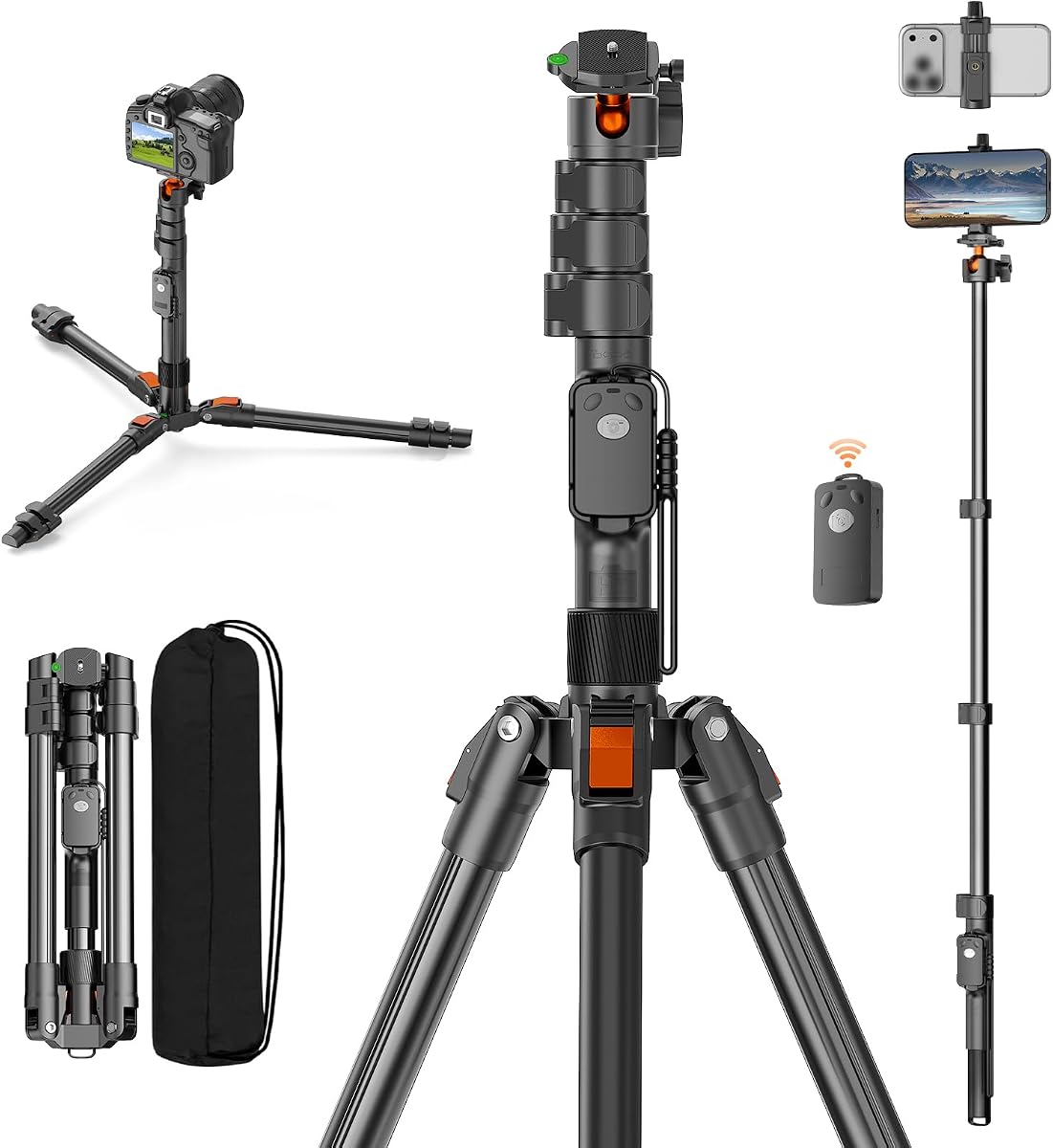
The ULANZI Camera Tripod, Mini Flexible Phone Stand w Hidden Phone Holder carries a supplied rating of 4.5 and represents the most accessible entry into flexible wildlife photography. Its bendable legs can wrap around lampposts, fence posts, tree limbs, chairs, and door knobs, allowing a phone to occupy positions that a full-size tripod cannot easily reach.
We may earn a commission when you buy through this link, at no additional cost to you.
A hidden smartphone holder keeps the phone supported without leaving a large clamp visible in every frame. The ball head rotates for vertical or horizontal composition, while the cold shoe provides a connection point for a microphone or LED video light. A quarter-inch thread and universal screw also make the stand compatible with many cameras, including DSLR, Sony, Canon, and Nikon bodies.
The principal limitation is that the product data provides no load capacity, so it should not be treated as a substitute for a rated long-lens support. Its small scale and flexible construction are less effective against strong wind, vibration, or a heavy camera. Even so, those constraints are understandable for a lightweight phone-centered stand used for observation clips, scouting, backyard wildlife, and casual telephoto work.
This is a strong choice for a nature enthusiast who wants inexpensive placement freedom. Use it with a phone, a lightweight camera, or a compact spotting setup, and select it when portability and wrapping around natural supports matter more than professional payload capacity.
The flexible legs adapt to branches, rails, and narrow objects where three rigid legs would slide or be unable to spread. This makes the stand especially useful for opportunistic shots from imperfect field positions.
Because the phone holder is hidden, it creates less visual clutter in recordings and photographs. The rotating clip also makes switching between portrait and landscape framing straightforward.
We may earn a commission when you buy through this link, at no additional cost to you.
The SIRUI PH-10 Gimbal Head has a supplied rating of 4.6 and is designed for photographers who need a dedicated platform for tracking wildlife with a long lens. Its 10-layer carbon fiber body weighs 0.98 kilograms while supporting a stated 15 kg load, making it a notably capable head for mirrorless cameras paired with telephoto optics.
We may earn a commission when you buy through this link, at no additional cost to you.
Independent knobs control the track, base, sliding platform, and quick release plate. This separation allows a photographer to balance a rig, establish the desired friction, and then pan or tilt smoothly. A 360-degree rotating base and sliding platform with scale marks support more deliberate composition than a basic ball head, especially when a bird changes direction.
The PH-10 is a head rather than a complete tripod, so it requires a compatible support and the photographer must be comfortable assembling and balancing the system. It also does not offer the flexible wrapping geometry associated with a true octopus product. Those are important distinctions for anyone shopping specifically for unusual perch mounting.
For an established tripod kit, this is an excellent wildlife head that prioritizes telephoto control. Choose it when smooth panning, repeatable adjustment, and a high stated payload matter more than pocketable flexibility or a concealed appearance.
Separate friction controls let the operator tune each axis rather than relying on one general adjustment. That level of control is valuable when tracking a fast bird, a grazing animal, or another subject that changes direction without warning.
The sliding platform and marked quick release make it easier to position a long camera-and-lens combination consistently. A quick button and security lock help prevent accidental release once the rig has been set.
We may earn a commission when you buy through this link, at no additional cost to you.
The K&F Concept 64 inch/163cm Lightweight Aluminum Travel Camera Tripod has a supplied 4.6 rating and provides a useful middle ground between a dedicated travel support and a large professional wildlife rig. It weighs just 1.15 kilograms, making it one of the lightest conventional tripods in the comparison.
We may earn a commission when you buy through this link, at no additional cost to you.
Its four-section legs extend from 20.4 to 64.1 inches and fold to 15.5 inches. The 36 mm ball head supports up to 8 kg and rotates through 360 degrees, providing enough control for a moderate telephoto lens, mirrorless body, or spotting scope. Flip locks can be operated quickly, which is useful when a subject appears while the tripod is still being unfolded.
Aluminum is heavier and can transmit more vibration than carbon fiber, while the conventional geometry cannot wrap around a branch. The product also does not state a maximum practical lens diameter, so a very long telephoto should be checked for overhang and balance before use. Even with those cautions, it offers more height and load capacity than a small flexible stand at a relatively manageable weight.
This tripod suits a traveling wildlife photographer who wants more precision than an octopus mount and less bulk than a heavy professional setup. It is particularly appropriate for moderate telephoto equipment used from stable ground rather than precarious perches.
A broad adjustment range makes it possible to frame from low near a trail puddle to a comfortable standing height. The ability to invert the center column also opens unusual ground-level compositions beneath branches or near water.
The flip-lock design is convenient when a bird appears suddenly. Fast setup does not replace careful leveling, but it reduces the time needed to move from packed to ready.
We may earn a commission when you buy through this link, at no additional cost to you.
The XXZU 75-inch Camera Tripod with Remote offers a supplied rating of 4.6 and a broad collection of configurations. Its legs extend to 75 inches, and the detachable center column can be used as a monopod or selfie stick, installed upside down for low-angle work, or removed to reduce the footprint.
We may earn a commission when you buy through this link, at no additional cost to you.
Each leg can be repositioned independently in angle and length, allowing the tripod to work on stairs, rocky paths, and uneven ground. The stated capacity is 8 kg vertically and 3 kg at a 45-degree tilt, a distinction worth remembering when a long lens extends far beyond the camera body. A 360-degree ball head, phone holder, and remote control broaden its use for video and unattended framing.
The feature-rich design can feel less streamlined than a dedicated wildlife tripod, and the 75-inch maximum reach makes the packed stand longer than many travel models. Aluminum tubing also adds weight compared with carbon fiber. Nevertheless, the adjustable geometry and detachable column make it unusually versatile for a single field kit.
Choose this stand for wildlife creators who alternate between camera, phone, panoramic, and low-angle video work. It is especially helpful on rough terrain where changing each leg position can provide a better foundation than forcing the legs to their maximum spread.
The removable column converts the support into a shorter monopod or a camera pole, while inversion enables very low shooting angles. That versatility makes it more than a standard tripod.
Independent leg angle and length adjustment lets each foot find a different surface. The anti-slip feet improve grip, and the hanging hook can accept added weight to improve stability around the center column.
We may earn a commission when you buy through this link, at no additional cost to you.
The LINKCOOL 360-degree Rotation Flexible Octopus Travel Stand has a supplied rating of 4.5 and is one of the most literal interpretations of the octopus-tripod category. Its adjustable legs can curl around irregular objects, while the swivel joint allows the mounted device to pan through a full circle and be used in portrait or landscape orientation.
We may earn a commission when you buy through this link, at no additional cost to you.
The phone clip adjusts from 2.4 to 3.7 inches and accommodates many modern smartphones. A separate camera adapter enables use with a DSLR or action camera, expanding the stand beyond its mobile origins. A Bluetooth shutter reaches approximately 30 feet, allowing the photographer to step away from a feeding bird, nesting area, or other observation point.
No load capacity is stated, so the support should be treated as a lightweight platform rather than a guaranteed long-lens system. Flexible legs can also transfer vibration if the device is heavy or the wind is strong. Even so, its combination of wrapping geometry, swivel control, and remote operation closely matches the needs of a mobile wildlife photographer.
Choose this model when your priority is a true octopus form factor, a phone-first setup, and the freedom to attach to natural or artificial perches. For heavy telephoto bodies, a rated tripod or monopod is the safer choice.
The flexible legs can conform around railings, branches, and narrow supports that would not accept rigid feet. Rubberized gripping sections help limit slipping and protect the object being wrapped.
The included wireless shutter removes the need to touch the device at the moment of capture. This is useful for recording feeding behavior or framing a subject where the photographer must remain well back.
We may earn a commission when you buy through this link, at no additional cost to you.
The SIRUI 2 In 1 Explorer Series Camouflage Outdoor Tripod CT-3204 has a supplied rating of 5.0 and focuses on outdoor utility. Its camouflage treatment is especially relevant for photography involving birds, reptiles, and other alert subjects because the tripod is less visually conspicuous than a conventional black or silver support.
We may earn a commission when you buy through this link, at no additional cost to you.
A dual-function bowl head adapter allows the photographer to switch between a fixed base and a leveling base. Adjustable height and three optional leg positions expand the available viewpoints, while metal spikes and rubber feet provide options for soft soil, vegetation, and harder surfaces. The design is aimed at accommodating varied terrain rather than maintaining one fixed setup.
The supplied information does not provide a specific payload, folded length, or weight, so comparing its carrying burden with lighter travel tripods is difficult. It also does not wrap around supports like a true octopus. The broad terrain-specific features may justify its larger form for photographers who value stealth and modular positioning over minimal packed size.
This tripod is well suited to hide-based and ground-level wildlife sessions where camouflage and foot choice are priorities. Buyers who regularly hike long distances with compact equipment may prefer a lighter travel model, while photographers working from established blinds will appreciate the range of stable configurations.
A camouflage finish reduces the contrast between the support and vegetation or earth. That can make a setup less conspicuous when a nervous subject is approaching or when the tripod enters the edge of a frame.
Metal spikes are useful in soft soil, while rubber feet are better around vegetation and surfaces where points could be intrusive. Swapping them allows the tripod to match the location more closely.
We may earn a commission when you buy through this link, at no additional cost to you.
The Benro Mammoth Carbon Fiber Tripod with WH15 Wildlife Head is the premium specialist in this comparison, carrying a supplied rating of 4.4. Its carbon fiber legs, 15 kg stated capacity, and dedicated wildlife head are designed for full-frame DSLRs, hybrid video setups, and large telephoto lenses used in demanding field conditions.
We may earn a commission when you buy through this link, at no additional cost to you.
The WH15 is a two-way fluid head with eight-step counterbalance, continuous pan and tilt drag, dual-pan capability, and a reversible pan handle. Those controls make it possible to tune movement for a specific lens-and-camera combination, reducing abrupt starts and stops while following a moving animal. Independent leg spread, three leg positions, rubber feet, and optional spikes provide adaptable grounding on uneven ground.
This is not a compact octopus accessory or a casual phone stand. It is a complete professional kit with a 75 mm bowl base, three accessory mounts, and more controls than most photographers need for casual work. Buyers should also account for the fact that the product data does not state its total packed length or weight, making it less compelling for photographers who hike or climb with minimal equipment.
Choose the Benro Mammoth when the image depends on a long lens, smooth tracking, and repeatable professional stability. It is the strongest premium recommendation here for dedicated wildlife assignments, provided the photographer values precise control more than extreme portability.
Eight counterbalance steps let the photographer tune how the head responds to a long, front-heavy lens. Once balanced, the fluid drag can follow movement with a smooth resistance rather than abrupt repositioning.
The quick-swap bowl mount, accessory mounts, multiple leg positions, and optional spikes create several ways to stabilize the system. Rubber feet serve ordinary terrain, while spikes can improve purchase in soft ground when they are appropriate for the site.
We may earn a commission when you buy through this link, at no additional cost to you.
The Peak Design Travel Tripod has a supplied rating of 4.5 and is built around a compelling proposition: a support that packs down to the diameter of a water bottle yet carries a stated 20-pound load. That makes it a practical travel companion for a photographer who regularly moves between wildlife locations with a full-frame body and telephoto lens.
We may earn a commission when you buy through this link, at no additional cost to you.
The leg design deploys and locks quickly without the sequence of flips and rotations associated with many conventional tripods. A quick-release lever streamlines camera changes, while the omnidirectional ball head uses one adjustment ring for direct control. The center column also incorporates a mobile mount, allowing the same kit to support a phone without requiring a separate accessory.
The tripod is still a conventional three-leg design, so it requires suitable ground and does not provide the unconventional positioning of a flexible octopus stand. It also lacks the fluid drag and counterbalance controls found in the Benro wildlife head, making it less specialized for long, continuously tracked subjects. Those compromises are reasonable for a travel-oriented support whose main strength is efficient mobility.
Choose this tripod for photographers who want telephoto-capable stability in a genuinely compact package. It is a strong companion for hikes, roadside birding, and destination wildlife trips where every carried item must earn its place.
The compact cylindrical form is easy to fit alongside a camera body, lens, and field clothing. That makes the tripod practical for travelers who want long-lens support without carrying a large conventional model.
The built-in phone support expands the system beyond the camera attached to the quick release. A mobile photographer can document behavior, scout compositions, and capture quick clips without adding another stand to the bag.
We may earn a commission when you buy through this link, at no additional cost to you.
The IFOOTAGE Cobra 3 C180F-P Carbon Fiber Camera Monopod has a supplied rating of 4.6 and is a useful alternative for wildlife photographers who need reach without the footprint of three long legs. Its carbon fiber pole weighs 2.8 pounds, extends through a 71-inch working range, and has a stated vertical payload of 8 kg.
We may earn a commission when you buy through this link, at no additional cost to you.
A foot-operated pedal releases the height lock for 360-degree swiveling, allowing the photographer to reposition quickly without bending down to turn a knob. The base can function as a tabletop mini tripod or low-profile support, while the pole can also serve as a stabilizer extension or hiking stick. A quick-release top plate ejects when the sleeve is pressed and locks when a plate is inserted.
The 27-inch collapsed length is not especially compact, and a monopod inherently has less lateral stability than a full tripod. The base opens to about 13.4 inches, improving support, but wind and uneven terrain can still affect a long lens. Convertible quarter-inch and three-eighth-inch screws broaden compatibility with cameras, gimbals, spotting scopes, lights, and microphones.
Choose the Cobra 3 when narrow trails, steep ground, or rapidly changing positions make a monopod more useful than a three-leg stand. It is particularly handy for handheld observation and quick telephoto reframing, while photographers working around highly nervous subjects should still consider a full tripod.
The pedal lock can be operated while the camera remains at eye level, reducing setup time during active wildlife encounters. It also allows quick swiveling between compositions without disturbing the mounted camera.
The opened base creates a wider support area and can serve as a low tabletop tripod. With the legs closed, the system becomes a compact foot support for a single camera pole.
We may earn a commission when you buy through this link, at no additional cost to you.
The most useful support depends on the camera, lens, terrain, and shooting distance. A true octopus stand provides placement freedom, while a conventional tripod or fluid head provides greater stability and load control for heavy telephoto equipment.
Choose flexible legs for opportunistic phone and compact-camera work; choose conventional supports for large telephoto rigs and precise long-exposure images.
Look for a published payload, then leave a practical safety margin for large lenses and uneven terrain.
For long approaches, prioritize total pack size and carry comfort before extra height that may rarely be used.
Choose fluid or panoramic controls for deliberate telephoto tracking and a simple rotating head for quick reframing.
Look for muted colors, nonreflective surfaces, and quiet locks when photographing close to skittish subjects.
Match the feet to the ground, and avoid spikes in protected habitats or around delicate vegetation.
Verify the thread, plate standard, and accessory requirements together to avoid incompatible adapters in the field.
Choose a dedicated phone holder for scouting and content work, or a universal tripod if the phone is an occasional secondary tool.
Inspect the legs, locks, head, and mounting plate before every outing. Confirm that every fastener is tight and that the camera is seated completely on the plate or screw. For a flexible octopus, load the device gradually and test the grip on a secure indoor object before relying on it around a tree or fence. Keep the legs clear of gaps where wildlife could become caught.
Set the support before the subject appears whenever possible. On a conventional tripod, spread the legs and adjust each section for the terrain; on an octopus, bend the legs evenly around the perch and rotate the device to compose the shot. Use a shutter release or remote when available, and make small movements rather than abrupt swings. For a fluid head, balance the camera and lens before adjusting the drag controls.
After the session, loosen any tension in flexible legs, wipe off soil and moisture, and allow the equipment to dry before storage. Do not leave rubber feet or grips in direct heat for long periods. Check carbon fiber sections for chips or cracks, clean the threads, and keep tripod heads free of sand that could interfere with the pan mechanism. Store the support in its bag with locks loosened slightly rather than clamping the mechanism under permanent pressure.
Its flexible legs can wrap around branches, rails, and other supports where a conventional tripod cannot stand. This creates more possible camera positions around a subject and can be especially useful in wooded habitats, blinds, and dense vegetation. The tradeoff is that flexible legs generally provide less rigid support for heavy telephoto lenses.
It depends on the stand's construction and stated payload. Some flexible models include a universal quarter-inch screw and can carry a lighter camera, but their listings may not provide a load rating. A conventional tripod, gimbal head, or monopod with a published capacity is safer for a large telephoto rig.
They are better for fixed observation, perched birds, and quick opportunistic repositioning than for smoothly following flight. A fluid or panoramic head offers more consistent movement control for telephoto tracking. An octopus stand can still hold a camera steady on a branch while a bird occupies a predictable feeding perch.
Carbon fiber generally reduces weight without increasing the overall pack burden, which can matter on long approaches. Aluminum is often simpler and can be less expensive, but it is heavier for equivalent stiffness. The correct choice also depends on load, head design, and how far the support must be carried.
Yes, when the phone and optional external lens form a practical observation or imaging system. A flexible phone tripod is particularly useful for positioning the device near a nest, feeder, or trail. A dedicated camera tripod remains preferable for the highest resolution, autofocus performance, and control with a long telephoto lens.
Choose a muted finish, avoid reflective hardware, and position the support before the subject arrives. Silent locks, rubber feet, and soft camera movement help reduce sound and sudden motion. Staying farther back with a long lens is often more effective than trying to conceal equipment at close range.
A monopod is often easier to manage on narrow or steep trails because it uses less space and the foot-operated lock can be operated quickly. A tripod offers better resistance to wind and movement when the ground is suitable. For remote terrain, choose the system that can be deployed safely without losing balance.
Inspect the rubberized sections for grit, choose an anchor with enough surface area, and test the grip before mounting an expensive camera. Keep the legs evenly tensioned and avoid relying on a very thin branch that could move under load. If the perch is unstable, move to a conventional support on the ground.
The Fotopro Green Carbon Fiber Tripod is the most complete recommendation for a serious but portable wildlife kit, combining a quiet forest finish, long-lens support, and monopod conversion. The ULANZI flexible phone tripod is the best budget choice when the goal is wrapping around natural perches with a phone or light camera, while the Benro Mammoth WH15 is the premium option for demanding telephoto work and fluid tracking.
Prioritize the actual shooting setup. Opt for flexible legs when placement freedom and compact size matter, a rated conventional tripod when a large lens needs stability, and a fluid head when smooth panning is central. Also consider camouflage, pack weight, terrain, remote control, and whether the same kit must support video and phone workflows.
Specifications, customer ratings, product availability, and prices can change, so check the current listing before buying. Confirm the camera or phone fit, mounting screw, stated load capacity, and included accessories against your particular equipment to make the most informed final choice.