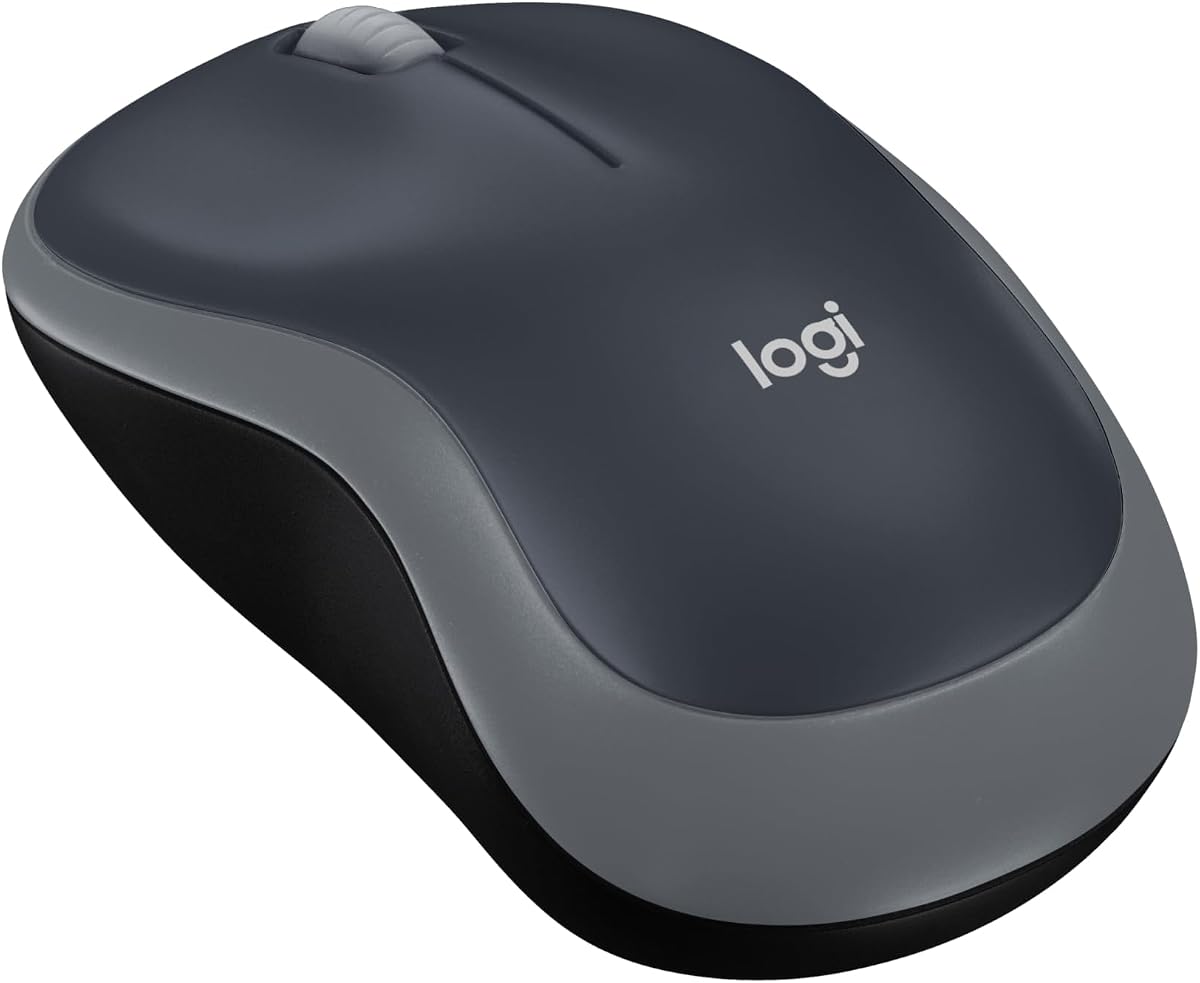
Logitech M185 Compact Wireless Mouse
4.4Editor score
Compact ambidextrous design
2.4 GHz wireless connection
Plug-and-play USB receiver
Discover the best Mouse for iMac Desktop options, comparing wireless and wired connectivity, comfort, controls, portability, and features for home or office
A mouse for iMac desktop should provide smooth cursor control, dependable connectivity, and a shape that suits your workspace. Important considerations include USB-C or USB-A support, Bluetooth stability, tracking performance, noise levels, button layout, and whether you prefer a wired, rechargeable, or battery-powered design.
The products in this guide were compared using the supplied specifications, compatibility claims, control layouts, connectivity options, size information, and customer ratings. The list covers wired and wireless models for iMac, MacBook, iPad, Windows, Linux, ChromeOS, and other compatible systems, from simple travel mice to refined premium options.
Each review explains the strongest features, practical trade-offs, and ideal users, while the comparison table makes recurring differences easier to scan. Ratings reflect the supplied marketplace feedback, and product availability, configurations, and pricing can change, so confirm the current listing and ports before making a final decision.
4.4Editor score

4.6Editor score

4.5Editor score
This side-by-side comparison highlights connection style, portability, control layout, and the features most likely to matter on an iMac desktop.



The Macally Dual Connector Mouse combines a straightforward three-button layout with a physical cable that includes both USB-C and USB-A options. Its 4.6 rating makes it one of the strongest-reviewed products in this guide. For many iMac desktop users, the combination of broad connector compatibility, immediate operation, and uncomplicated controls is especially appealing.
We may earn a commission when you buy through this link, at no additional cost to you.
The standout feature is the dual-ended plug. Newer iMac desktops and other modern computers can use USB-C, while older systems or peripheral hubs may still rely on USB-A. That versatility reduces the need to keep an adapter nearby. A 1200 DPI optical sensor supports everyday navigation through documents, spreadsheets, web pages, and creative applications without requiring installation of software or configuration.
Its ambidextrous shape is another practical advantage. Because the design is not strongly molded for one hand, it can suit shared offices, classrooms, homes, and rotating workstations. The three-button arrangement—left click, right click, and scroll wheel—avoids the learning curve associated with complicated shortcut buttons. The trade-off is that people who need programmable side controls, rapid sensitivity changes, or maximum freedom from a cable may find it limited.
This is a strong general recommendation for an iMac desktop owner who values reliability and simplicity over elaborate features. It works immediately with Mac, PC, and Chromebook systems, and it avoids both disposable battery replacement and wireless pairing. Choose it when dependable plug-and-play operation and support for two common USB connector types matter more than gaming-oriented controls or a highly specialized ergonomic shape.
The combined USB-C and USB-A connector is particularly useful for iMac setups that may include different generations of computers or hubs. You can move the mouse between compatible machines without searching for a separate adapter or changing the mouse's internal configuration.
The familiar three-button layout reduces distractions and works well for routine productivity. It also makes this mouse a practical option for anyone who has used a basic desktop mouse for years and does not want to manage extra buttons, profiles, or configuration software.
We may earn a commission when you buy through this link, at no additional cost to you.
The Logitech M185 is a conventional wireless mouse that focuses on dependable everyday operation rather than advanced features. It has a 4.4 rating and a plug-and-play design that requires only a small 2.4 GHz USB receiver. It supports Windows, Mac, and laptops, making it a familiar choice for an iMac desktop workspace that still relies on USB-A.
We may earn a commission when you buy through this link, at no additional cost to you.
Its most notable strength is the combination of a compact contoured shape, ambidextrous design, and long stated battery life of up to one year. The included AA battery and smart sleep mode are designed to reduce maintenance. A line-by-line scroll wheel is straightforward, and the absence of complicated buttons keeps the mouse approachable for general office work, web browsing, and home use.
The main limitation is that it is not a native Bluetooth mouse and does not offer a USB-C receiver. On a modern iMac setup, you will therefore need a USB-A port or an appropriate adapter. There is also no advertised DPI control, so users who need to move between precise and fast cursor settings may have to adjust sensitivity within macOS instead.
Despite those limitations, the M185 is easy to recommend for someone who wants a recognizable, uncomplicated mouse that works across Mac and PC systems. Its small footprint suits tight desks and travel, while its wireless design clears the desk. It is particularly attractive to buyers who want the Logitech name and established plug-and-play behavior without a feature-heavy design.
The tiny USB receiver and compact mouse make the M185 convenient to carry between a desktop and a laptop. Setup requires no software, and the ambidextrous shape broadens its appeal for shared workstations or users who alternate hands.
The included AA battery and automatic sleep function are intended to reduce interruptions. This makes the mouse a sensible everyday option when consistent, uncomplicated operation matters more than rechargeable convenience or multi-device switching.
We may earn a commission when you buy through this link, at no additional cost to you.
The Microsoft ARC Mouse offers the most distinctive design in this collection. Its 4.5 rating reflects a well-regarded product that combines an ultra-slim, lightweight body with native Bluetooth connectivity. Rather than imitating a traditional desktop mouse, it presents a flatter profile suited to clean workspaces, modern iMac setups, and users who prioritize portability.
We may earn a commission when you buy through this link, at no additional cost to you.
The full scroll plane is the feature that most clearly separates it from conventional entries. Users can scroll vertically in the familiar direction and horizontally across documents, images, and wide interfaces. Precise tracking and clearly differentiated left and right clicks support everyday productivity. The mouse can also snap flat, making it easy to place in a pocket or bag without taking up much room.
Its premium design also comes with trade-offs. The slim profile may not provide the same palm support as a larger conventional mouse, particularly during very long sessions. It lacks the multi-mode receivers, jiggler functions, adjustable DPI controls, and wired flexibility found elsewhere in this guide. The best fit is therefore a buyer who values portability, aesthetics, and horizontal scrolling more than extensive controls.
For an iMac owner who wants a clean desk and travels with a compact computer, the ARC Mouse is a particularly polished choice. It avoids a permanently occupied USB port because it uses Bluetooth, and its Mac compatibility makes it straightforward to add to an existing Apple workspace. It is best treated as a design-led productivity accessory rather than a feature-heavy gaming or specialist control mouse.
The full scroll plane adds useful lateral movement that many basic wheels cannot provide. It can be particularly valuable when working with wide documents, timelines, spreadsheets, design canvases, and browser views that otherwise require a horizontal scrollbar.
Its folding, ultra-thin construction makes the mouse easy to pack and helps maintain a visually uncluttered workspace. The lightweight profile is especially useful for people who alternate between an iMac desktop and a portable MacBook.
We may earn a commission when you buy through this link, at no additional cost to you.
The Suteke Multi-Mode Wireless Mouse is built for people who move between an iMac, another computer, a tablet, and other compatible devices. It has a 4.4 rating and supports Bluetooth 5.2, Bluetooth 3.0, and a 2.4 GHz receiver with both USB-A and USB-C connectors. That range of options allows the same mouse to work across different systems and ports.
We may earn a commission when you buy through this link, at no additional cost to you.
Three DPI levels of 800, 1200, and 1600 provide a useful balance between everyday productivity and more precise movement. The supplied description also reports 96 percent noise reduction, giving it an advantage in shared offices or quiet evening work. A built-in rechargeable battery, USB-C charging, and smart sleep mode remove the need for disposable batteries, while the 68-gram body helps portability.
The main caveat is fit. The product information specifically states that the mouse is not designed for large hands and is better suited to small or medium palms using palm or finger grip. It also asks users to employ a mouse pad for the best experience. Those points matter because a feature-rich connection system cannot compensate for a shape that feels uncomfortable during extended work.
This mouse is a good fit for a flexible Apple ecosystem user who wants one peripheral across several machines. Choose it if quiet operation, rechargeable convenience, and broad mode support are priorities. For buyers with larger hands or a preference for one-button switching with no mode management, a simpler ambidextrous option may be more appropriate.
Bluetooth pairing and a dual-head 2.4 GHz receiver cover common desktop and portable-device arrangements. This is useful in offices where USB-A ports remain on older machines while newer equipment relies on USB-C.
The claimed 96 percent noise reduction makes the mouse appealing in shared workspaces. Its rechargeable battery, automatic sleep behavior, and one-click wake function also support convenient routine use without disposable battery changes.
We may earn a commission when you buy through this link, at no additional cost to you.
The Macally Slim USB-C Mouse is a straightforward wired option for iMac desks built around modern USB-C connections. It carries a 4.4 rating and uses a familiar three-button layout that covers clicking, right-clicking, and scrolling. Its plug-and-play design means it can be connected without installing drivers or managing a wireless pairing process.
We may earn a commission when you buy through this link, at no additional cost to you.
Noise reduction is the key feature for many buyers. The product information claims the quiet button mechanism reduces click noise by 90 percent, which can make a noticeable difference in a home office, library, or shared workplace. DPI can be adjusted among 800, 1200, 1600, and 2400, offering a wider sensitivity range than many of the basic alternatives in this guide.
Its slim profile supports comfortable everyday handling while preserving a familiar desktop-mouse form. However, the connection is limited to USB-C. If the relevant iMac has no accessible USB-C port, you will need an appropriate hub or adapter. As with every wired mouse, the cable may also occupy desk space and restrict how far the mouse can move from the computer.
This is a strong recommendation for someone who prefers a stable wired connection, wants quieter clicking, and needs more sensitivity options than a standard 1200 DPI mouse. It is particularly useful for modern iMac setups that already use a USB-C hub for displays, storage, or other accessories. Users who frequently switch between radically different systems may prefer a multi-mode wireless alternative.
A physical USB-C connection avoids charging, battery replacement, receiver storage, and reconnection concerns. For a stationary iMac desk, that predictable behavior can be preferable to maintaining several wireless modes.
Four DPI options let you move from slower, controlled pointer movement to faster cursor travel. The highest setting can be useful across large displays, while lower levels may suit detailed selection work.
We may earn a commission when you buy through this link, at no additional cost to you.
The Macally Silent Wired Mouse combines a 4.6 rating with a compact, uncomplicated design. It is intended for Apple Macs, Windows PCs, laptops, and desktops, with a five-foot USB-A cable that should accommodate most desk arrangements. It suits buyers who want a basic peripheral that begins working as soon as it is connected.
We may earn a commission when you buy through this link, at no additional cost to you.
The mouse reduces click noise by 90 percent, making it a practical fit for shared rooms or quiet work sessions. It also offers four DPI settings—800, 1200, 1600, and 2400—selected with a dedicated button. That flexibility is more useful than a fixed sensor setting when moving between detailed tasks, general browsing, and large displays.
Its slim, compact body requires relatively little desk space, and the ambidextrous shape is intended to remain comfortable for right- or left-handed users. The major limitation is its fixed USB-A plug. Newer iMacs may require a hub or adapter to accommodate this mouse, so buyers should verify the available ports before choosing it over a native USB-C model.
This mouse is a good choice for an iMac workspace where USB-A access is already available and silence, compactness, and straightforward operation matter. It is less suitable for users who need USB-C, wireless flexibility, programmable side buttons, or a mouse that can be carried easily between computers. Even so, its strong rating and restrained feature set make it a compelling compact wired option.
The compact body helps preserve desk space, while the five-foot cable provides useful reach without demanding a large extension. The physical connection remains stable and does not require a separate charging dock or receiver.
The mouse focuses on the functions used most often and adds just one DPI button. This keeps the controls approachable while reducing the disruptive sound associated with conventional mechanical switches.
We may earn a commission when you buy through this link, at no additional cost to you.
The Macally Rechargeable Bluetooth Mouse emphasizes a clean, Apple-oriented appearance and native wireless connectivity. Its 4.4 rating reflects solid buyer feedback, while its compatibility list includes Mac, MacBook Pro, MacBook Air, iPad, and PC. It is a natural fit for an iMac desktop user who prefers Bluetooth over a wired or 2.4 GHz receiver.
We may earn a commission when you buy through this link, at no additional cost to you.
The ultra-thin profile is designed for both right- and left-handed use, and the supplied information describes a comfortable, minimalistic shape. Noise-reducing silicone membranes under the buttons are claimed to make clicks up to 90 percent quieter, although the scroll wheel is specifically excluded from that claim. A rechargeable battery and included USB-C charging cable remove the need for disposable batteries.
The listed wireless range reaches up to 30 feet, giving you flexibility to sit back from a desktop display or move around a large work area. The trade-off is that the mouse provides only Bluetooth connectivity; it does not offer a 2.4 GHz USB receiver or adjustable DPI button. It therefore may not suit someone who needs to switch instantly between incompatible devices or control pointer sensitivity directly.
This mouse is a strong recommendation for a minimalist Apple workspace, particularly when USB-C charging and native Bluetooth are priorities. It is also useful for iPad users because pairing does not require the proprietary ecosystem of the supplied iMac itself, though exact operating-system behavior should be confirmed. Choose it for a tidy, quiet, rechargeable setup rather than for advanced controls or maximum cross-platform flexibility.
The slim white profile is intended to sit naturally alongside Mac hardware. Bluetooth pairing removes a receiver from the desk and allows the mouse to move between a compatible iMac, MacBook, or iPad without a cable.
USB-C recharging supports a cleaner, more consistent power routine. Reduced button noise makes the mouse suitable for shared environments, while the stated exclusion for the scroll wheel sets realistic expectations about remaining sound.
We may earn a commission when you buy through this link, at no additional cost to you.
The FYBC Wireless Mouse and Jiggler combines normal pointer control with a feature designed to simulate movement and keep a computer from locking. Its 4.3 rating makes it a slightly less universally favored option than the top-rated wired models, but the combination of Bluetooth, 2.4 GHz, and a dual-port receiver gives it meaningful versatility for a modern iMac desk.
We may earn a commission when you buy through this link, at no additional cost to you.
Bluetooth connectivity supports devices such as the MacBook Pro, MacBook Air, iPad Pro, and iPad Air, while the 2.4 GHz receiver includes USB-A and USB-C connections. A press-and-hold DPI-button action activates the built-in jiggler mode without additional drivers. The mouse also offers 800, 1200, and 1600 DPI levels, quiet clicking, and a 68-gram body.
Its stated battery life reaches up to 90 days on a charge, with a full recharge taking approximately one and a half to two hours. The slim shape is intended for small and medium hands. The jiggler is useful for selected office, remote-work, and IT tasks, but it is not a universal solution for every security policy or every application, so buyers should understand the purpose before treating it as an essential feature.
This mouse makes the most sense for a user who wants several connection options and appreciates the convenience of a built-in activity function. It is less compelling for a straightforward stationary workstation, where a simple wired mouse could reduce complexity. For a portable Apple setup that alternates between tablet, laptop, and desktop systems, however, its multi-mode design is highly relevant.
Bluetooth handles portable devices cleanly, while the 2.4 GHz receiver supplies a direct connection for desktops and systems where a receiver is preferred. The dual-port receiver further reduces USB-C and USB-A compatibility concerns.
The integrated jiggler is activated by holding the DPI button for several seconds and requires no separate utility. It can help maintain activity during selected short breaks, although organizational security settings should always take precedence.
We may earn a commission when you buy through this link, at no additional cost to you.
The Compact Cordless Travel Mouse is built around a small asymmetrical shape intended for right-hand use, with a built-in thumb rest to reduce grip pressure. Its 4.4 rating and compact dimensions make it a practical option for small-to-medium hands, tight workspaces, and users who frequently travel with a laptop or compact MacBook.
We may earn a commission when you buy through this link, at no additional cost to you.
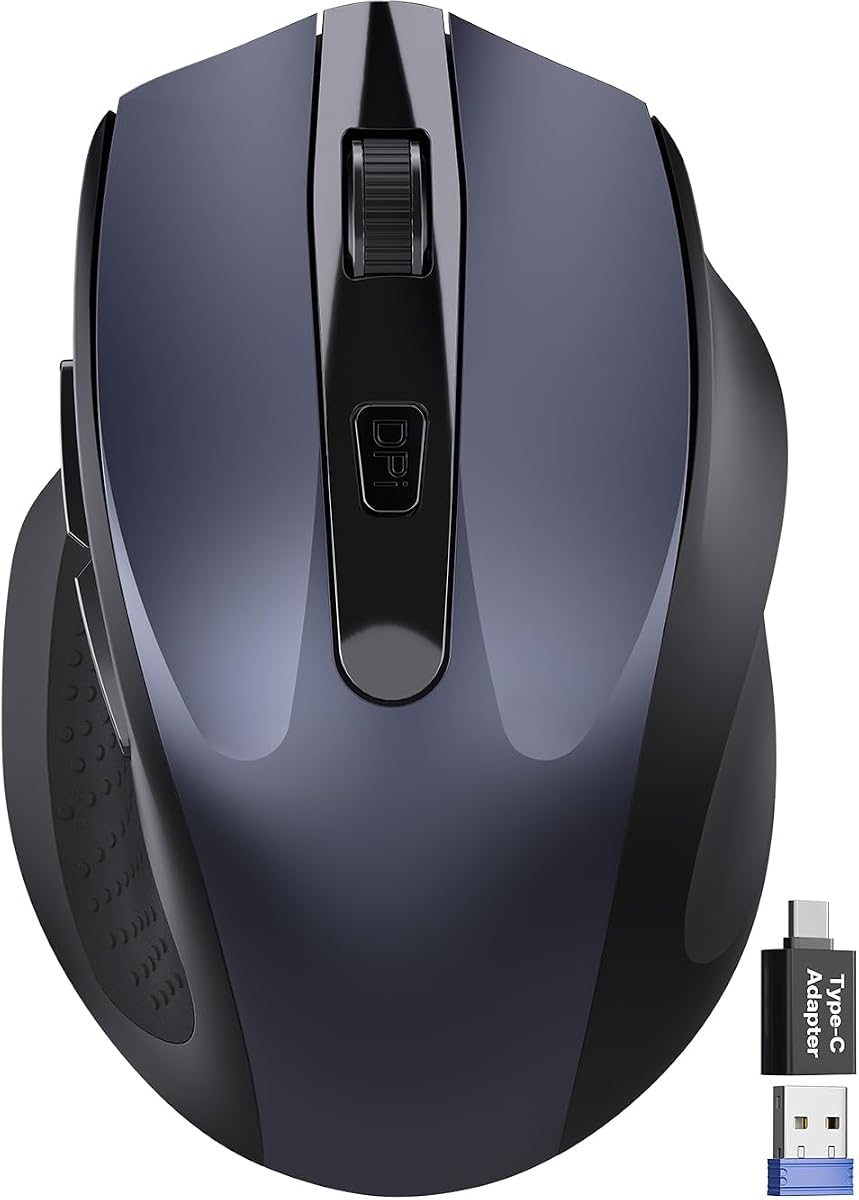
It uses a 2.4 GHz connection with a listed range of up to 33 feet. The package includes a USB-A nano receiver and a USB-C adapter, allowing it to work with modern iMac desktops through an appropriate port while retaining support for USB-A systems. The supplied compatibility list also includes Windows, Mac, Linux, ChromeOS, Android, and iOS, including OTG-capable phones.
Quiet clicks, a 3-level DPI selector, forward and back buttons, and a rubber scroll wheel make this more functional than a bare-bones travel mouse. The asymmetrical right-hand design, however, makes it unsuitable for a left-handed user, and the required AA battery is not included. Smart sleep stages help conserve power, but this is still a disposable-battery design rather than a rechargeable one.
Choose this mouse when portability, surface flexibility, and the inclusion of navigation buttons matter most. It can track on wood, fabric, paper, or leather according to the supplied information, reducing the need to carry a dedicated pad. It is less ideal for large-hand users, left-handed use, or buyers who want a fully rechargeable setup with no battery purchasing.
Despite its small body, the mouse includes forward and back buttons, adjustable DPI, and quiet clicks. These additions make it more useful for document navigation and web browsing than many extremely compact alternatives.
The optical tracking is described as functioning on wood, fabric, paper, and leather. That flexibility is valuable in cafes, shared workspaces, and other locations where a conventional mouse pad may not be available.
We may earn a commission when you buy through this link, at no additional cost to you.
The Mini Bluetooth Mouse and Jiggler combines a compact rechargeable design with both Bluetooth and 2.4 GHz operation. Its 4.4 rating indicates generally positive feedback, and its compatibility claims cover Mac, iMac, MacBook, Windows, Linux, ChromeOS, Android, iPadOS, and other Bluetooth-enabled devices. This makes it one of the broader platform options in the guide.
We may earn a commission when you buy through this link, at no additional cost to you.
The dual-mode receiver includes 2.4 GHz USB-A and USB-C connections, while Bluetooth 5.2 and 3.0 are available for wireless pairing. The mouse has three DPI levels, a 500mAh rechargeable battery, and a claimed battery life of up to 500 hours after a full charge. It automatically enters sleep mode after eight minutes of inactivity and wakes with a click.
Its jiggler function is activated by holding the DPI button for roughly three to ten seconds, requiring no additional software. The very slim, portable shape and muted clicks are useful for travel, but the small dimensions may not suit long sessions or larger hands. Like any jiggler, it should be used only where automatic activity is consistent with the user's workflow and security requirements.
This is a good option for a compact Apple-centered setup that wants rechargeable power, modern receiver flexibility, and a jiggler in one device. It is less suitable for users seeking a substantial palm grip, tactile mechanical switches, or a simple mouse with no automated activity feature. For a small desk or frequently packed bag, though, the portability is a clear advantage.
The built-in battery removes disposable battery waste and supports a long stated operating window. Automatic sleep helps preserve charge when the mouse is not being used, while a simple click wakes it again.
Bluetooth and a dual-connector receiver allow the mouse to move between iMac desktops, MacBooks, iPads, and PC systems. Check the current operating-system and USB-port requirements before purchase, particularly if you plan to use a USB-C iMac.
We may earn a commission when you buy through this link, at no additional cost to you.
The right iMac mouse depends on your ports, hand size, workspace, and need for portability. Use the following factors to narrow the field before comparing the final features and ratings.
Start with the ports available on your iMac and the systems you expect to control. Native Bluetooth creates the cleanest wireless desk and is broadly useful for Mac, iPad, and compatible PC equipment. A 2.4 GHz nano receiver offers plug-and-play wireless operation but occupies a USB port, while a wired mouse provides a permanent physical connection without charging or pairing. Models with both USB-A and USB-C receivers offer more flexibility across different generations of equipment.
Choose native Bluetooth when portability and a minimal desk are priorities. Choose 2.4 GHz when you want simple wireless control and do not mind keeping the receiver plugged in. Choose wired when reliability and zero charging are more important than a completely cable-free layout.
USB-C is common on current iMac desktops, but some accessories and older setups still use USB-A. A mouse with a native USB-C connection removes the need for an adapter. A dual-ended wired mouse can support both formats directly, while a wireless set with a dual-head receiver can provide USB-A and USB-C options for the same 2.4 GHz connection. Confirm which connector is attached and whether the included adapter is a simple adapter or changes the connection method.
For a single modern iMac, native USB-C is usually the cleanest choice. For mixed equipment or shared workstations, dual USB-A and USB-C support is the safer, more convenient option.
Mouse comfort is closely connected to hand size and preferred grip. Compact models may suit small-to-medium hands and travel but can provide less palm support over long sessions. Full-size designs generally cradle the hand more generously, while asymmetrical shapes are often shaped for right-hand use and may not suit left-handed users. An ambidextrous body is safer when a mouse will be shared.
If possible, compare the dimensions with a mouse you already like. Choose a small or compact model for portability and tight desks, a fuller shape for extended daily use, and an ambidextrous or clearly handed design based on how you naturally hold a pointer.
Quiet or silent buttons can improve concentration and reduce disruption in shared rooms. The relevant measurements in this guide range from 90 percent to 96 percent noise reduction. These claims relate to the buttons, and some products explicitly exclude the scroll wheel from the reduction. Actual perceived sound also depends on the desk surface, click force, room acoustics, and the user's technique.
Choose a quiet model for offices, libraries, homes with shared rooms, and late-night work. Do not assume every part of the mouse is silent; the scroll wheel and broad-surface contact may still produce audible sound.
DPI controls cursor sensitivity, meaning how far the pointer travels for a given physical movement. A fixed 1200 DPI setting is sufficient for many office tasks, while selectable levels offer more flexibility across large displays, detailed editing, and general browsing. Optical sensors are common and support smooth everyday movement. Some listings also describe their products as laser optical, but the practical priority remains stable tracking and a sensitivity range that suits your screen size.
Pick a fixed-sensor mouse for simplicity, but consider adjustable DPI if you work across multiple displays or need both precision and rapid cursor travel. Test the mouse on your actual desk surface whenever possible.
A three-button layout with a scroll wheel is the baseline for productive desktop use. Additional forward and back buttons can speed up browser and document navigation, while a full horizontal scroll plane can help with wide content. Programmable buttons and multi-device shortcut controls may be useful for advanced workflows, but they also add complexity and are not necessary for every user.
Keep the layout simple for shared workstations and general productivity. Add navigation buttons if you browse and review documents frequently. Consider horizontal scrolling or programmable controls only when they solve a specific task in your daily routine.
Rechargeable mice use a built-in battery and commonly charge through USB-C, reducing the need to carry or replace disposable cells. AA-powered designs can be extremely convenient because batteries are widely available, and some models claim a year of battery life under typical conditions. Automatic sleep is valuable in both categories because it reduces consumption when a mouse is idle.
Choose rechargeability for frequent travel and a predictable charging routine. Choose replaceable batteries if you value minimal charging downtime and want to keep spare cells in a drawer. Check claimed battery durations against your own activity level, since heavy use, wireless connectivity, and sleep settings can change results.
A mouse jiggler simulates movement to reduce the chance that a computer will lock during a short absence. Some models activate this function by holding the DPI button, while others offer a dedicated jiggler mode. It can be useful in certain office, remote-work, and IT situations, but it is not automatically appropriate for every environment, and it may conflict with a workplace's security policies.
Treat the jiggler as a specialized convenience rather than a primary quality measure. Buy a mouse with one if you have a clear need and understand the local policy implications. For ordinary desktop work, connection reliability, comfort, and tracking should take priority.
For a wired mouse, identify whether the plug ends in USB-C or USB-A and connect it directly to the corresponding port on the iMac. For a Bluetooth model, switch the mouse on, open the appropriate Bluetooth settings on your Mac, choose the mouse from the available-device list, and complete the pairing process. A 2.4 GHz mouse usually works by inserting its nano receiver into a compatible USB port and pressing the mouse's connection button.
Allow the cursor to move naturally after connection, then adjust the pointer speed and acceleration in macOS if necessary. If the mouse includes a DPI button, cycle through the available levels and begin with a middle setting. Test forward and back buttons in the applications you use most, and use a mouse pad or another suitable surface if tracking feels inconsistent on a bare desk.
For rechargeable models, recharge with the supplied USB-C cable on a schedule that avoids important work sessions. For battery-powered models, keep a spare of the correct battery type available. Clean the underside occasionally so the optical sensor is not obstructed, remove dust from buttons and the scroll wheel, and avoid pulling the mouse across the cable when it is wired.
Yes, an iMac desktop supports standard Bluetooth mice as long as the device is compatible with macOS and the mouse uses a supported Bluetooth connection method. Pair the device through macOS Bluetooth settings and confirm that any required software or configuration is available for that model. A native Bluetooth mouse can also be useful with other compatible Apple devices.
The answer depends on the iMac model and generation. Newer iMac desktops predominantly use USB-C, while older models and some accessories may use USB-A. Check the physical ports on the back of your specific iMac or the technical specifications for its model before purchasing a mouse with a fixed connector.
A wired mouse offers a permanent connection, consistent input, and no charging or pairing routine. A wireless mouse provides a cleaner desk and more freedom of movement, although it requires batteries or charging and may use either Bluetooth or a USB receiver. The best choice depends on how stationary your desk setup is and whether you regularly move between computers.
Bluetooth connects directly with a compatible computer and generally does not require a receiver dongle, which makes it convenient for travel. A 2.4 GHz connection uses a small USB receiver and follows a conventional wireless mouse setup. Some multi-mode mice support both, allowing you to choose the method that best fits each device.
A middle sensitivity setting is a sensible starting point for most desktop use. Lower DPI can provide finer control during detailed work, while higher DPI reduces the physical movement required to cross a large display. The best setting depends on screen size, desk space, and personal preference, which is why adjustable DPI can be valuable.
A jiggler can prevent automatic locking during brief absences by generating simulated pointer movement, but it is not suitable for every situation. Security policies may prohibit unattended activity, and applications can still observe other signs of inactivity. Use the feature only when your workflow and organization permit it, and lock the computer when a stronger security posture is required.
Smaller mice are often more portable and may fit comfortably in small-to-medium hands, but they can offer less palm support during extended sessions. A larger or fuller design may feel better for long workdays, while a compact model is easier to store and carry. Hand size, grip style, and available desk space are more useful criteria than size alone.
No. Quiet mice reduce mechanical click noise, but the scroll wheel, button contact, and movement across a surface can still be audible. Reduction claims also vary by model, and some apply only to the main buttons. A fabric desk mat may change the sound, so realistic expectations are important when choosing a mouse for a shared environment.
The Macally Dual Connector Mouse is the strongest all-around recommendation because it combines a 4.6 rating, broad USB-C and USB-A support, and a familiar three-button design without wireless management. The Logitech M185 stands out for uncomplicated wireless value, while the Microsoft ARC Mouse leads the premium group with its ultra-thin body, native Bluetooth, and horizontal scroll plane.
Prioritize the factors that affect daily comfort and reliability: check the available iMac ports, compare mouse size with your hand, decide whether native Bluetooth or a receiver suits your setup, and select noise and DPI features according to your workspace. Compact travel users may prefer a rechargeable multi-mode model, while stationary desks often benefit from a simple wired mouse with a fixed, reliable connection.
Before purchasing, verify the current product listing, connector type, operating-system support, dimensions, and included accessories. Customer ratings and technical descriptions provide useful guidance, but checking the current details helps ensure that the selected mouse matches your particular iMac generation and daily workflow.