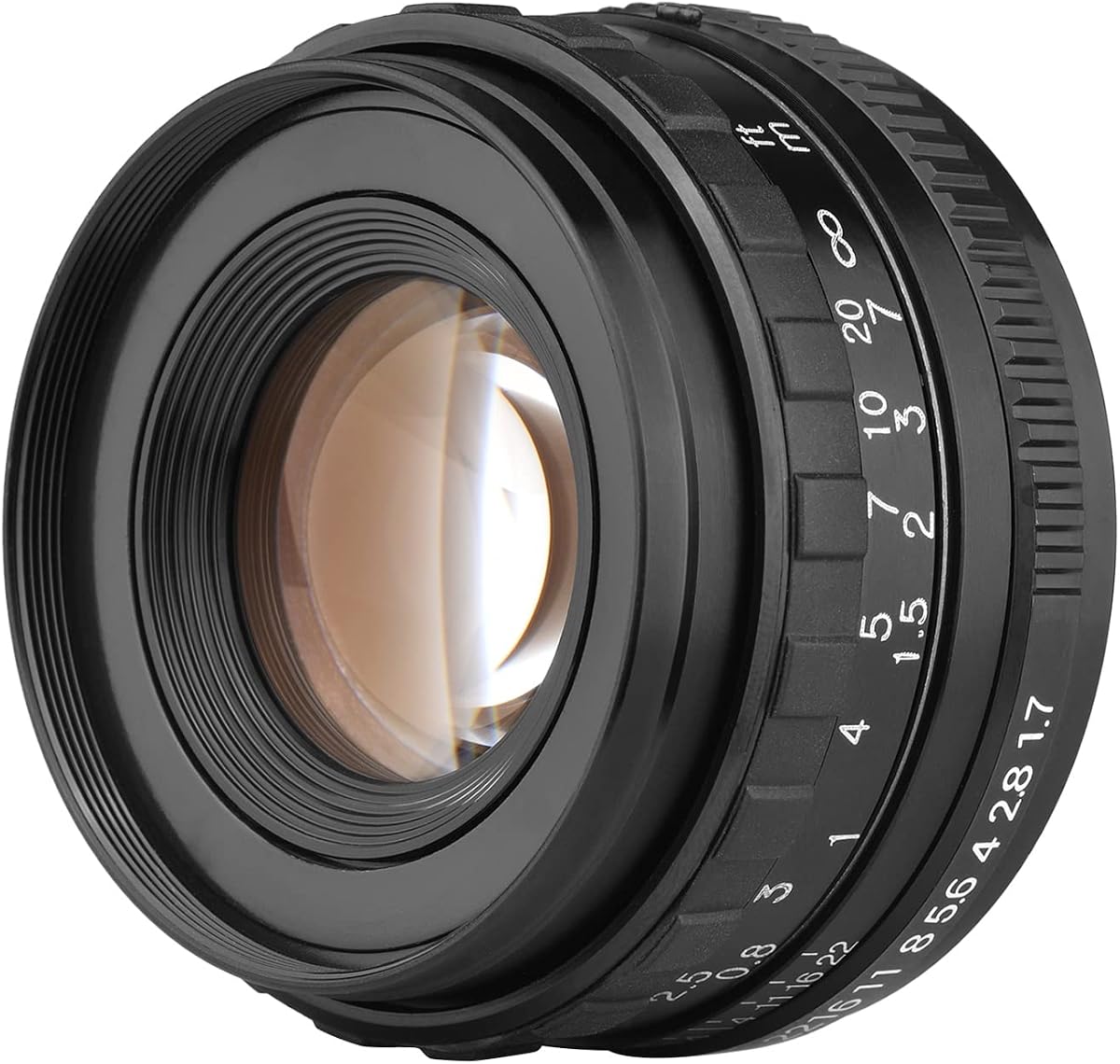
Andoer 50mm F1.7
5.0Editor score
50mm full-frame prime lens
Bright F1.7 manual aperture
Manual focus design
Best K Mount Lenses for Pentax Camera compares ten options for APS-C and full-frame bodies, covering prime lenses, zooms, telephoto glass, and accessories.
A K mount lens can transform the way a Pentax camera is used, but the strongest choice depends on focal length, aperture, autofocus, and intended subject. Pentax bodies have long offered distinctive manual-focus primes, highly regarded standard zooms, and compact travel-friendly glass for both APS-C and full-frame cameras.
This guide compares ten K mount lenses and one related protection accessory using the supplied specifications, customer ratings, mount information, and stated features. It covers manual-focus primes, general-purpose zooms, telephoto lenses, weather-resistant optics, and options intended for Pentax K-series bodies without making unsupported claims about individual image quality.
Each review shows what a product is best suited for, where its strengths stand out, and which compromises deserve attention. The first three recommendations receive the top-pick labels, while the remaining entries provide useful alternatives. Product availability and prices change, so confirm the current listing and compatibility before purchasing.
5.0Editor score

4.6Editor score

4.5Editor score
The comparison below places the ten selections by focal length, maximum aperture, focusing system, compatibility, and practical role. It also includes one K-mount protection accessory because it can be useful alongside a Pentax lens, while making clear that this final item is not an optical lens.


The Andoer 50mm F1.7 is a manual-focus prime built around the Pentax K bayonet, with the supplied listing identifying compatibility with the Pentax K1 and K-1 Mark II full-frame cameras. Its 50mm focal length gives it a familiar natural-angle perspective, while the large F1.7 aperture makes it appealing for portraits, low-light work, and backgrounds with pronounced blur. It carries a 5.0 customer rating, the highest displayed score among the selections with available ratings.
We may earn a commission when you buy through this link, at no additional cost to you.
The central attraction is the combination of focal length and aperture. A 50mm lens is often more versatile for everyday photography than an ultra-wide prime, while F1.7 provides a comparatively bright opening for the Pentax K mount. Because this is a manual-focus model, the user can work directly with the focus ring and may appreciate the deliberate, hands-on process of setting focus and composing. The supplied product information does not list autofocus or electronic aperture features.
There are important trade-offs. Manual focusing takes more time than using a DA-series autofocus lens, especially for fast-moving subjects or when working in poor light. Buyers should also verify all camera-specific functions, including automatic aperture behavior, with the exact body they own. The product is a third-party lens rather than a Pentax-designed model, and the listing does not provide detailed information about weather sealing, coatings, or included filters.
This is a compelling recommendation for photographers who want a bright full-frame prime for a Pentax K1 or K-1 Mark II and prefer manual operation. It is less suitable for action, children, wildlife, or anyone who wants immediate autofocus. Subject to normal compatibility checks, it is the strongest budget-oriented choice in this list because it combines a recognizable focal length, a bright maximum aperture, and a perfect displayed customer rating.
The 50mm focal length works naturally for portraits, street scenes, events, and everyday visual storytelling. Its F1.7 maximum aperture is particularly useful when the goal is to isolate a subject or photograph without available light.
The supplied description specifically identifies the Pentax K1 and K-1 Mark II as compatible full-frame bodies. Buyers using another camera should confirm the mount and operational behavior before ordering.
We may earn a commission when you buy through this link, at no additional cost to you.
The Pentax SMC PENTAL-Da 35mmF2.4AL is a compact standard zoom positioned as a first lens for Pentax K-series cameras. It has a 4.6 customer rating, a 45mm total length, and a listed weight of approximately 124 grams. Its supplied Amazon title describes a 35mm lens with a 53.5mm focal length, while the product details also refer to a 35mm-format standard-lens role, so buyers should examine the exact field of view on their chosen body.
We may earn a commission when you buy through this link, at no additional cost to you.
The lens is designed for broad everyday use, including snapshots, landscapes, portraits, and general travel. Pentax lists an F2.4 maximum aperture, hybrid aspherical elements for aberration correction, and a Super Protect coating designed to resist dust, water drops, grease, and other substances. It also benefits from the shake-reduction system built into compatible Pentax K-series camera bodies, allowing the body-mounted stabilization to work with the lens.
Its main limitation is the relatively moderate F2.4 maximum aperture compared with the bright F1.7 primes in this guide. That can matter in dim indoor scenes, although the stated aperture still supports faster shutter speeds than a kit zoom with a narrower opening. The minimum focusing distance is listed at 0.3 meters, with a maximum magnification of 0.17x, which is useful for close subjects but not positioned as a dedicated macro lens.
This is an excellent choice for a photographer building a simple Pentax system around one everyday lens. Autofocus, body-based stabilization, compact construction, and broad subject suitability make it more immediately practical than the manual-focus alternatives. It is the Editor's Choice because it balances convenience, portability, optical features, and strong customer feedback without attempting to specialize in only one type of photography.
The standard focal length and F2.4 aperture are intended to cover portraits, landscapes, snapshots, and travel without demanding a major focal-length change. That makes it a practical first lens for many Pentax photographers.
At approximately 124 grams and 45 millimeters long, the lens is designed for easy carrying. A small everyday lens is particularly convenient when minimizing the amount of equipment carried during trips or long photo walks.
We may earn a commission when you buy through this link, at no additional cost to you.
The Tamron AF 70-300mm f/4-5.6 Di LD Macro, identified as Model A17P, is a telephoto zoom made for Pentax digital SLR cameras. Its supplied rating is 4.1, and the defining specifications are the 70-300mm focal range, a variable maximum aperture from F4 to F5.6, and a minimum focusing distance as short as 37.4 inches.
We may earn a commission when you buy through this link, at no additional cost to you.
A 70-300mm zoom is a specialist tool rather than an everyday lens. It gives photographers access to distant subjects without changing lenses, which is useful for wildlife, outdoor events, distant architecture, compressed-looking landscapes, and detail work. The short stated minimum focus distance adds flexibility at the long end, while the model's Macro designation suggests an interest in subjects at relatively close range.
The variable F4-5.6 maximum aperture is the principal compromise. Compared with the F1.7 and F2 lenses in the guide, it demands more light or slower shutter speeds in dim conditions. It is also bulkier and less convenient for ordinary street or family photography than a standard zoom or compact prime. Only the focal range, minimum focus distance, Pentax DSLR compatibility, and model designation are confirmed in the supplied data.
The Tamron is a good match for a Pentax owner who specifically needs reach and is comfortable working with a modest maximum aperture. It is less compelling as the only lens in a kit, but it can complement a standard prime by covering distant subjects. Confirm the exact body compatibility and current physical condition before making the purchase.
The 70-300mm range is suited to subjects that appear small from a normal shooting position. It can reduce the need to move closer, particularly in wildlife, outdoor sports, and distant architectural work.
The listed F4-5.6 maximum aperture changes across the zoom range. Photographers should consider that limitation carefully when planning low-light shots or consistently fast shutter speeds.
We may earn a commission when you buy through this link, at no additional cost to you.
The Pentax SMC 50mm F1.7 is a renewed manual-focus prime listed for Pentax K-mount SLR and DSLR cameras. It combines the enduring 50mm focal length with a large F1.7 maximum aperture. Its displayed rating is 3.0, the lowest numerical score among the rated products here, which should be considered alongside the benefits of buying a renewed manual-focus lens.
We may earn a commission when you buy through this link, at no additional cost to you.
The focal length is easy to understand: it provides a conventional perspective suitable for portraits, street photography, travel, and everyday documentary work. F1.7 gives the lens a bright maximum aperture and the potential for shallow-looking depth of field when the subject and background allow it. The manual focusing design favors photographers who are comfortable making precise adjustments directly on the lens.
Renewed status is the central caution. The product information does not describe the lens's mechanical or optical condition in detail, so a buyer may accept more uncertainty than with a new lens. The 3.0 customer rating also suggests that experiences with this particular listing have been mixed. Check the return terms, inspect the lens upon arrival, and verify that its aperture, focus, and mount operate as expected.
This lens makes most sense for someone attracted to a classic Pentax manual-focus prime and comfortable accepting renewed-product risk. It may also appeal as a character-oriented option rather than a modern autofocus workhorse. The bright aperture and familiar focal length are appealing, but the condition and customer feedback should outweigh those benefits if dependable daily operation is the primary concern.
The 50mm focal length offers a balanced field of view that can move naturally between environmental scenes and portraits. It is also easier to frame than an extreme specialty prime.
A renewed lens may provide useful value, but condition can vary. Review the listing photographs and guarantee, inspect the product promptly, and test aperture operation and focus accuracy.
We may earn a commission when you buy through this link, at no additional cost to you.
The Sigma 28-80mm F3.5-5.6 Aspherical Macro HF is a zoom lens whose listing identifies compatibility with Pentax-AF cameras. The 28-80mm range is unusually versatile for a period-style standard zoom, spanning wide-angle views through a short telephoto perspective. The product data does not state a current numerical customer rating, and the mount designation is not explicitly given as Pentax K.
We may earn a commission when you buy through this link, at no additional cost to you.
At its basic level, the focal range allows a photographer to move from environmental compositions to portraits or details without changing lenses. An F3.5-5.6 maximum aperture is moderate rather than bright, but it offers a practical balance for general-purpose use. The aspherical and macro features in the model name indicate that close-focusing capability and optical correction were part of the design.
Compatibility is the decisive issue. The product title says Pentax-AF, while the requested category concerns K-mount lenses for Pentax cameras. A Pentax-AF designation may imply an older or different mount, and it should not be treated as proof of direct K-mount compatibility. The supplied description is also minimal, mentioning only the lens condition, so it does not clarify focus system, included accessories, or aperture mechanics.
This Sigma is worth considering only after confirming the actual bayonet and electronic functions with the seller or manufacturer. Its broad 28-80mm range and close-focusing concept make it potentially useful, but the missing K-mount confirmation prevents it from competing confidently with the clearly identified Pentax K options. Check compatibility before ordering, and do not assume a Pentax-AF lens will work on a digital K-series body.
The 28-80mm interval can handle wide scenes, everyday views, portraits, and tighter details. It is a flexible concept for photographers who want to travel with less equipment.
Because the supplied title identifies Pentax-AF rather than explicitly naming a K mount, compatibility must be verified. Mount, aperture control, and autofocus operation should all be checked before use.
We may earn a commission when you buy through this link, at no additional cost to you.
The Pentax Asahi SMC M 1:2 2 50mm is a classic manual-focus 50mm F2 prime in the PK bayonet format. It has a 5.0 customer rating, matching the highest displayed score in the group, and it is described as functional and in good condition with light signs of use. That combination of established design, bright aperture, and strong customer feedback gives it particular appeal to manual-focus photographers.
We may earn a commission when you buy through this link, at no additional cost to you.
The 50mm focal length is broad enough for portraits, street photography, events, and everyday shooting. At F2, it is one step less bright than the F1.7 primes in this list, but it still provides a useful maximum aperture for low-light work and background separation. Its manual focus operation also gives the photographer a more hands-on relationship with focus, aperture, and depth of field.
The description's mention of light use marks is honest and appropriate to consider. Used mechanical lenses can develop aperture inconsistencies, stiffness, haze, scratches, or focus problems, although the supplied data does not claim that this example has those issues. Because the rating is strong but condition information is limited, the return policy and careful inspection remain important. The PK bayonet should fit the intended K-mount body, but automatic functions should be verified.
This is the top pick for photographers who value a classic Pentax manual-focus prime over autofocus convenience. It combines a 5.0 rating with a versatile focal length and bright aperture. For dedicated portraitists, documentary photographers, and anyone who enjoys working manually, the Pentax Asahi SMC M 50mm F2 is a particularly coherent choice.
The F2 maximum aperture supports a classic prime-lens workflow centered on portraits, low light, and controlled depth of field. It remains a step brighter than many standard zoom lenses.
Manual focusing requires more deliberate operation, but it can be rewarding for photographers who prefer direct control. The lens is especially relevant to those who enjoy classic Pentax K-mount photography.
We may earn a commission when you buy through this link, at no additional cost to you.
The Pentax SMC 50mm F2.0 is a renewed manual-focus prime explicitly listed for Pentax K-mount SLR and DSLR cameras. It is presented as a portrait-oriented 50mm lens with a bright F2 aperture, natural perspective, metal mount, and manual focus ring. No numerical customer rating is provided for the listing, so the features and stated design are more useful as a basis for comparison than its review history.
We may earn a commission when you buy through this link, at no additional cost to you.
The supplied bullet points emphasize optical clarity, detail, and vibrant color, while the 50mm focal length supports portraits, street photography, and everyday use. F2 is bright enough to support low-light shooting and shallow depth of field, and the smooth manual focus ring allows deliberate adjustment. The metal mount and durable-construction claim make the lens appealing to photographers who value a traditional, robust mechanical design.
Renewed status is the primary uncertainty. The data does not specify how the lens was inspected, whether its optics are free from haze, or how its aperture blades and focus ring currently perform. A renewed product can still be highly usable, but the buyer is accepting more variability than with a new listing. The 50mm F2 design also overlaps heavily with the Pentax Asahi SMC M option, making condition, included accessories, and seller support important distinctions.
This lens is a reasonable choice for a photographer who wants a classic K-mount 50mm portrait prime and is comfortable assessing renewed equipment. It may be particularly useful if the listing includes clear photographs and a dependable return policy. For a no-hassle first purchase, a new standard lens may be more straightforward; for a distinctive manual prime, this renewed Pentax SMC offers the intended focal length and aperture.
A 50mm focal length produces a natural-looking perspective suited to environmental portraits, people photography, and candid street work. It is versatile without being excessively wide.
The smooth manual focus ring lets the photographer make careful, deliberate adjustments. This can be useful for static portraits and scenes where a predictable focus workflow is preferred.
We may earn a commission when you buy through this link, at no additional cost to you.
The SMC Pentax-M 50mm F1.7 is a compact manual-focus prime with a 4.2 customer rating. Its defining features are straightforward: a 50mm focal length and a bright F1.7 maximum aperture. Those characteristics make it relevant to Pentax photographers who want a small, bright standard lens for portraits, travel, street work, and available-light situations.
We may earn a commission when you buy through this link, at no additional cost to you.
The F1.7 aperture makes this one of the brightest options in the guide. It allows a comparatively open viewfinder image and more flexibility with shutter speed than a typical standard zoom. A 50mm focal length also avoids the distortion associated with very wide primes while remaining more intimate than a typical telephoto lens. The trade-off is manual focus, which rewards a slower, deliberate shooting style.
The supplied information is limited to the model and basic optical specifications, so details such as minimum focus distance, filter size, included caps, or weather resistance should be checked on the current listing. A manual-focus lens may also interact differently with different Pentax bodies, particularly regarding automatic aperture behavior. The 4.2 rating is positive but lower than the top manual-focus prime in this group.
This is a compelling pick when portability, a bright aperture, and a traditional focal length are the priorities. It suits photographers who understand the benefits and effort of manual focusing and want a straightforward 50mm lens for a Pentax system. It is less suited to quick action or users who depend on autofocus, but it remains an efficient choice for deliberate everyday photography.
F1.7 provides a bright maximum opening and can help when available light is limited. It also gives photographers greater control over background blur when working at suitable distances.
A compact manual prime can be an appealing travel companion, but users should be comfortable focusing by hand. The slower process becomes part of the creative rhythm rather than a barrier.
We may earn a commission when you buy through this link, at no additional cost to you.
The Pentax DA 18-135mm F3.5-5.6 ED AL (IF) DC WR is a weather-resistant zoom for Pentax digital SLR cameras. Its broad 18-135mm range, 4.5 customer rating, and 75-times stated zoom factor make it one of the most adaptable selections here. It is designed for photographers who want to cover landscapes, travel, family events, portraits, and distant subjects with one lens.
We may earn a commission when you buy through this link, at no additional cost to you.
The focal range is the headline feature. Beginning at 18mm provides a wide perspective, while reaching 135mm adds useful telephoto framing for events, details, and distant subjects. The DC motor supports quick, quiet autofocus, which is important for a general-purpose zoom used in changing conditions. Seven rounded diaphragm blades and Super Protect coating are also listed, while the ED AL designation points to extra-low-dispersion and aspherical optical features.
The F3.5-5.6 maximum aperture is moderate, so the lens is not optimized for the brightest possible low-light operation or extremely shallow depth of field. Its broad zoom range also makes it larger than a dedicated prime. Weather-resistant construction is beneficial in damp conditions, but it should not be assumed to make the lens waterproof. Buyers should still protect the front element and dry the equipment when needed.
This is the best premium all-round option for a Pentax photographer who wants one zoom to cover many assignments. Its autofocus, broad range, and weather resistance make it particularly practical for travel and family documentation. The 4.5 rating and comprehensive feature set support that recommendation, while photographers who prioritize low-light performance may prefer a bright prime.
The 18-135mm range moves from wide-angle scenes to moderately tight framing. It reduces the need to carry multiple focal lengths during travel, events, and family photography.
The WR designation indicates a weather-resistant design intended to handle damp or inclement conditions. It is a useful feature for outdoor shooting, although proper care remains essential.
We may earn a commission when you buy through this link, at no additional cost to you.
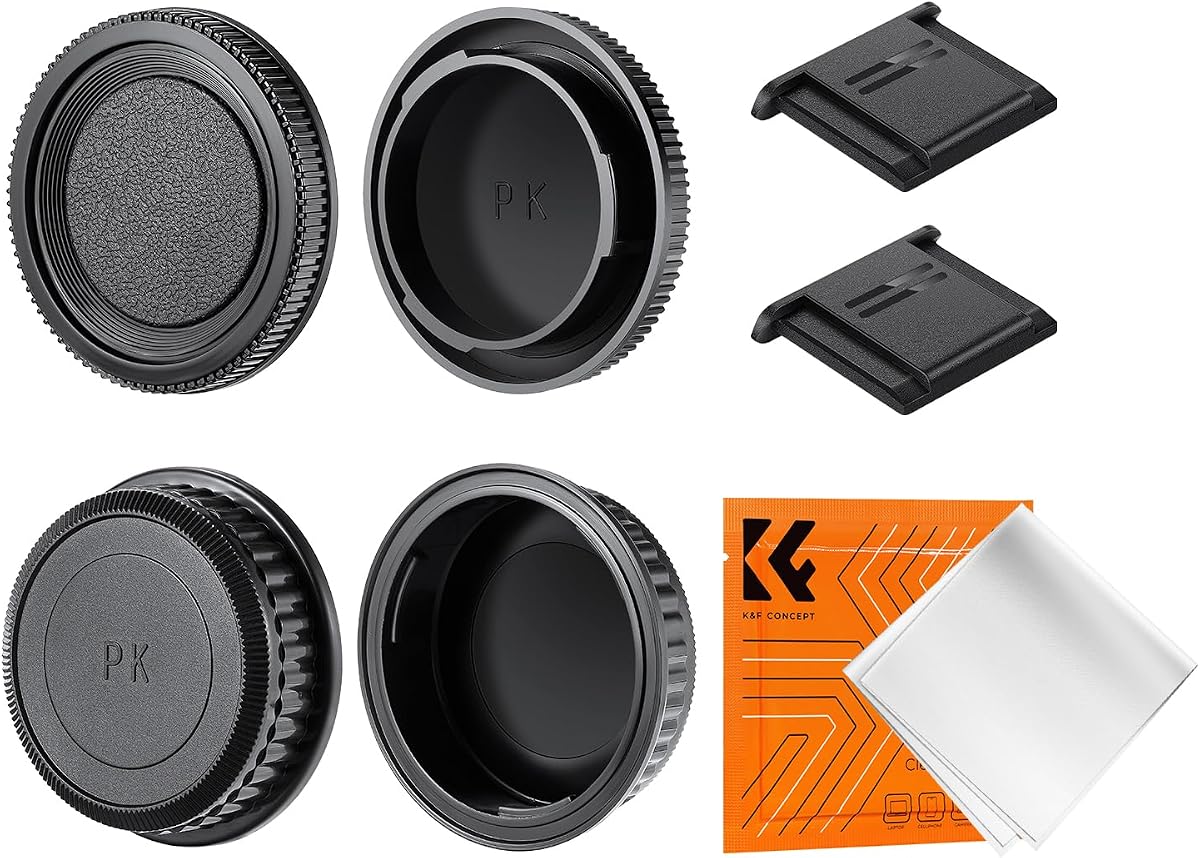
The K&F CONCEPT Rear Lens Cap and Body Cap Cover with Hot Shoe Cover Kit is an accessory rather than a lens. It includes two camera body covers, two rear lens caps, two hot shoe covers, and a microfiber cleaning cloth. The stated compatibility includes Pentax K-mount cameras and lenses such as the K3, K3 II, K70, KS1, KS2, K500, and K50.
We may earn a commission when you buy through this link, at no additional cost to you.
Its purpose is straightforward: covering a camera body's exposed mount, a lens's rear element, and the camera's hot shoe can reduce the chance of dust, moisture, fingerprints, and physical damage while equipment is stored or carried. The bayonet-style caps are described as quick to install and remove, and the high-impact plastic construction is intended to be lightweight yet resistant to drops.
This is not a substitute for a lens, and buyers should understand that distinction before considering the product. It also cannot protect a front lens element because the kit contains rear lens caps rather than front caps. A separate front cap and proper lens storage remain important. Exact fit should be confirmed because a generic body cap can appear similar without matching every camera's dimensions and locking behavior precisely.
The kit is a worthwhile companion for Pentax owners who already own suitable lenses and want inexpensive physical protection for vulnerable openings. Its 4.7 customer rating and useful multi-piece format make it a strong accessory selection. For the core category, however, prioritize a verified K-mount lens and use this kit as a secondary addition rather than a substitute.
Body caps, rear lens caps, and hot shoe covers help shield areas that can collect dust or suffer accidental contact. They are especially useful during storage and transport.
The kit includes duplicate caps, which makes it convenient for users who operate more than one body or keep a camera and lens stored separately. The cleaning cloth adds a basic maintenance tool.
We may earn a commission when you buy through this link, at no additional cost to you.
The right K-mount lens depends on camera format, preferred subjects, focusing habits, and the role the lens will play in your kit. Use the following factors to narrow the field before comparing the final specifications.
Begin by identifying the exact Pentax camera model and its mount. Most modern Pentax DSLR and mirrorless cameras use the K mount, but some older lenses described as Pentax-AF use a different bayonet and may require adaptation. The Sigma 28-80mm in this guide illustrates why the wording of a listing matters: its supplied title names Pentax-AF rather than explicitly identifying a K mount. A lens can look similar while failing to attach, communicate electronically with the body, or control the aperture automatically.
For a digital K-series body, favor listings that explicitly state Pentax K-mount compatibility. Verify that the lens has the correct bayonet and determine whether autofocus, automatic aperture, in-body stabilization, and electronic contacts are expected to work. On manual-focus vintage glass, a simple physical fit does not guarantee every automatic function. Always check the current product description, manufacturer information, and the compatibility notes for the specific body before ordering.
A 50mm prime is a flexible standard perspective for portraits, street scenes, travel, and everyday photography. A 35mm-class standard lens offers a somewhat wider field of view, while the 18-135mm zoom can move from wide-angle scenes to moderate telephoto framing without changing lenses. The 70-300mm Tamron is much more specialized, making it relevant to distant subjects, outdoor events, wildlife, and compressed-looking details.
Choose a focal length based on where the subject usually appears rather than on maximum zoom alone. A single prime can be ideal when visual consistency matters, while a broad zoom is useful when priorities change quickly. Consider the body format too, because APS-C and full-frame cameras provide different field-of-view coverage with the same lens. The most useful lens is one whose range fits the subjects you actually photograph.
Maximum aperture affects low-light visibility, shutter speed, depth of field, and the amount of light reaching the sensor. The Andoer 50mm F1.7 and SMC Pentax-M 50mm F1.7 provide the brightest openings in this group. The Pentax Asahi SMC M and renewed Pentax SMC options reach F2, the compact Pentax DA standard zoom opens to F2.4, and the zooms reach F3.5 or F4 at their widest settings.
A brighter lens generally makes low-light and shallow-depth-of-field photography easier, but it is not automatically the better purchase. A smaller aperture can support sharper results when the camera is stable, while a larger lens usually costs more and adds bulk. If fast shutter speeds, indoor events, or strong background separation are central to your work, favor a wider maximum aperture. For general travel and daylight use, aperture trade-offs may be less important than size, price, and focal range.
Autofocus is the more convenient choice for family events, moving subjects, travel, and fast-changing scenes. The Pentax SMC PENTAL-Da 35mmF2.4AL includes Pentax's in-body shake reduction and is positioned as an easy first lens, while the Tamron 70-300mm and Pentax DA 18-135mm provide motorized autofocus. Manual-focus primes offer a different experience: more deliberate framing, direct control of focus, and the appeal of classic Pentax K-mount operation.
Think about how often you will change subjects and how much attention you want to devote to focus. Manual focusing can become a satisfying part of the photographic process, but it takes more time and is less forgiving in dim conditions. If convenience, consistent acquisition, and rapid subject transitions are priorities, select a lens with confirmed autofocus. If the manual process is part of why you enjoy photography, a classic 50mm prime may be more satisfying.
The Pentax SMC PENTAL-Da 35mmF2.4AL is explicitly described as compact and lightweight, measuring 45 millimeters long and weighing approximately 124 grams. That makes it a natural candidate for a travel kit or everyday carry. Manual 50mm primes are also generally simple tools, but the supplied data does not provide their dimensions or weights, so those specifications should be checked. A broad zoom such as the 18-135mm generally trades greater size and weight for focal flexibility.
Portability should be evaluated together with handling. A lens that is convenient to carry can encourage more frequent shooting, while a larger zoom may be worthwhile if it prevents the need to carry several primes. If the lens will remain at home for specialized work, size matters less. If it accompanies every outing, compact dimensions, a manageable weight, and secure storage can have a greater effect on the overall experience than small specification differences.
A prime concentrates its capabilities around one focal length, often with a simple manual design and a bright maximum aperture. A zoom provides greater framing flexibility, making it useful for trips, events, and uncertain shooting conditions. A telephoto zoom such as the 70-300mm reaches farther but is not a strong all-purpose choice. Macro capability may also matter, appearing in the naming of both the Sigma 28-80mm and the Tamron telephoto.
Build a kit around the way you photograph rather than around lens categories alone. A compact standard lens can cover many everyday needs, and a 50mm prime can be enough when the subject range is predictable. A broad 18-135mm zoom may be the most useful single lens for a traveler. Specialized glass is strongest when it fills a genuine gap, such as distant wildlife or close-up detail.
Condition matters especially for renewed or used manual-focus lenses. The renewed Pentax SMC 50mm F1.7 and F2.0 options may provide useful characteristics, but buyers cannot assume identical cosmetic and mechanical standards. The Pentax Asahi listing notes light signs of use. Examine available photographs, ask about haze, fungus, scratches, aperture operation, focus smoothness, and included accessories, and review the return policy before buying.
A new lens generally offers more predictable condition and may come with clearer warranty or seller protections, while a renewed or used lens can suit a buyer who understands the tradeoff. Ratings are useful signals but should not replace inspection. A 5.0 customer score is encouraging, yet it does not guarantee the condition of an individual used lens. Conversely, a lower score may reflect a specific listing rather than the inherent design of the lens.
Coatings and optical design can affect how a lens handles flare, dirt, and contrast, while construction influences durability. The Pentax SMC PENTAL-Da 35mmF2.4AL includes Super Protect coating and hybrid aspherical elements. The Pentax DA 18-135mm combines ED AL optical features, Super Protect coating, weather-resistant construction, and rounded diaphragm blades. The renewed Pentax SMC F2.0 listing also states that it has a metal mount.
These features are most useful when they align with your shooting environment. A weather-resistant zoom is valuable for outdoor work in variable conditions, and a coated front surface can make maintenance easier. A metal mount does not guarantee better image quality, and advanced optical designations do not replace the need for suitable technique. Use them as evidence of design intent and care requirements, then prioritize fit, focal range, aperture, and focusing system.
Before mounting any lens, confirm that the camera is off, switch the body to the appropriate exposure mode, and check that the rear element and camera mount are clean. Remove the rear cap only when ready to attach the lens, align the mounting marks, rotate the bayonet until it locks, and confirm that the release is no longer exposed. For a manual-focus lens, test the aperture selector and focus ring before raising the camera to the eye.
Use the lens within the focusing and aperture practices appropriate to its design. A bright prime such as a 50mm F1.7 may benefit from stopping down for greater depth of field, while a standard zoom can be zoomed to place the subject properly. The 70-300mm telephoto is better suited to distant subjects and benefits from steady technique, while weather-resistant glass should still be protected during rain and damp conditions. On manual-focus models, verify whether the body controls aperture automatically and adjust expectations if electronic functions differ.
Clean glass only with an appropriate lens cloth and a safe cleaning method, avoiding pressure on the front element. Store each lens with its rear cap installed, and use a body cap when no lens is attached. Keep caps in a dedicated pocket so they are not lost during a shoot. For the K&F CONCEPT kit, rotate the body, rear lens cap, and hot shoe cover into place by their bayonet fittings, and use the included microfiber cloth for routine smudge removal. Check the current return policy and preserve all packaging and documentation when a lens is renewed.
A K mount lens uses the Pentax K bayonet and is designed for compatible Pentax cameras with that mount. The system includes modern DA-series autofocus lenses and older manual-focus primes and standards. Because older Pentax-AF lenses use a different mount, the exact designation on a listing should be checked before purchase.
Compatibility depends on the specific Pentax camera model and the lens's electrical and mechanical features. Physical bayonet compatibility does not automatically guarantee autofocus, aperture control, stabilization, or electronic communication. Review the camera maker's current compatibility guidance and the seller's specifications for the exact combination before ordering.
A 50mm prime is simpler and often offers a bright maximum aperture, making it appealing for portraits and available-light work. A standard zoom provides more framing flexibility and is often more convenient for travel or changing subjects. The best choice depends on whether consistency or versatility matters more to the way you photograph.
A wider maximum aperture generally makes low-light photography easier because more light reaches the sensor and faster shutter speeds become possible. The F1.7 primes in this guide are the brightest selections, while the standard and telephoto zooms have narrower openings. Stabilization, shutter speed, subject movement, and sensor performance also influence the final result.
A manual-focus K mount lens can physically fit many compatible Pentax bodies, but automatic functions may be limited depending on the lens and camera. Focus is operated by hand, and automatic aperture behavior may differ between models. Confirm those details for the exact lens-body pairing before purchasing.
Inspect the glass for haze, fungus, scratches, and separation, then test every aperture and focus through the range. Check that the mount is clean and undamaged, the focusing ring moves smoothly, and the aperture clicks or stops as expected. Review the return policy and report any problem promptly while keeping the product and packaging in good condition.
Weather-resistant construction is intended to handle damp or inclement conditions better than a lens without it, but it is not the same as being waterproof. Rain can still reach the front element, and moisture around the rear mount may be a concern. Use reasonable protection, dry the equipment afterward, and follow the manufacturer's care guidance.
Yes. A body cap protects the exposed camera mount, a rear lens cap protects the rear element, and a hot shoe cover helps shield another exposed opening. These inexpensive accessories are especially useful during storage and transport, although they do not replace a front lens cap, proper case, or careful handling.
The three leading choices serve different needs. The Andoer 50mm F1.7 stands out as the budget pick for full-frame K1 and K-1 Mark II users who want a bright manual-focus prime. The Pentax SMC PENTAL-Da 35mmF2.4AL earns the Editor's Choice for its compact, autofocus-oriented everyday design, body-based stabilization support, and 4.6 customer rating. The Pentax DA 18-135mm F3.5-5.6 ED AL is the premium all-round choice for travel, events, and broad subject coverage.
Prioritize compatibility, focal range, and focusing method before any other feature. A manual prime may offer a bright aperture and an engaging workflow, while an autofocus zoom provides convenience and versatility. A telephoto lens only makes sense when distance is a regular part of your photography, and a standard zoom remains one of the most practical starting points for many Pentax systems. Review the supplied specification, current listing, and body compatibility carefully before deciding.
Prices and availability can change, as can the condition and contents of renewed or used listings. Check the current product page for the newest information, review the return policy, and confirm that the lens supports the functions you need. For additional protection, the K&F CONCEPT cap kit is a useful companion, but it should complement a suitable lens rather than replace one.