
HP 14-inch Student Laptop
4.6Editor score
4GB DDR5 memory
628GB total storage
Windows 11 Pro
A laptop for nursing school must balance academic software, clinical reference tools, video lectures, note-taking, and long days between classes. The right model also needs to be portable enough for campus life, comfortable to use for lengthy assignments, and dependable when connectivity is inconsistent. Display quality, battery life, and everyday performance matter as much as raw processing power.
The products in this guide were compared using their stated processors, memory, storage, displays, operating systems, connectivity, portability, included software, and intended uses. The list covers Windows laptops, a ChromeOS alternative, compact models, larger workstation-style options, and premium configurations. It also considers practical factors such as keyboards, webcams, microphones, ports, and battery claims.
Each recommendation reveals what the model is best equipped to handle, from budget-friendly note-taking to heavier multitasking and multimedia work. Ratings reflect the supplied customer feedback, while specifications and feature descriptions come from the product information. Availability and pricing can change, so readers should verify the current listing and configuration before purchasing.
4.6Editor score

4.4Editor score

4.3Editor score
As an Amazon Associate we earn from qualifying purchases.
This side-by-side comparison highlights each laptop's processor, memory, storage, display, portability, and connectivity so nursing students can identify the configuration that best matches their coursework, software, and daily routine.

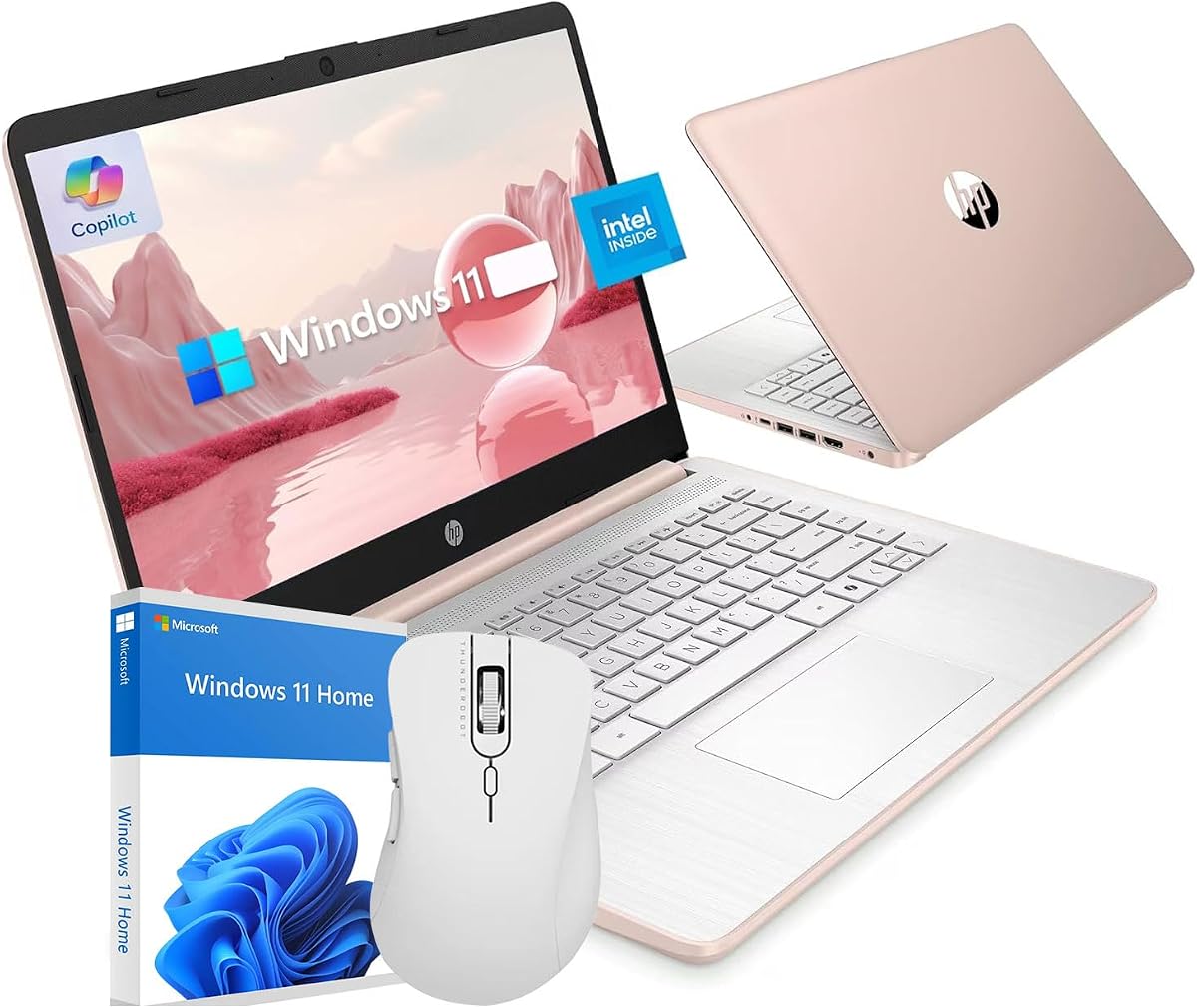

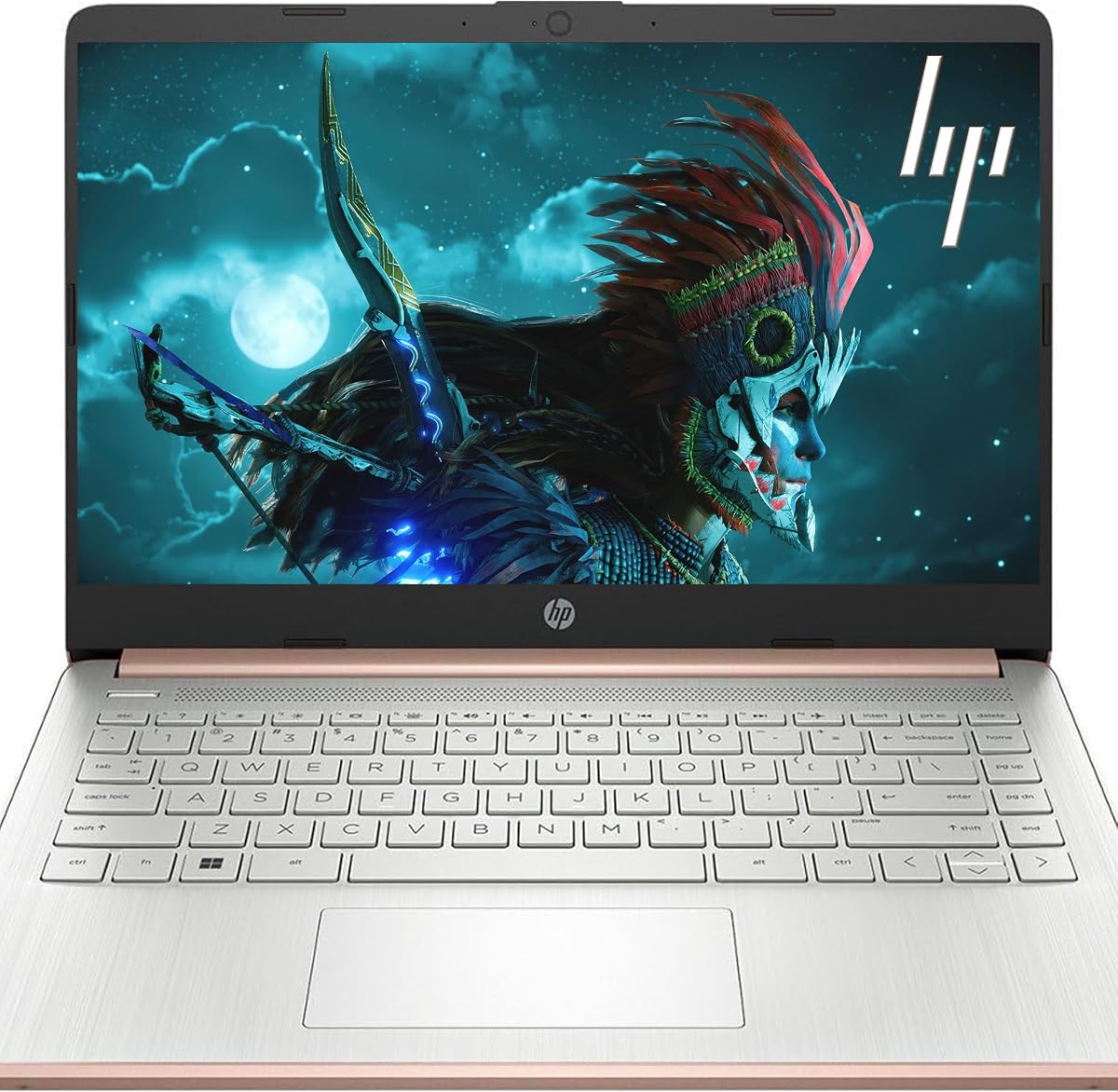


This HP 14-inch model combines an Intel N150 processor, 4GB of LPDDR5 memory, Windows 11 Pro, and 628GB of combined storage. Its supplied 4.6 rating is the highest among the rated products in this guide. It stands out as a value-focused campus laptop with enough storage flexibility for documents, lecture notes, and course materials.
We may earn a commission when you buy through this link, at no additional cost to you.
The 500GB portable external drive expands the built-in 128GB UFS storage, which gives students more room for large lecture files, e-books, and media without relying entirely on cloud storage. The accessory bundle also includes a wireless mouse, earbuds, an HDMI cable, a USB extension cord, and a mouse pad. Windows 11 Pro provides a familiar productivity environment, while the included Office suite supports document and spreadsheet work.
Its main limitation is 4GB of RAM. That is adequate for browsing, note-taking, Office applications, and video calls, but it leaves less headroom when many browser tabs, virtual meetings, and clinical applications are open simultaneously. The Intel N150 is also designed for efficient everyday work rather than demanding software, heavy video editing, or advanced data analysis. Buyers should also account for the external drive when packing for classes.
This is a strong choice for nursing students who want familiar Windows software, useful accessories, and generous file capacity at a restrained budget. It is particularly appealing for lectures, research, Microsoft Office assignments, and study groups. Students who routinely run demanding clinical applications or keep dozens of resources open may prefer a model with 8GB or 16GB of memory, but for ordinary nursing-school work this configuration is notably complete.
The included external drive is particularly helpful for students accumulating lecture recordings, research articles, and study documents. It also allows the internal UFS storage to remain relatively uncluttered while keeping course files accessible.
The anti-glare 14-inch display, 720p camera, and dual microphones support online classes and study sessions. Wi-Fi 6 and the included accessories create a practical setup for dorms and shared study spaces.
We may earn a commission when you buy through this link, at no additional cost to you.
This HP balances portability, memory, battery life, and software in a way that suits nursing school. It carries a 4.4 rating and combines the Intel N150 processor with 8GB of RAM, 128GB of UFS storage, Wi-Fi 6, and Windows 11. The result is a more comfortable everyday computer than many similarly compact alternatives.
We may earn a commission when you buy through this link, at no additional cost to you.
Eight gigabytes of memory gives the system more room to run a browser, an online textbook, a video call, and a note-taking application at the same time. The included one-year Microsoft 365 subscription provides access to Word, Excel, and PowerPoint. Its stated battery life of up to 11 hours, 3.24-pound weight, and 14-inch full HD display are especially useful for students moving between classes, laboratories, and clinical placements.
Storage is the clearest compromise. At 128GB, internal space is sufficient for an operating system, current coursework, and cloud-synced documents, but it may fill quickly with downloaded videos, high-resolution images, or multiple large software packages. The product information also positions the Intel N150 as an efficient processor for professional tasks and casual use rather than intensive computational work. Checking the school's software requirements before purchase remains important.
This laptop is an excellent all-around recommendation for a nursing student who values battery life and practical multitasking more than large internal storage. It should handle coursework, research, presentations, and communication well. Adding portable storage later would be straightforward if file capacity becomes an issue, while the included Office subscription and full set of connectivity options make the package immediately useful for academic life.
The lightweight chassis and stated 11-hour battery reduce dependence on campus outlets. A full-size keyboard and 14-inch full HD panel also make the laptop practical for extended typing and reading sessions.
Microsoft 365 covers the core Word, Excel, and PowerPoint applications commonly required for assignments. The USB-C and HDMI ports offer additional ways to connect study peripherals and external displays.
We may earn a commission when you buy through this link, at no additional cost to you.
The HP Essential is a compact Windows 11 laptop designed around clear specifications and practical connectivity. Its 4.4 rating reflects generally favorable customer feedback, while the Intel N150, 4GB LPDDR5 memory, and 128GB UFS storage position it as a straightforward device for browsing, streaming, editing, and daily assignments.
We may earn a commission when you buy through this link, at no additional cost to you.
Its strongest educational feature is the 720p HP True Vision camera with noise reduction and dual-array microphones. These components support online classes, tutoring sessions, and group meetings where clear communication matters. The anti-glare 14-inch panel, Wi-Fi 6, Bluetooth 5.4, and a dedicated Copilot key add convenience, while a one-year Microsoft 365 Personal subscription includes Word, Excel, PowerPoint, and cloud storage.
The port selection is unusually useful for a compact model. It includes USB-C with DisplayPort, two USB-A ports, HDMI, a headphone and microphone combination jack, and a multi-format SD card reader. Against those strengths are 4GB of RAM and a 1366-by-768 HD display. The resolution is fine for many documents and video calls, though a larger worksheet or side-by-side research may look more comfortable on a higher-resolution or larger screen.
This laptop suits nursing students who want a straightforward online-learning device with a portable footprint, modern wireless connectivity, and useful ports. It is a good choice for lectures, research, Microsoft Office work, and virtual meetings. Those expecting intensive clinical software, high-resolution media editing, or simultaneous heavy applications should look toward 8GB or 16GB of memory and a more powerful processor.
A 720p camera, noise reduction, and dual microphones create a useful setup for nursing lectures and peer study sessions. The system is also designed for easy access to Microsoft Copilot through its dedicated key.
USB-C DisplayPort output, HDMI, USB-A ports, and an SD reader cover many study accessories. Wi-Fi 6 and Bluetooth 5.4 simplify connections to campus networks, headphones, and other peripherals.
We may earn a commission when you buy through this link, at no additional cost to you.
This HP Ultrabook offers a compact Windows 11 Home configuration with a 14-inch display, Intel N150 processor, 4GB memory, and 128GB solid-state storage. Its 4.0 rating is the lowest confirmed score in the group, so buyers should read customer feedback carefully. The rose-gold design gives it a more personal appearance than a conventional business notebook.
We may earn a commission when you buy through this link, at no additional cost to you.
The processor provides four cores and four threads with turbo boost up to 3.6 GHz, which is appropriate for web-based research, document editing, communication, and routine academic work. A one-year Microsoft 365 Personal subscription is included, providing the main Office applications and Copilot access. Solid-state storage supports quick startup, while Wi-Fi 6 keeps the laptop ready for connected classes and study sessions.
The product information does not provide the same level of detail about battery life, camera quality, or port selection as several competing entries. With only 4GB of RAM, the laptop may feel constrained when handling a heavy browser workload, remote clinical software, and multimedia simultaneously. The 128GB drive also demands careful file management or reliance on cloud storage for larger resources.
This model is most appropriate for a nursing student who values a small, polished, Windows-based computer for lectures, notes, readings, and Office work. It is less compelling when comprehensive connectivity details, stronger multitasking memory, or extensive performance specifications are priorities. Prospective buyers should confirm the final port, battery, and display details on the retailer listing.
The compact 14-inch format is easy to carry between classes, while Windows 11 provides a familiar environment for research and coursework. The rose-gold finish also distinguishes it from more utilitarian campus laptops.
The N150 processor and 4GB of memory are best matched to standard applications rather than intensive workloads. Students with substantial software demands should investigate a higher-memory alternative.
We may earn a commission when you buy through this link, at no additional cost to you.
The Lenovo Chromebook is the clearest browser-centered alternative in this guide. It pairs a 14-inch full HD touchscreen with an eight-core MediaTek Kompanio 520 processor, 4GB of RAM, and 64GB of eMMC storage. Its 4.2 rating and Chrome OS design make it an interesting choice for students whose learning tools are primarily web based.
We may earn a commission when you buy through this link, at no additional cost to you.
The 1920-by-1080 IPS display offers more usable detail than the HD panels on several Windows alternatives, and the touch function supports finger navigation, handwritten notes, and interactive classroom tools. The integrated 720p camera has a physical privacy shutter, while dual microphones support online classes, Google Classroom, remote learning, and Zoom. Chrome OS provides built-in protection, cloud backup, and access to a broad collection of applications.
Its most important limitation is ecosystem fit. If a nursing program requires Windows-specific clinical software, specialist applications, or a particular device-management policy, a Chromebook may not satisfy those requirements. The 64GB storage and 4GB memory also leave limited room for locally installed software and offline media. Although the 2.86-pound weight and 0.73-inch thickness make it highly portable, that advantage matters most when coursework remains in a browser.
This Chromebook is a compelling selection for nursing students who use Google Workspace, web-based resources, cloud storage, and online collaboration tools. Its full HD touchscreen is especially useful for reviewing charts and participating in interactive lessons. Before buying, students should confirm that every required application, simulation, exam tool, and clinical system supports Chrome OS.
The 1920-by-1080 IPS touchscreen provides sharper detail and more natural interaction than a standard non-touch HD laptop. It is useful for charts, annotations, and browser-based study interfaces.
Chrome OS emphasizes automatic updates, cloud backup, and built-in protection. The camera shutter adds physical privacy for dorm rooms, libraries, and clinical study areas.
We may earn a commission when you buy through this link, at no additional cost to you.
This 17.3-inch HP is the strongest performance-oriented option in the guide. Its 4.3 rating accompanies a 13th-generation Intel Core i5-1334U processor, 16GB of DDR4 memory, 512GB PCIe NVMe storage, and Intel Iris Xe graphics. Those specifications give nursing students more room for research, multiple clinical applications, and demanding coursework.
We may earn a commission when you buy through this link, at no additional cost to you.
The 16GB of RAM is the key advantage over the more affordable N150 models. It supports smoother multitasking when a student is running a browser, video meeting, charting reference, and productivity suite together. The 512GB NVMe drive also provides meaningful room for applications, downloaded course materials, and local media. Its full HD IPS panel offers wide viewing angles, while Iris Xe graphics improve visual capability for educational content.
The larger 17.3-inch display is excellent for reading long documents, reviewing care plans, and working in spreadsheet-heavy assignments. It can also serve as a more comfortable general-purpose family and study computer. The tradeoff is portability: a large chassis is less convenient for carrying between buildings or clinical shifts. The product information also does not provide a specific battery-life claim, which may matter to students traveling between clinical locations.
This laptop is best for students who need stronger multitasking, abundant local storage, and a large display. It is a particularly strong choice when the nursing program uses complex software, multiple browser-based references, or multimedia resources. Those who prioritize minimal weight and all-day battery convenience may find the smaller HP models more appropriate, while those needing clinical software should confirm program compatibility before buying.
Sixteen gigabytes of RAM provides comfortable headroom for simultaneous coursework applications. This reduces the likelihood of slowdowns when a student moves between a lecture, research tabs, and a required clinical reference.
The 17.3-inch full HD IPS display is well suited to long readings, detailed tables, and presentations. Wide viewing angles also help when a study partner sits beside the student.
We may earn a commission when you buy through this link, at no additional cost to you.
This HP stands out for combining 16GB of memory with a portable 3.24-pound chassis and a stated battery life of up to 11 hours and 30 minutes. It runs the Intel N150 processor, includes a 128GB PCIe NVMe SSD, and uses Windows 11 Home with Microsoft Copilot. No customer rating was supplied, so its value proposition must be assessed primarily from the specifications.
We may earn a commission when you buy through this link, at no additional cost to you.
The 16GB of DDR4 RAM provides unusually generous multitasking capacity for an entry-level N150 configuration. A student can keep numerous browser tabs, a video lecture, and an Office document open with less concern about memory pressure. The NVMe drive supports fast file access, while a 720p camera, dual microphones, Wi-Fi 6, Bluetooth, and an anti-glare display cover the essentials of online learning.
Its storage is modest at 128GB, and the 1366-by-768 anti-glare display is less detailed than the full HD models in the list. It also carries the limits of the Intel N150 processor: efficient for coursework, communication, and documentation, but not intended to replace a more powerful workstation for advanced simulations or intensive research. The included earbuds are convenient for private study or virtual classes.
This laptop is a good option for students who value abundant memory and low weight more than local file capacity. It should handle multiple academic applications smoothly while remaining easy to carry. Before buying, confirm that the school's required nursing software and exam tools are compatible with Windows 11, and consider whether cloud storage or an inexpensive external drive is acceptable for larger files.
The 16GB memory helps this model handle more open applications than similarly compact 4GB alternatives. At just 3.24 pounds, it remains practical for students moving between academic and clinical locations.
The stated battery life supports extended class days and travel between campus buildings. The included earbuds add a useful option for lectures, study sessions, and online meetings.
We may earn a commission when you buy through this link, at no additional cost to you.
The Dell 15.6-inch laptop is designed for everyday learning with an Intel Core 3 100U processor, 8GB of RAM, a full HD display, and Windows 11 Home. Its 4.3 rating suggests generally positive customer feedback. The model is especially interesting for nursing students who spend time in spreadsheets, data tables, and detailed study materials.
We may earn a commission when you buy through this link, at no additional cost to you.
One of its most practical features is the separate numeric keypad. That can make calculations, dosage worksheets, inventory records, and quantitative exercises more efficient. The 15.6-inch full HD display offers a generous work area, while Dell ComfortView software is designed to reduce blue-light emissions during extended viewing. Lifted hinges provide a more ergonomic typing angle, supporting comfort during long notes and reports.
Energy-efficient batteries and Express Charge are helpful for a demanding academic schedule, although the listing does not provide a specific maximum battery duration. The internal storage capacity is also not stated in the supplied product data, so buyers should verify that the configuration includes enough room for required clinical software and course files. Like other Windows laptops, its practical performance depends on the software the nursing program mandates.
This Dell is a strong recommendation for students who want a larger screen and a full-size keypad rather than the smallest possible laptop. It is particularly well suited to data-heavy assignments, research, spreadsheet work, and extended typing. Those who travel frequently and prioritize maximum battery life should compare it with a lighter model, while students with heavy software requirements should confirm both storage and application compatibility.
A dedicated keypad gives nursing students a faster way to complete calculations and work with tables. The full-size layout also supports familiar academic and administrative workflows.
Lifted hinges improve the typing position, while the full HD panel provides a comfortable area for documents. Dell ComfortView adds a software-based approach to reducing blue-light emissions.
We may earn a commission when you buy through this link, at no additional cost to you.
The HP 14-inch Office 365 laptop targets students who need a straightforward Windows computer for assignments and communication. It has a 4.3 rating and combines the Intel N150 quad-core processor, 4GB of LPDDR5 memory, 128GB of UFS storage, and a one-year Microsoft 365 subscription. Its specification is modest but focused on common nursing-school tasks.
We may earn a commission when you buy through this link, at no additional cost to you.
The included Office 365 subscription gives students ready access to the applications most often used for reports, presentations, and spreadsheets. The 14-inch 1366-by-768 anti-glare display works well in bright classrooms and shared study areas, while the 720p camera, temporal noise reduction, and dual microphones support online learning. The full-size keyboard should be comfortable for extended typed notes.
The four gigabytes of memory is the main limitation, especially for students who keep numerous tabs, virtual meeting tools, and clinical references open together. Storage is similarly modest, and the listing mentions space for a bundled external hard drive but does not clearly specify whether one is included. The integrated graphics and N150 processor are suitable for general productivity but not demanding 3D or specialized computational work.
This laptop is a practical choice for nursing students whose work is primarily browser based, Office focused, and classroom centered. It is especially convenient for students who value included software and a familiar operating system over high-end specifications. Confirm the exact package contents and software requirements before ordering, and add portable storage if you expect to retain many large files locally.
The one-year Microsoft 365 subscription provides the core applications commonly required for nursing assignments. It reduces the need to purchase separate licenses immediately after setup.
USB-C with DisplayPort, two USB-A ports, HDMI, and an SD card reader cover common accessories. Wi-Fi 6 and Bluetooth 5.4 support reliable connections around campus.
We may earn a commission when you buy through this link, at no additional cost to you.
This HP 14-inch model is one of the most bundle-oriented options in the guide. It pairs the Intel N150 processor, 4GB of LPDDR5 memory, 128GB of internal UFS storage, and a 500GB external drive with Windows 11 Pro. Its 4.3 rating and rose-gold styling make it a polished choice for a student setting up a new study space.
We may earn a commission when you buy through this link, at no additional cost to you.
The accessory package is a major differentiator. It includes a six-in-one USB-C docking hub with USB 3.0, 4K HDMI, a USB-C connection, and an SD or TF card reader, along with the external drive, USB extension cord, HDMI cable, mouse pad, and wireless mouse. A lifetime Microsoft Office 2024 installation is also stated. These additions can simplify a first-time setup at a dorm or home desk.
The laptop itself offers a 14-inch HD display, a 720p camera, dual-array microphones, and support for online classes and Zoom. Its Intel N150 is intended for efficient productivity, while 4GB of RAM is enough for ordinary coursework but modest for heavy multitasking. The external drive provides welcome capacity, although it must be carried separately and cannot replace more internal memory for active applications.
This is a useful recommendation for a new nursing student who wants a ready-to-use computer and desk accessories in one package. It handles coursework, research, presentations, and communication well, provided the software demands are moderate. The included dock can also make it easier to connect a monitor and peripherals at home. As with the other 4GB models, buyers with intensive clinical workloads should consider a memory upgrade.
The docking hub, external drive, wireless mouse, cables, and mouse pad cover several common setup needs. This is helpful for a student who wants a ready-to-use dorm or home workspace.
Windows 11 Pro provides security, encryption, and hardware-based isolation features. The stated lifetime Office 2024 installation supports the document work required in most nursing programs.
We may earn a commission when you buy through this link, at no additional cost to you.
Choosing a nursing-school laptop means balancing the software required by your program with screen quality, portability, battery life, memory, and connectivity. Start with school requirements, then prioritize the features used during the longest parts of your academic day.
The most important first step is to determine whether your program requires Windows-specific applications, specialized clinical software, virtual labs, secure browsers, or particular hardware. A general-purpose laptop can handle coursework, research, and video lectures, but nursing schools may mandate software for medication calculations, charting, simulation, anatomy, or clinical assessment. Check the current student handbook and ask the program coordinator before choosing an operating system.
Memory determines how comfortably several applications can remain open. A 4GB configuration can handle a browser, documents, and a video meeting, but nursing students often use reference tabs and clinical resources simultaneously. Models with 8GB provide a more practical balance, while 16GB is preferable for advanced applications, multiple browser profiles, virtual labs, and heavier multitasking. A faster processor does not fully compensate for insufficient memory when many active applications are involved.
An entry-level Intel N150 is designed for efficient browsing, document editing, streaming, and online classes. It is appropriate for students whose work is primarily web based and office oriented. A Core i5 or Core 3 processor offers more headroom for demanding applications and extensive multitasking. Rather than focusing only on processor generation, consider the software, number of simultaneous tasks, and duration of each study session.
A 14-inch laptop is often the easiest compromise for nursing school because it remains suitable for campus carrying while offering a readable workspace. A 15.6-inch or 17.3-inch display is better for long documents, spreadsheets, and reference materials but adds weight and bulk. Full HD resolution provides more usable detail than a basic 1366-by-768 screen, while an anti-glare finish can improve comfort in bright clinical and classroom environments.
A full nursing-school day may include lectures, study sessions, clinical rotations, and travel between buildings. Battery claims provide a useful comparison, but actual runtime depends on display brightness, wireless use, video calls, and workload. A stated duration around 11 hours can suit an extended school day, yet students should still carry a charger for simulations, long assessments, or power-intensive applications. Lightweight construction and battery capability should be considered together.
A nursing laptop should support the peripherals you regularly use. USB-A ports are useful for flash drives, laboratory equipment, and existing accessories, while USB-C can provide data transfer, charging, and video output on compatible models. HDMI makes an external monitor straightforward, and an SD card reader can speed up photo transfer. Wi-Fi 6, Bluetooth, a headphone jack, a webcam, and quality microphones are also useful for remote learning and collaboration.
Storage needs depend on whether you rely on cloud services or keep files locally. 128GB models are adequate for an operating system, current documents, and cloud-synced coursework, but downloaded videos, images, and large software can fill the space quickly. A 256GB or 512GB drive offers more freedom, while an external drive provides inexpensive expandable storage. Do not overlook backup habits; a large drive should not be the only copy of important assignments.
Nursing education involves extensive typing, note-taking, and chart review. A full-size keyboard with a comfortable key travel and a responsive pointing device can make long study sessions easier. Some students benefit from a separate numeric keypad for dosage and calculation work. A lightweight design is useful on campus, but it should not come at the expense of keyboard stability, screen visibility, or a trackpad that feels precise.
Start by completing the operating system setup, signing into your school account, enabling device encryption, and installing the current versions of every required nursing application. Activate the included Microsoft 365 subscription if it has not already been added, and update the operating system, browser, security software, and required clinical programs. Save current coursework to both local storage and the school's approved cloud or network drive so that a hardware problem does not become a missed deadline.
Create a weekly organization routine that separates lecture notes, reading materials, assignment drafts, clinical references, and archived files. Use folders and consistent filenames rather than saving everything to the desktop. Keep sensitive patient information only in authorized systems, and never store it in an personal folder, an unrelated cloud account, or a publicly accessible drive. If the laptop will be used in a clinical setting, follow the school's policies for device security, screen privacy, and approved applications.
Protect the machine with a padded, well-ventilated case and avoid leaving it in cars, direct sunlight, or unattended public locations. Clean the screen and keyboard with soft microfiber materials, keep liquids away from openings, and let the vents remain unobstructed. Charge the laptop on a hard, stable surface, use battery-preservation modes when available, and back up important files regularly. A periodic restart and a quick check of storage, updates, and device security can prevent avoidable problems during the semester.
For standard nursing coursework, 8GB of RAM is a practical minimum because students often run a browser, online textbook, video meeting, and documentation tools at once. 16GB provides better headroom for specialized clinical applications, multiple browser profiles, or virtual labs. A 4GB laptop can handle basic assignments, but it may feel constrained during a full academic day. Always confirm the requirements of your specific nursing program first.
A Chromebook works well when the program relies on web-based resources, Google Workspace, and cloud-based applications. It may not be suitable if students must run Windows-only clinical software, specialized exam tools, or programs with detailed hardware requirements. The Lenovo Chromebook in this guide has a full HD touchscreen and strong connectivity, but software compatibility remains the decisive consideration.
A 14-inch model is usually easier to carry between classes and clinical locations, while 15.6-inch and 17.3-inch models offer more room for reading and spreadsheet work. A full HD display is preferable for detailed documents. The best choice depends on how much you carry, how long you work away from a desk, and whether your program uses large reference windows.
Most nursing coursework does not require a dedicated graphics card. Integrated graphics are generally sufficient for documents, research, video lectures, and standard clinical applications. A stronger processor and more memory can be more useful than a dedicated GPU unless your program specifically uses advanced imaging, anatomy, simulation, or data visualization software. Check the program's published system requirements for certainty.
It can be enough if you store active coursework in an approved cloud service and archive completed work regularly. Downloaded videos, images, simulators, and large application files can consume space quickly. A 512GB internal drive or a portable external drive offers greater flexibility. Maintain a separate backup because external storage should not be the only copy of important assignments.
Microsoft Word, Excel, and PowerPoint are commonly used for care plans, presentations, research summaries, and data tables, so access to a current Office subscription is useful. Several models in this guide include a one-year Microsoft 365 subscription or a stated Office installation. Check the length and activation terms, because bundled software offers and subscription periods can differ between listings.
It can be very important when students spend long periods away from an outlet, particularly during simulations or hospital-based learning. A stated battery life near 11 hours offers useful headroom, although actual runtime varies with video calls, brightness, and wireless use. Keep a compact charger or power bank available, and check whether clinical facilities impose restrictions on personal electronic devices.
Purchasing early allows time for setup, updates, application testing, and a return period if the configuration is unsuitable. It also prevents a last-minute purchase during a busy enrollment period. Before ordering, confirm the exact operating system, memory, storage, software compatibility, included accessories, and current listing details, since configurations and bundles can change.
The HP 14-inch Student Laptop is the strongest all-around value when storage, Windows 11 Pro, and included accessories are priorities. The HP 14-inch N150 laptop offers the more balanced configuration for everyday nursing school because its 8GB memory, full HD display, portability, and stated battery life work together especially well. For demanding coursework, the HP 17.3-inch Core i5 laptop provides the clearest performance advantage with 16GB of RAM, a 512GB NVMe drive, and a large full HD IPS panel.
Your nursing program's software requirements should override every general recommendation. Choose 8GB rather than 4GB when the budget allows, prioritize a comfortable screen and full-size keyboard, and make sure the operating system supports every required clinical or exam tool. ChromeOS is useful for browser-based learning, but a Windows laptop offers broader compatibility for specialized academic software. For clinical days away from a desk, battery life and portability deserve equal attention.
Finally, verify the current configuration and available accessories on the retailer listing before purchasing, because product bundles and specifications can change. Read recent customer questions and reviews for details missing from the listing, and ensure the laptop has current security updates, reliable campus Wi-Fi compatibility, and enough storage for the courses you are taking. These checks will lead to a more confident, practical purchase.