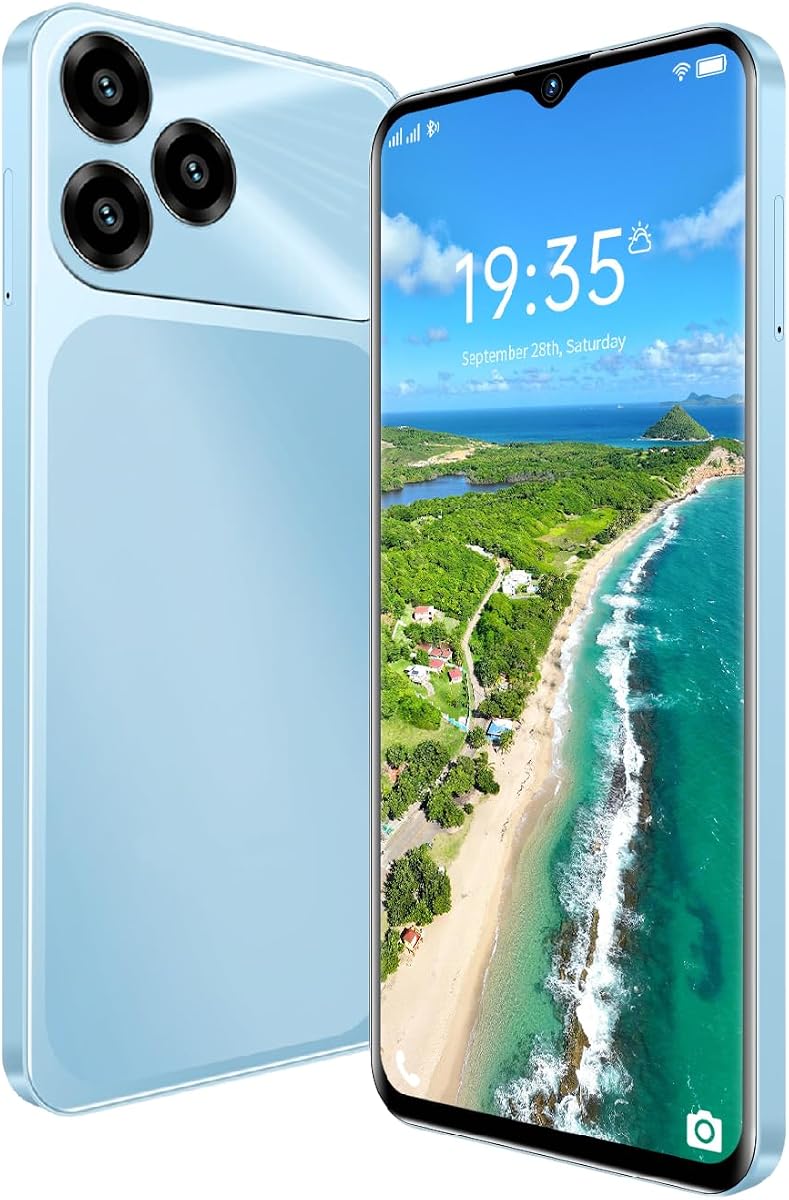
Unlocked Android Smartphone with 6.52-Inch HD Screen
5.0Editor score
Six-point-five-two-inch HD display
Android 8.1 operating system
Dual SIM and expandable storage
USB-C charging connection
A reliable smartphone for Zoom meetings must do more than display a clear video. It should capture your voice cleanly, maintain a stable connection, and work smoothly with the apps and accessories you already use. The right choice depends heavily on meeting size, room acoustics, connection type, and whether you need portability or conference-room coverage.
We compared all ten products according to their connection options, microphone design, speaker capability, platform compatibility, and practical suitability for online meetings. The list includes smartphones, USB and Bluetooth conference speakerphones, mobile recording microphones, a phone camera lens, and landline conference systems, allowing us to distinguish dedicated meeting tools from products better suited to other tasks.
Each review explains what the product does well, where it falls short, and the kind of user it serves best. The top picks offer especially strong combinations of audio quality, flexibility, and meeting-room usability. Product specifications and availability can change, so readers should verify current compatibility and features before ordering.
5.0Editor score

4.3Editor score

4.3Editor score
As an Amazon Associate we earn from qualifying purchases.
The table below compares every product by core hardware, connectivity, intended use, and Zoom-related relevance, making it easier to identify a suitable device for a home office, small huddle room, or larger conference space.


This USB conference speakerphone combines a desktop speaker and an omnidirectional microphone in one compact unit, giving it a 4.2 rating and making it a straightforward option for Zoom calls conducted from a computer. Its most appealing quality is how little setup it demands: connect the USB interface, select the device in the conferencing application, and begin the conversation.
We may earn a commission when you buy through this link, at no additional cost to you.
The 360-degree microphone is designed to pick up voices from different positions around the desk, while full-duplex operation lets participants speak and listen at the same time. Far-field pickup, noise reduction, and echo cancellation target the audio problems that commonly make small calls difficult. A 3.5mm earphone port also provides a private way to monitor a conversation through headphones.
The main limitation is its reliance on USB computer connectivity. It is not described as a Bluetooth speakerphone, so it is less convenient for a meeting centered on a phone or tablet. Its compatibility list also emphasizes Windows, Microsoft Lync, Skype, and related applications rather than newer collaborative platforms. That does not prevent it from serving as a Zoom microphone, but users should confirm that the computer and application recognize external USB audio devices.
Choose this product when you want an uncomplicated way to improve computer-based Zoom audio without managing a separate headset, battery, or wireless pairing process. It is especially appropriate for a home office, shared desk, or small meeting at a laptop. For phone-first meetings or larger groups, one of the wireless conference speakerphones will offer more flexibility.
The 360-degree microphone can capture speech from around the device, which is useful when a participant is not seated directly in front of a laptop. Echo and noise reduction help keep the conversation intelligible in a normal home-office environment.
The included 3.5mm earphone connection allows the user to hear a call privately while the built-in speaker and microphone continue handling voice pickup. This is useful in shared rooms where listening through the room speaker would be inconvenient.
We may earn a commission when you buy through this link, at no additional cost to you.
The Kaysuda conference speakerphone earns a 3.9 rating by combining wireless Bluetooth calling with a direct USB option for computers. Its six-microphone array and 360-degree pickup are aimed at small groups of one to four people, making it a practical bridge between a smartphone-based Zoom meeting and a more permanent office setup.
We may earn a commission when you buy through this link, at no additional cost to you.
Its strongest feature is connection flexibility. A phone or tablet can connect over Bluetooth, while a laptop can use the supplied USB cable. The product is listed as compatible with Zoom, Skype, WebEx, GoToMeeting, Google Hangouts, Cisco, Avaya, FaceTime, and Microsoft Teams, while support extends across Windows, macOS, Linux, ChromeOS, and Android.
Audio processing includes an acoustic echo canceler and a noise-isolating microphone intended to improve clarity in distracting surroundings. The supplied description also mentions rich HD audio. However, the average rating suggests that the real-world experience may not match every expectation, so buyers should consider their room acoustics and verify their exact device and operating system before purchasing.
This is a good choice for individuals and small teams that regularly move between phone and computer calls. It is not the strongest option listed for a large conference room, where the dedicated Tenveo or M6 models offer more microphones and broader room pickup. For a small Zoom meeting, however, its dual connection methods and cross-platform support make it notably convenient.
Bluetooth support is especially valuable when a meeting begins on a phone and later moves to a laptop. USB remains available for users who want a wired computer connection without relying on wireless pairing.
The six-microphone array and echo cancellation are designed for conference-style pickup around a table. They are best matched to one to four participants rather than a large group distributed across an expansive room.
We may earn a commission when you buy through this link, at no additional cost to you.
The Zoom Am7 is a USB-C external microphone for Android devices, rated 3.7 by users. Rather than functioning as a complete conference speakerphone, it improves the microphone used by an Android phone or compatible device. That narrower purpose can still make it useful for a presenter who wants clearer recorded audio or a more deliberate voice-capture setup during online calls.
We may earn a commission when you buy through this link, at no additional cost to you.
The microphone supports 90-degree, 120-degree, and Mid-Side recording patterns, giving users options for directional and stereo capture. A rotatable capsule allows alignment with the camera or subject, and the analog gain control plus three-position LED clip meter provide immediate visual feedback. It can work with the device camera and other applications that accept an external microphone.
The principal constraint is platform specificity. The product is designed for Android devices with USB-C connectors, and it requires an app such as the Handy Recorder app for its listed recording functions. Users should verify that their meeting application permits an external USB microphone and that their phone supports the required connection. It also does not provide a room-filling speaker for group conversations.
Buy the Am7 if you record interviews, demonstrations, or video on Android and want more control over microphone direction and levels. It is less appropriate as a general Zoom room system or as a replacement for a smartphone. For a simple mobile meeting, the phone's built-in microphone may already be sufficient, making the Am7 better suited to creators who need better captured audio.
Choosing between 90-degree, 120-degree, and Mid-Side patterns allows the user to tailor the capture to the subject and setting. The rotatable capsule makes it easier to align the microphone once the phone is mounted.
A physical gain wheel and a three-position LED meter help the user judge input levels visually. This is particularly valuable when a meeting app does not provide equally clear microphone feedback.
We may earn a commission when you buy through this link, at no additional cost to you.
The M6 is a six-microphone conference speakerphone built for hybrid meetings and rated 3.7. It combines room audio, meeting transcription, summaries, writing assistance, real-time subtitles, and two operating modes. Those features distinguish it from simpler USB speakerphones and make it appealing to users who want more support before, during, and after a call.
We may earn a commission when you buy through this link, at no additional cost to you.
Its audio system includes six omnidirectional microphones that capture voices within a 20-foot range. A directional mode focuses on speakers within a 90-degree area up to three feet away, while meeting mode is designed to reduce more than 300 categories of noise. The stated capacity is up to 18 people in a small-to-medium room. USB plug-and-play, Bluetooth, and NFC provide several ways to connect.
The transcription, summarization, and GPT-based writing functions are the most distinctive parts, but they also require some care regarding the user's preferred apps, account setup, and privacy preferences. The 3.7 rating indicates mixed experiences, and the product information lists up to 20 hours of battery life despite the title mentioning 25 hours. Buyers should consult the current product details rather than relying on a headline number.
This speakerphone is best for a small or medium hybrid office that values meeting records and captions in addition to voice pickup. It is less attractive for a solo user who only needs a basic USB microphone. As with any connected meeting accessory, checking platform permissions and verifying which features require cloud services before purchase is advisable.
Omnidirectional mode covers participants distributed around a room, while directional mode emphasizes a tighter 90-degree area. This flexibility helps the device serve both roundtable meetings and focused conversations.
Transcription, concise summaries, writing help, and real-time subtitles extend the product beyond basic audio hardware. These features are most useful for users who regularly document meetings and compare notes afterward.
We may earn a commission when you buy through this link, at no additional cost to you.
The Zoom iQ6 is a compact iOS microphone with a 4.0 rating. Designed for iPhone and iPad recording, it uses the same condenser microphone concept associated with the brand's larger recorders. It is most relevant to users who want a more deliberate audio setup for interviews, video, or mobile presentations.
We may earn a commission when you buy through this link, at no additional cost to you.
Its rotatable capsule can be adjusted from 90 to 120 degrees, giving the user some control over the relationship between the microphone and the subject. The product can be used on iPhones and iPads with or without cases, reducing a common source of frustration when an accessory interferes with a protective shell.
This is not a dedicated conference speakerphone, so it does not solve room-filling speaker output or capture a large group in the manner of a six- or eight-microphone system. It also cannot be used with Android devices. For a basic Zoom meeting, the iPhone microphone may be sufficient; the iQ6 becomes more valuable when recorded content quality matters or the user wants a different pickup angle.
The iQ6 is a sensible choice for iPhone-based creators who record interviews or videos and occasionally use mobile applications for calls. Verify that your specific iOS device and application support the connection before ordering. For multi-person hybrid meetings, use a dedicated conference speakerphone instead.
The capsule angle can move between 90 and 120 degrees, allowing the user to direct attention toward a subject. This makes the microphone more versatile than a fixed-position mobile accessory.
Support for iPhone and iPad, including use with a case, makes setup easier for people who already rely on Apple's mobile ecosystem. It also means the product is not a cross-platform option.
We may earn a commission when you buy through this link, at no additional cost to you.
The MIAO LAB 60X is a smartphone telephoto lens kit rated 3.9, and its primary relevance to Zoom is visual rather than auditory. It adds 60-times magnification, a universal phone clip, an extendable tripod, a remote shutter, and a carrying case. It can help a participant frame a distant subject more closely during a video call.
We may earn a commission when you buy through this link, at no additional cost to you.
The lens uses fully multi-coated green film on its optical surfaces and an aluminum alloy housing with a focus ring. Its universal clip is designed to work with smartphones that have triple, quad, or more camera arrangements. The four-section tripod extends to 54 inches, while a wireless remote enables shutter operation without touching the phone.
There is no evidence in the supplied specifications that this product improves microphone quality, speaker output, connectivity, or compatibility with Zoom. The camera magnification may also be difficult to use during a live meeting, where framing and focus need to be adjusted quickly. Installation is said to require some patience and practice, making it less convenient than simply opening a meeting app.
Choose this product only if distant visual detail is a priority, such as demonstrating equipment, viewing a presentation from another room, or participating in a meeting where the subject is physically far away. It is not one of the strongest smartphone choices for ordinary Zoom conversations. A smartphone with a dependable built-in camera and a dedicated audio accessory will serve routine calls more directly.
The 60-times telephoto design makes faraway subjects appear closer in the phone camera. This is useful when a call benefits from a detailed view rather than a wide-angle shot of the entire area.
The extendable tripod and wireless remote help keep the phone steady and allow the user to remain out of the frame. These accessories are more useful for prepared recording than for spontaneous meeting adjustments.
We may earn a commission when you buy through this link, at no additional cost to you.
The Tenveo MagiCall Pro is the strongest all-around meeting accessory in this guide, combining a 4.3 rating with support for Zoom, Microsoft Teams, Google Meet, WebEx, and OBS. Eight AI microphones, a six-meter pickup range, and a five-watt speaker make it appropriate for huddle rooms, home offices, and mobile work sessions.
We may earn a commission when you buy through this link, at no additional cost to you.
Triple connectivity is its defining advantage. USB provides a wired computer link, Bluetooth supports phones and tablets, and the included dongle creates a convenient wireless receiver alternative. The one-touch control and LED indicators simplify power, pairing, and mute operations, while an 8000mAh battery supports up to 18 hours of continuous meetings.
Advanced DSP processing provides intelligent noise reduction, echo cancellation, and 360-degree voice pickup. The package includes the speakerphone, USB cable, Bluetooth dongle, OTG adapter, and manual. It is a more substantial device than a simple desktop microphone, so users who only participate in one-person calls may find it excessive. The stated 12–15-person capacity also suggests that a very large room would require a different solution.
This is the top recommendation for users who need one speakerphone across computers, phones, and live-streaming applications. It offers enough microphone coverage for small and medium groups without occupying an entire conference room. Choose it over a basic USB model when wireless freedom, long meeting use, and broad platform support are important.
USB, Bluetooth, and the included dongle let the same device serve different platforms. This is especially helpful for hybrid workers who alternate between a laptop, a phone, and a streaming setup.
Eight AI microphones and a stated six-meter pickup range provide broad coverage, while echo cancellation helps prevent the speaker from feeding back into the microphones. The 12–15-person target makes it well suited to a compact meeting room.
We may earn a commission when you buy through this link, at no additional cost to you.
The VTech VCS702 ErisStation is a premium DECT 6.0 conference phone with a 4.3 rating. Its defining feature is a distributed microphone system: two wireless microphones and one central fixed microphone cover a small-to-medium conference room, while the base provides full-duplex speakerphone operation.
We may earn a commission when you buy through this link, at no additional cost to you.
Audio processing includes acoustic echo cancellation, automatic gain control, and dynamic noise reduction. Those features are particularly relevant when several participants speak around a table. The two-line backlit display shows the date and time, stores up to 50 caller ID entries, and supports a phonebook of up to 50 names and numbers.
The magnetic charging bays keep the two wireless microphones organized and ready. Each provides up to 70 hours of battery life and eight hours of talk time. The major trade-off is purpose: this is a traditional conference telephone system, not a USB or Bluetooth smartphone accessory. It is most relevant to offices that initiate or receive calls through a landline rather than relying exclusively on mobile or computer-based meeting software.
Buy the VCS702 when a permanent meeting room needs dependable voice distribution and every participant should be able to speak naturally from different positions. Users seeking a Zoom-focused mobile setup should choose a USB or Bluetooth conference speakerphone instead. For a traditional office phone system, however, its microphone array, full-duplex design, and charging system offer a polished solution.
Two removable wireless microphones allow participants to spread out and speak without crowding around the base. The central fixed microphone adds another listening position for a compact conference area.
Built-in magnetic bays help prevent wireless microphones from being misplaced and keep them charged between calls. Long standby and talk-time figures make the system suitable for a regular meeting schedule.
We may earn a commission when you buy through this link, at no additional cost to you.
This unlocked Android smartphone carries a 5.0 rating and is the only conventional mobile phone in the group. Its six-point-five-two-inch HD display makes it a practical device for Zoom, Google Meet, and other mobile video applications, while the dual-SIM design offers useful connection flexibility.
We may earn a commission when you buy through this link, at no additional cost to you.
The phone includes a 2-megapixel front camera, a 13-megapixel rear camera, a 3000mAh battery, and USB-C charging. It runs Android 8.1 with a four-core Helio P35 processor, 3GB of RAM, and 16GB of internal storage. A TF card can expand storage by up to 256GB, and OTG supports transfer to a computer or USB drive.
Network compatibility is an important limitation. The listed unlocked bands cover the United States, while European and Asian frequency bands are not supported. The operating system is also an older Android version, so buyers should check the current version of their required meeting app and confirm that important security and application updates are available for their intended use.
Choose this phone as an affordable dedicated mobile meeting device when a large screen, unlocked service, expandable storage, and front-camera video are the priorities. It may not replace a premium smartphone for processing speed, camera quality, or long-term software support. For better group audio, pair it with a compatible Bluetooth conference speakerphone such as the Kaysuda or Tenveo model.
The 6.52-inch HD display provides a comfortable viewing area for joining calls, checking chat, and sharing the screen. A front-facing 2-megapixel camera provides the selfie-facing image used for mobile video meetings.
Dual-SIM support can be useful for separating calls from data or activating local service. Because the listed bands are for the United States, international travelers should check carrier compatibility before relying on the phone.
We may earn a commission when you buy through this link, at no additional cost to you.
The AT&T SB3014 is a traditional conference phone system with a 4.4 rating, the highest user rating in this comparison. It uses a corded landline base, DECT 6.0 wireless technology, and a six-microphone arrangement to provide broad coverage for an office meeting.
We may earn a commission when you buy through this link, at no additional cost to you.
Four microphones are wireless and can be placed around the room, while two fixed microphones are integrated into the base. Full-duplex technology, digital mixing, and audio equalization support natural conversation, and the system can store 50 names and numbers. Caller identification information can be moved into the phonebook or speed-dial list.
Each wireless microphone offers up to eight hours of talk time and 70 hours of standby time. Magnetic charging bays in the base keep the units together and ready. The main limitation is that this is a landline conference system, not a direct USB or Bluetooth accessory for a smartphone or Zoom application. It is most useful for offices that already depend on an AT&T landline connection.
This product is worth considering when a traditional meeting room needs six microphones and the flexibility to distribute them around the table. It is a strong dedicated office telephone, but it is not the most natural choice for a mobile-first Zoom workflow. Users who regularly join meetings through smartphones, laptops, or a mix of both should favor a USB or Bluetooth conference speakerphone.
Four wireless microphones can be positioned according to the seating arrangement, while two fixed microphones provide additional coverage at the base. This distributed setup helps speakers be heard without passing a single device around.
DECT 6.0 operation, full-duplex conversation, digital mixing, and built-in charging make the SB3014 appropriate for an established office phone environment. Its strengths are clearest when the meeting is hosted through the landline system.
We may earn a commission when you buy through this link, at no additional cost to you.
The best device is not necessarily the one with the most advanced specifications. Your operating system, meeting platform, room size, and preferred connection method should determine which kind of phone or accessory offers the most useful experience.
A smartphone is a self-contained mobile meeting device, while a conference speakerphone improves audio for a computer or phone. External microphones target creators who need controlled voice capture, and landline conference phones serve offices whose calls run through a traditional telephone base. Consider whether you need a complete mobile device, a room audio upgrade, or a fixed office communication system rather than assuming the most expensive hardware is the most relevant.
Check that the product explicitly supports your phone, computer, and meeting application. Some accessories require USB-C, some are made for iOS, and others rely on Bluetooth or a proprietary dongle. The Tenveo and Kaysuda products list broad meeting-platform support, while the Zoom iQ6 and Am7 are more narrowly tied to iOS and Android respectively. A product can be technically capable of recording sound yet still fail to appear as a microphone in a particular meeting app.
Microphone count, pickup range, and directional behavior matter more when several people share a room. The Tenveo offers eight microphones with a stated six-meter range, the M6 has six omnidirectional microphones, and the Kaysuda uses six microphones for groups of one to four. The traditional AT&T and VTech systems distribute microphones around a table. For a solo caller, a smartphone or single desktop microphone may be sufficient.
Echo cancellation prevents the device speaker from being picked up again by its microphones, while noise reduction can make speech easier to understand in a busy environment. The Tenveo, M6, Kaysuda, and VTech explicitly emphasize these processing features. Echo cancellation is especially important when the phone is positioned close to the user, while noise control becomes more valuable in an office with nearby conversations, fans, or traffic.
USB generally provides a straightforward computer connection and may reduce pairing complexity. Bluetooth offers mobility between a phone, tablet, and laptop, while the Tenveo dongle provides another wireless route for compatible computers. A traditional conference phone requires a landline connection. The best choice is the one that supports the devices you use most often and does not force an inconvenient adapter or setup routine.
The Kaysuda is targeted at one to four people, the Tenveo at 12–15, and the M6 at up to 18 within a stated 20-foot range. Those figures describe intended use, not a guarantee for every room. A compact desktop unit may be enough for a home office, while a room with hard walls, a large table, and widely spaced participants benefits from distributed microphones.
A useful speakerphone can include mute controls, connection indicators, transcription, subtitles, summaries, or writing assistance. These extras are valuable when the device will support recurring hybrid meetings, but they may add complexity for occasional users. The M6 is the most feature-oriented in the group, while the Tenveo emphasizes audio hardware, battery life, and one-touch operation.
Wireless meeting devices should have enough power to cover a full schedule without frequent charging. The Tenveo supports up to 18 hours of meetings, the M6 lists up to 20 hours despite a longer figure in its title, and the wireless microphones in the VTech and AT&T systems provide long standby times and magnetic charging bays. Always verify the current specification because manufacturer titles and manuals may present different usage figures.
Begin by identifying the audio source the meeting application is using. For a USB conference speakerphone, connect the cable, select the speakerphone in the computer's audio settings, and confirm that the microphone moves its level indicator when you speak. For Bluetooth models, pair the device with the phone or computer and then choose it as both the microphone and speaker in the meeting app. For a traditional conference phone, connect the base to its landline service and remove the wireless microphones from their charging bays.
Position the device according to the pickup design. A desktop unit works best near the center of a small group, while distributed wireless microphones should be placed at useful conversational positions rather than crowded together. Keep the device away from obvious sources of vibration and noise, orient the microphone toward the speaker, and use a headset with the dedicated privacy port when private monitoring is needed.
Care for the product by following its charging and storage guidance. Keep microphones dry, remove the conference phone from service before cleaning it, and use only gentle methods recommended by the manufacturer. Update the relevant meeting application, confirm the app still recognizes the accessory, and test the microphone and speaker before an important call. Recheck platform permissions and network support whenever the phone, operating system, or meeting service changes.
A dedicated speakerphone is usually better when several people share a room because it places microphones near the participants and adds echo cancellation. A smartphone remains more convenient for mobile and individual calls. The right choice depends on group size, room acoustics, and whether you need laptop or phone connectivity.
Zoom can generally work with a compatible USB speakerphone by selecting it as the microphone and speaker in the meeting audio settings. Actual behavior depends on the computer's operating system and Zoom audio permissions. Test the device before a critical meeting to confirm that the speaker output and microphone input are both routed correctly.
Bluetooth offers the most freedom when meetings move between a phone, tablet, and laptop, although users must manage pairing and battery life. USB is simpler for a fixed computer setup. A model with both options, such as the Kaysuda or Tenveo conference speakerphone, provides greater flexibility across different devices.
The Kaysuda is described as optimized for one to four people, the Tenveo for 12–15, and the M6 for up to 18 in a small-to-medium room. Actual performance depends on the room, microphone placement, background noise, and application settings. These are intended-use figures rather than guaranteed capacities in every acoustic environment.
A large screen can make joining calls, reading chat, and viewing shared material more comfortable, but screen size is only one part of the experience. Microphone quality, network stability, application support, battery life, and speaker output also matter. The included Android phone offers a 6.52-inch HD display, while the conference speakerphones are designed to supplement phones or computers.
It may help if the visual subject is physically distant and magnification is more important than normal room framing. The MIAO LAB kit does not provide any stated improvement to microphone quality, connectivity, or meeting-platform features. Most participants will receive better everyday value from a reliable conference audio accessory unless distant video detail is a specific requirement.
Confirm that the microphone supports your phone's connector and operating system, and verify that your meeting application can select an external microphone. The Zoom Am7 is designed for Android devices with USB-C, while the iQ6 targets iPhone and iPad. Also consider the recording pattern, directional control, and whether the product is intended for calls or primarily for recorded content.
They are most useful in offices that regularly place or receive calls through a landline system. The VTech VCS702 and AT&T SB3014 provide full-duplex audio and distributed microphones, but they are not direct USB or Bluetooth accessories for a smartphone. For a computer-based Zoom workflow, a USB or wireless conference speakerphone is the more straightforward choice.
The Tenveo MagiCall Pro leads the guide because it combines USB, Bluetooth, and dongle connectivity with eight AI microphones, a broad pickup radius, long battery life, and broad support for leading meeting platforms. The unlocked Android smartphone offers a practical mobile-device option with a large HD display, while the VTech VCS702 is the premium choice for a traditional office conference room.
Prioritize the audio and connectivity that match your actual environment. Solo mobile users should consider a capable phone, while small teams benefit from a portable Bluetooth speakerphone and medium-sized groups need wide microphone coverage and reliable echo control. Larger offices may prefer distributed wireless microphones, and creators can add a dedicated mobile recording microphone for better voice capture.
Before ordering, verify the connector, operating system, meeting application, room capacity, and current product specifications. Pricing, availability, and software behavior can change over time, so checking the latest listing and testing the setup before an important meeting will help avoid surprises.