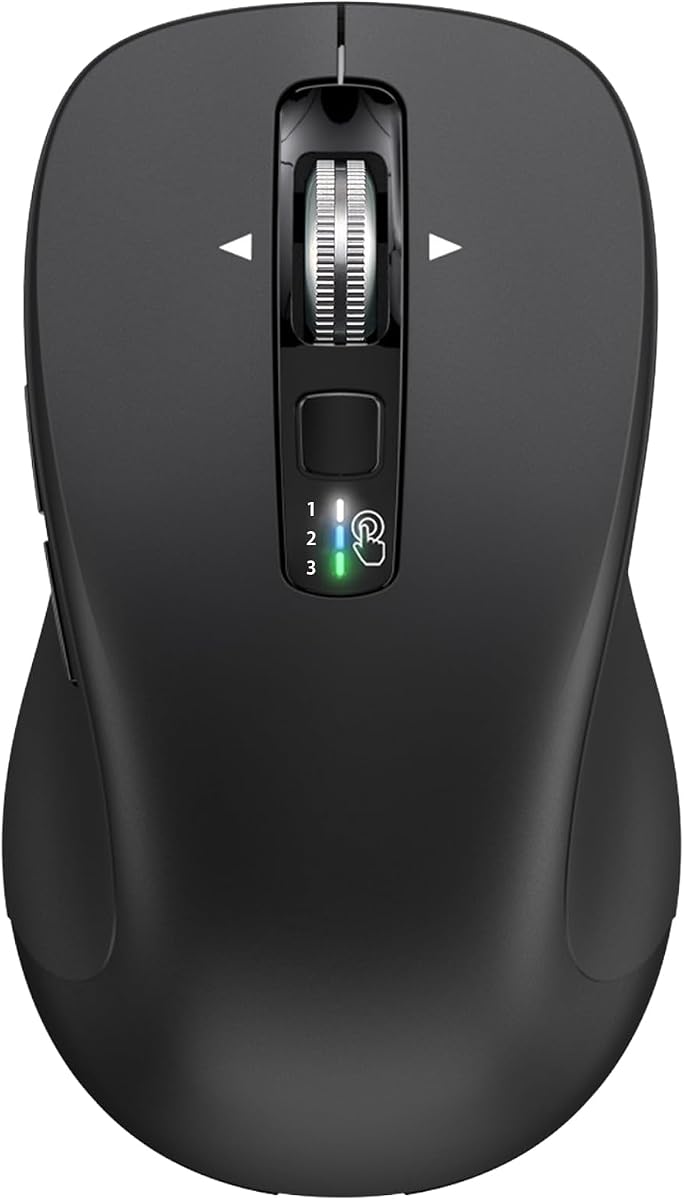
CITLLA Multi-Device Wireless Mouse
4.4Editor score
Dual Bluetooth connectivity
Four-way metal scroll wheel
Five programmable buttons
Adjustable 3000 DPI
Discover the best Mouse for Photoshop, comparing wireless, wired, ergonomic, vertical, and multi-device mice for precision editing, comfort, and productivity.
A Mouse for Photoshop should do more than move a cursor. It should support precise brush placement, painless layer navigation, comfortable extended editing, and smooth switching between a desktop and laptop. The right model depends on your grip, workspace, display setup, and whether you value programmability or simple plug-and-play operation.
We compared ten mice based on the supplied specifications, focusing on sensor performance, button layout, scrolling options, wireless connectivity, ergonomics, battery life, and cross-platform support. The list includes full-size productivity models, compact ambidextrous designs, vertical ergonomic mice, and gaming-oriented options built for responsive Photoshop workflows.
Each review highlights the features most relevant to photo editing, along with practical trade-offs. The recommendations cover different needs, from a versatile ergonomic productivity mouse to a premium esports-focused model and a budget-friendly multi-device option. Product details and prices can change, so confirm current specifications before purchasing.
4.4Editor score

4.6Editor score

4.6Editor score
This side-by-side comparison shows how the ten recommended mice differ in connectivity, ergonomics, sensor resolution, scrolling, and control options, making it easier to identify the best fit for a Photoshop editing setup.

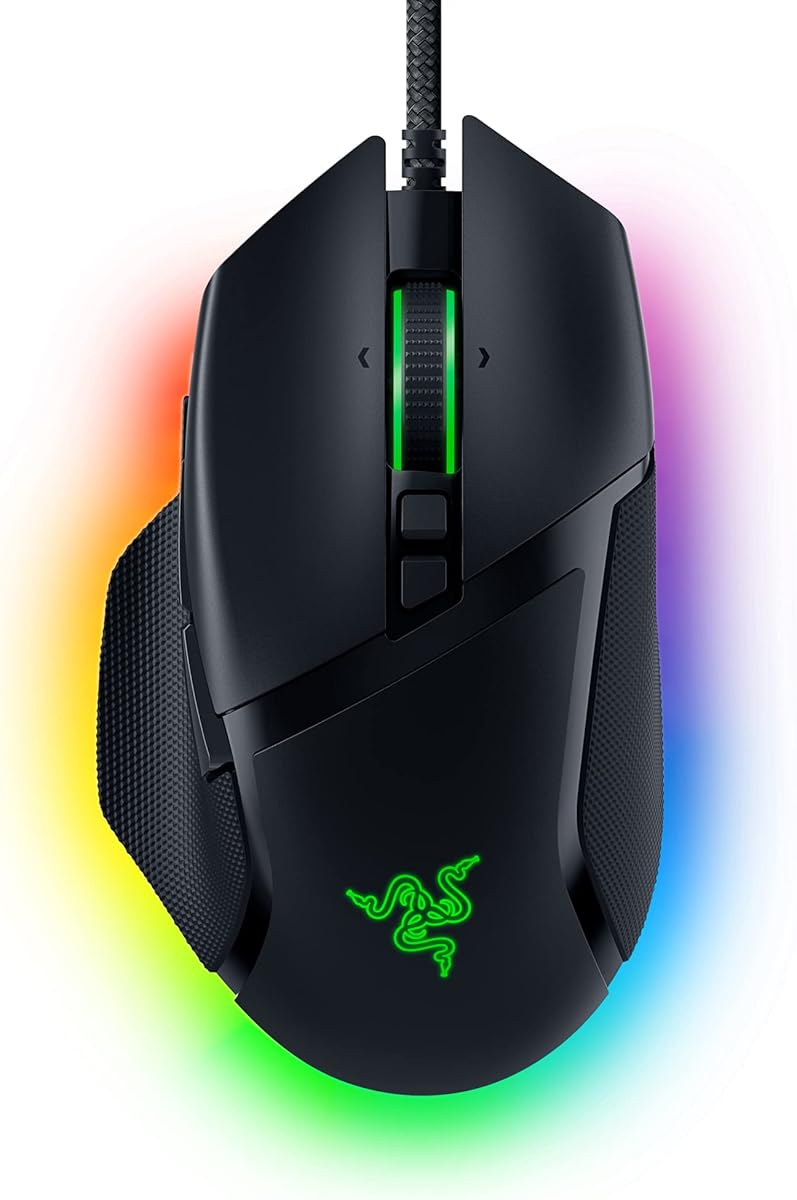




The Razer Basilisk V3 X HyperSpeed is a flexible wireless mouse for photographers who want extensive control without remaining tethered to a desk. Its 4.4 rating reflects a strong balance of precision, customization, and battery endurance. Nine easy-access controls make it easier to assign Photoshop tools, brushes, zoom functions, and navigation commands without repeatedly reaching for menus.
We may earn a commission when you buy through this link, at no additional cost to you.
The 18,000 DPI optical sensor is designed for responsive, pixel-precise tracking, while the ergonomic shape supports different grip styles. Razer HyperSpeed Wireless is intended to provide low-latency input, and Bluetooth offers a more practical option for everyday productivity. Multi-device support is particularly useful for editors who move between a workstation, laptop, and tablet while working on image files.
Its Gen-2 mechanical switches are rated for up to 60 million clicks, and 16.8-million-color Chroma RGB lighting can provide visual feedback or integrate with supported games. The main drawback is complexity. A Photoshop-focused user who only needs basic navigation may not use every button, lighting zone, or configuration option, while software setup adds another layer to the workflow.
This is a strong choice for a creative professional who alternates between image editing, retouching, and gaming or other high-control applications. It also suits anyone who wants a wired-like wireless experience and extensive remapping without moving to a premium model. For a simpler setup, the standard Basilisk V3 may be more direct.
Nine accessible controls can be assigned to frequently used Photoshop commands, reducing dependence on keyboard shortcuts. Reassigning brush sizes, zoom, hand navigation, and visibility tools can make a layered editing session feel more fluid.
HyperSpeed Wireless and Bluetooth provide two ways to connect, while multi-device support suits photographers reviewing images across a desktop, laptop, and tablet. The advertised battery figures vary with use, but both options reduce cable management.
We may earn a commission when you buy through this link, at no additional cost to you.
The Razer Basilisk V3 is the most balanced recommendation in this guide for a dedicated Photoshop workflow. Its 4.6 rating is among the highest in the group, and the combination of 11 programmable buttons, a 26,000 DPI sensor, and a fast optical switch system makes it particularly practical for intensive editing. The wired connection removes wireless latency from the equation.
We may earn a commission when you buy through this link, at no additional cost to you.
The standout feature is its control density without forcing a different grip style. Secondary buttons sit close to the thumb, while the HyperScroll tilt wheel can move through long documents quickly or provide tactile feedback when precise increments are more useful. Photoshop users can map the buttons to zoom, brush selection, foreground and background colors, or other application-specific commands.
Its Gen-2 optical switches are listed for a 0.2ms actuation speed and a lifespan of up to 70 million clicks. The Focus Plus 26K sensor promises accurate tracking without smoothing, which is valuable for detailed selections, retouching, and brush placement. As a wired model, however, it lacks the freedom offered by the V3 X and V3 Pro, and the elaborate lighting may not appeal to a minimalist workspace.
The Basilisk V3 is best for an editor who values precision, repeatability, and extensive customization at a desk. It is particularly appropriate for long editing sessions where a stable connection and quick access to tools matter more than a completely cable-free environment. Users who travel frequently may prefer one of the multi-device wireless alternatives.
The 26,000 DPI Focus Plus sensor and low-latency optical switches support controlled movement over masks, selections, and brush edges. These specifications are most useful when a user benefits from a high-sensitivity but stable pointer.
The HyperScroll wheel can free-spin for rapid movement through large files, then switch to tactile mode for controlled scrolling. A tilt wheel also allows horizontal navigation without moving the pointer away from the canvas.
We may earn a commission when you buy through this link, at no additional cost to you.
The CITLLA Wireless Bluetooth Mouse is a budget-conscious choice for photographers who need a full-size control surface without spending on a specialized gaming mouse. Its 4.4 rating suggests a capable general-purpose product, and its combination of a 2.4 GHz receiver, dual Bluetooth, five programmable buttons, and a four-way metal wheel covers many essential editing needs.
We may earn a commission when you buy through this link, at no additional cost to you.
The ability to pair with three devices is useful for a portable workflow involving a laptop, desktop, and tablet. A device-switch key makes changing targets quick, while the horizontal and vertical wheel functions help with wide canvases, layer panels, and spreadsheets. Adjustable DPI levels up to 3000 offer sufficient precision for standard photo correction and retouching tasks.
The full-size body measures 4.6 by 2.6 by 1.6 inches, and the rubber side grip is designed to resist slipping. The product is compatible with Windows, macOS, iOS, Android, Linux, and Chrome OS. Its stated battery life of up to three years and four months is ambitious, though actual results will depend on usage, and the product uses replaceable batteries rather than a rechargeable cell.
This mouse makes sense for students, travelers, and budget-conscious editors who need dependable navigation and device switching. It is less suitable for someone requiring advanced sensor specifications, extensive shortcut mapping, or premium tactile feedback. Even so, the useful scroll wheel and programmable buttons make it more capable for Photoshop than a basic office mouse.
We may earn a commission when you buy through this link, at no additional cost to you.
The Logitech G PRO X2 SUPERSTRIKE is the premium selection for photographers who want the fastest control and most advanced feedback in the group. It carries a 4.6 rating, combines a 44,000 DPI HERO 2 sensor with eight kilohertz wireless polling, and introduces a Haptic Inductive Trigger System that provides real-time feedback on trigger actions.
We may earn a commission when you buy through this link, at no additional cost to you.
Ten selectable actuation points and five rapid-trigger reset levels let users tune the click response to their editing habits. The sensor tracks at more than 888 IPS and 88 g-force, providing high-resolution tracking for exact cursor placement. Its lightweight case, 0.7 mm thin walls, and extra-large UHMWPE feet are designed to glide smoothly and remain durable during demanding use.
The rechargeable battery is rated for 60 to 90 hours, depending on use, and the included USB-A to USB-C cable supports charging. Advanced functionality requires Logitech G HUB, while continuous wireless play through POWERPLAY 2 requires a separately sold accessory. It is compatible with PC and Mac, but some of its most specialized features will have little effect on ordinary Photoshop navigation.
This mouse is best for a demanding creative setup where precision, response customization, and premium construction justify a higher-end purchase. It can also serve editors who game on the same machine. Buyers should be prepared to configure the software and should not choose it solely for haptics unless they can see a practical benefit in their specific editing habits.
Ten actuation points and five rapid-trigger reset levels offer granular control over how clicks register. In Photoshop, that can translate into a more personalized balance between rapid tool changes and deliberate brush placement.
The HERO 2 sensor supports up to 44,000 DPI, while the inductive trigger system returns physical feedback. Together, they create a responsive, information-rich pointer for detailed creative work.
We may earn a commission when you buy through this link, at no additional cost to you.
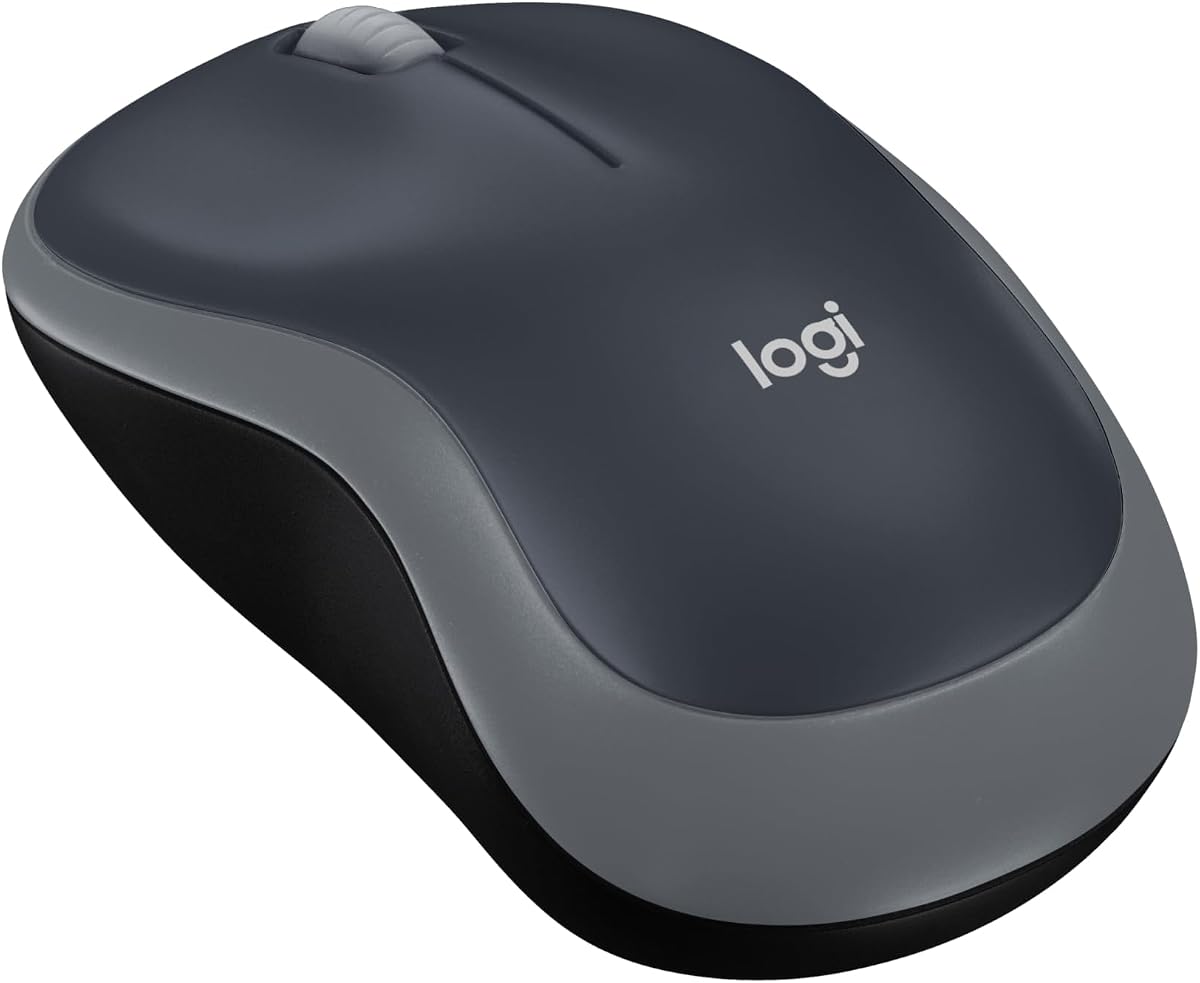
The Logitech M185 is a straightforward mouse for occasional Photoshop work, travel, and anyone who wants to avoid setup complexity. Its 4.4 rating reflects a dependable compact design, and the mouse offers a comfortable contoured shape that can be used by either right- or left-handed users. It connects through a small 2.4 GHz nano receiver.
We may earn a commission when you buy through this link, at no additional cost to you.
The line-by-line scroll wheel and smooth cursor control are sufficient for navigating canvases, layers, and side panels. Its compact dimensions suit small to medium hands, tight desks, and mobile workspaces. A smart sleep mode helps conserve power, while the included AA battery is advertised for up to one year of use, depending on activity and computing conditions.
The principal limitation is the lack of programmable controls, a high-resolution sensor specification, or a more advanced scroll mechanism. It is designed for efficiency rather than complex command mapping. Consequently, an experienced retoucher who frequently changes tools will probably find a more specialized mouse more convenient, particularly for long sessions.
The M185 is a good recommendation for a secondary editing setup, a travel bag, or a user with a preference for uncomplicated hardware. It works with Windows PCs and Macs, requires no software, and offers a cleaner setup than many multi-button alternatives. It is not the strongest choice for intensive professional editing, but it handles everyday image correction competently.
The nano receiver and compact body make the mouse easy to pack with a laptop. Plug-and-play operation also makes it useful for quick client sessions or temporary workstations.
The ambidextrous contoured form is more accommodating than a narrow travel mouse for many users. It remains best suited to small and medium hands rather than users who prefer a large, sculpted palm rest.
We may earn a commission when you buy through this link, at no additional cost to you.
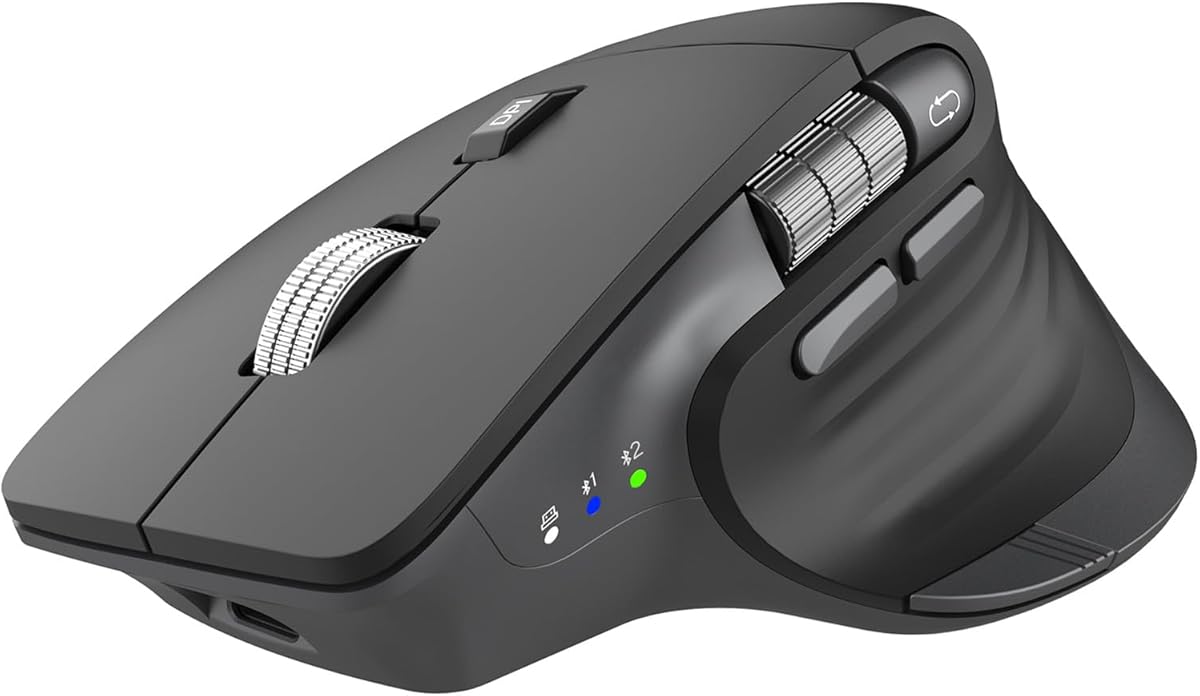
The CITLLA Ergonomic Bluetooth Mouse focuses on all-day productivity, making it a practical option for photographers who spend much of the day correcting images, preparing assets, and communicating with clients. Its 4.3 rating reflects a capable feature set, including a sculpted shape, a horizontal thumb wheel, silent clicks, and support for up to three devices.
We may earn a commission when you buy through this link, at no additional cost to you.
The flying scroll wheel is designed for rapid movement through long documents, while the thumb wheel provides direct horizontal scrolling in spreadsheets, design software, and wide Photoshop layouts. Five DPI levels reaching 4800 give users a reasonable range of sensitivity. A one-touch return-to-desktop control is also included for Windows users, adding quick access to a familiar shortcut.
Dual Bluetooth and a 2.4 GHz receiver provide broad connection options, and compatibility extends across Windows, Mac, ChromeOS, Linux, iPadOS, and Android. USB-C charging and an advertised battery life of up to 60 days reduce interruptions. The trade-offs are the lower overall rating and the subjective nature of a flying wheel, which some users may find less precise than a conventional notched scroll wheel.
Choose this mouse for a flexible office, a student desk, or a mobile creative setup where comfort, quiet operation, and multi-device use matter most. It is well suited to moderate editing demands, though it does not offer the sensor resolution or switch response of the Razer models. For intensive retouching, a higher-specification precision mouse may be preferable.
The naturally contoured shell and thumb support encourage a more relaxed hand position. Silent clicks can also make focused work in shared offices or late-night sessions less disruptive.
Two Bluetooth connections and one USB receiver allow quick switching among three devices. That flexibility is valuable when moving between a main editing computer, a laptop, and a tablet.
We may earn a commission when you buy through this link, at no additional cost to you.
The Transformers Vertical Ergonomic Mouse stands apart with an LED information display and a multifunctional control knob. Its 4.2 rating is the lowest in this group, but the unusual feature set can be useful for designers who want immediate access to DPI, battery, and connection status while working in Photoshop or other graphics applications.
We may earn a commission when you buy through this link, at no additional cost to you.
The vertical form follows a more natural handshake-style posture and places the hand at a 103-gram weight. A matte, non-slip surface is intended to provide a secure grip for medium and large hands. The knob can handle zooming, horizontal scrolling, and volume adjustment, potentially reducing dependence on keyboard shortcuts during extended design sessions.
The mouse connects through 2.4 GHz wireless and dual Bluetooth 5.0, allowing simultaneous use with three devices. Six DPI settings range from 800 to 4000, and the silent buttons are aimed at shared workspaces. Its built-in 500mAh battery uses the included Type-C cable, while button wake-up and auto-sleep functions help conserve energy.
This is a compelling option for a designer who values a visible status display and rotary control and can comfortably manage the moderate weight. It is less suitable for users who require advanced sensor specifications, extensive programmable buttons, or a lighter hand feel. Confirm the vertical shape and control placement suit your grip before settling on it.
The LED display shows real-time DPI, battery level, and connection mode. This reduces the need to open software merely to check the current operating state.
The multifunctional knob supports zooming, horizontal scrolling, and volume changes. Photoshop users may find it helpful for switching between the Hand and Zoom tools or adjusting panel views.
We may earn a commission when you buy through this link, at no additional cost to you.
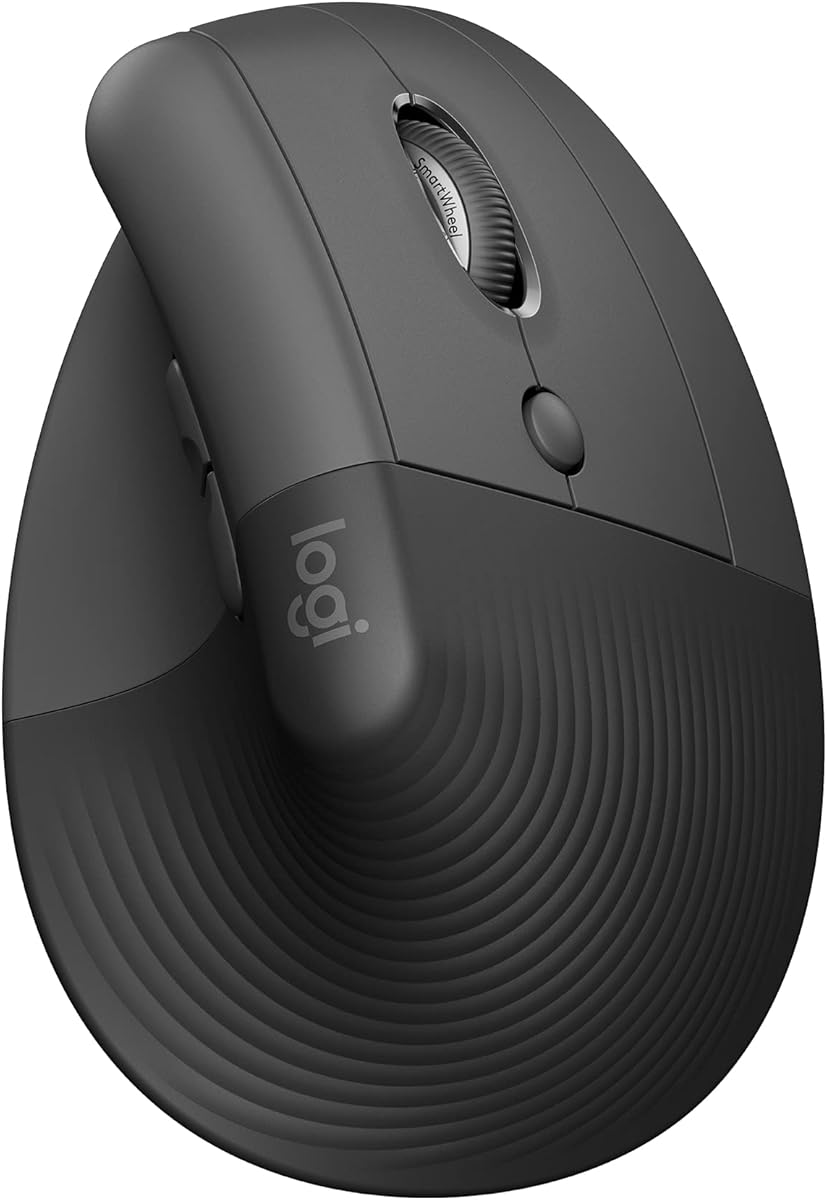
The Logitech Lift Vertical Ergonomic Wireless Mouse in Graphite is an excellent choice for editors concerned about wrist and forearm comfort. Its 4.4 rating and ergo-certified design support its reputation as a well-considered productivity mouse. The 57-degree vertical angle raises the hand into a more natural posture, reducing the need to bend the wrist as sharply.
We may earn a commission when you buy through this link, at no additional cost to you.
The sculpted form includes a softly textured grip and snug thumb rest, with the stated fit aimed at small and medium right hands. Easy-to-reach customizable buttons, whisper-quiet clicks, and the SmartWheel make it practical for long sessions. The SmartWheel shifts between smooth and line-by-line scrolling, allowing rapid movement through a document or controlled panel navigation.
Connection options include Bluetooth Low Energy and the Logi Bolt USB receiver, with compatibility for Windows, macOS, iPadOS, ChromeOS, and Linux. The listed battery life reaches up to two years, making it a low-maintenance option. It is less versatile for left-handed users and may feel small for people with larger hands, although the shape itself is thoughtfully designed around its target size.
The Lift is best for an office-based photographer or designer who spends many hours navigating images and documents and values a quieter, more natural hand position. It is less aggressive than a gaming mouse, but that restraint helps it blend into a creative workspace. Users should confirm the right-hand fit before purchasing.
The 57-degree vertical shape encourages the forearm to remain more neutral, reducing wrist extension during extended work. Its certified ergonomic construction makes it particularly appealing for all-day editing.
The SmartWheel alternates between rapid free-scrolling and precise ratcheted movement. That versatility helps with long Photoshop documents, zoomed canvases, and narrow side panels.
We may earn a commission when you buy through this link, at no additional cost to you.
The Razer Basilisk V3 Pro combines a 30,000 DPI sensor, 11 programmable buttons, and high-speed wireless technology in a high-control design. Its 4.4 rating makes it one of the strongest advanced choices, especially for a photographer who wants extensive shortcut mapping and a mouse capable of handling both precision editing and gaming.
We may earn a commission when you buy through this link, at no additional cost to you.
The Focus Pro 30K sensor is designed to track accurately across a wider variety of surfaces, including glass, while intelligent functions support aim and control. Gen-3 optical switches provide 0.2ms actuation and are rated for a 90-million-click lifecycle. The HyperScroll tilt wheel supports both free-spinning and tactile scrolling, making it useful for large documents and wide working canvases.
Razer HyperSpeed Wireless is advertised as 25 percent faster than other wireless technology, and 8K polling can be enabled with separately sold Razer accessories. Battery life is listed at up to 150 hours over Bluetooth and 110 hours over HyperSpeed at 1000 Hz, with shorter figures when using higher-frequency polling. Thirteen lighting zones and extensive Chroma integration add visual customization.
The Basilisk V3 Pro suits a high-end creative workstation where wireless freedom and precision are both priorities. It is less necessary for general photo correction, and some users may find the many controls and lighting options excessive. Buyers should also account for the separate accessories needed to unlock the highest polling rate.
The 30,000 DPI Focus Pro sensor offers fine sensitivity control for detailed masks, selections, and retouching. Its stated ability to track on glass also adds flexibility in unusual workstation setups.
HyperSpeed Wireless provides responsive everyday performance, while compatible Razer accessories can enable 8K polling. The option lets buyers scale up without requiring a separate mouse for high-frequency input.
We may earn a commission when you buy through this link, at no additional cost to you.
The Off White Logitech Lift is a compact vertical mouse that brings an ergonomic approach to smaller desks and lighter travel kits. It shares the core benefits of the Graphite version, including a 57-degree angle, textured grip, thumb rest, quiet clicks, customizable controls, and a SmartWheel, while its 4.4 rating reflects a well-regarded feature set.
We may earn a commission when you buy through this link, at no additional cost to you.
The shape is designed for small to medium right hands and promotes a natural forearm position. This can be valuable during repeated retouching, cropping, layer management, and client-review sessions. The SmartWheel allows users to move quickly through long documents and still make controlled adjustments in tight interface areas. Customizable buttons provide room for a few essential commands.
Bluetooth Low Energy and Logi Bolt connectivity cover Windows, macOS, iPadOS, ChromeOS, and Linux, and the battery is listed for up to two years. The supplied information notes that the USB receiver is included with or inside the mouse. The Off White finish is also easy to coordinate with a clean studio or office arrangement, though color preference is subjective.
This Lift version is best for users with smaller hands who want more ergonomic support than a standard compact mouse. It is less suitable for left-handed users, large hands, or those who want numerous buttons and high-end sensor specifications. For ordinary editing, its comfort and navigation features provide a compelling reason to choose it over a basic office mouse.
The upright position reduces wrist bending while the compact dimensions keep the mouse appropriate for small desks. It offers a natural hand posture without the footprint of a full-size ergonomic model.
Whisper-quiet clicks help during shared offices and evening editing sessions. Broad operating-system support makes the mouse convenient to carry between a desktop and a laptop.
We may earn a commission when you buy through this link, at no additional cost to you.
The best Mouse for Photoshop combines accurate tracking, comfortable positioning, useful navigation controls, and dependable connectivity. Your grip, editing intensity, and need for shortcuts should guide the most important choices.
A precise sensor helps you place brush strokes, selections, and transform boundaries consistently. The models in this guide range from a practical 3000 DPI to a high-resolution 44,000 DPI. Higher maximum DPI is not automatically better, because an overly sensitive setting can make small corrections difficult. Look for adjustable sensitivity, reliable tracking, and a sensor that behaves predictably on the mouse surface you actually use.
Choose a high-resolution sensor when you work on highly detailed images, large displays, or surfaces that require frequent fine adjustments. For ordinary editing, stable tracking and an intuitive DPI range matter more than the largest advertised number.
A mouse should support your hand without forcing a cramped wrist position. Horizontal ergonomic designs suit users who prefer a familiar palm or claw grip, while vertical mice place the forearm in a more neutral handshake posture. Consider hand size as well as shape: compact mice favor smaller hands, and sculpted models may feel more natural to users with medium or large hands.
Choose a shape that feels comfortable during a normal editing session, not merely during a brief product demonstration. If possible, check whether the supplied control positions match your grip and whether vertical operation appeals to you.
Programmable buttons can accelerate common tasks such as changing brush size, zooming, switching tools, and cycling colors. Models with five to eleven buttons provide meaningful shortcut access, while simpler mice may force more reliance on the keyboard. Review the supported software and ensure the mouse can remember useful assignments.
Prioritize a manageable number of buttons in locations you can reach without shifting grip. Extra controls are helpful only when they are mapped to commands you regularly use.
Photoshop contains timelines, long documents, zoomed canvases, and narrow panels, so the scroll wheel can affect productivity considerably. Free-spinning or flying wheels move rapidly through large files, while tactile and line-by-line modes support small adjustments. A tilt wheel or dedicated horizontal thumb control can make navigating wide images and panels more convenient.
Look for a wheel that offers both speed and precision if you regularly work on complex files. A simple line-by-line wheel remains adequate for lighter editing and may feel more familiar.
Wired mice provide a straightforward, consistently connected experience and remove battery management. Wireless models offer a cleaner desk and make it easier to move between devices, but connection technology, polling behavior, and battery life become important. Bluetooth is convenient for ordinary productivity, while gaming-oriented wireless systems are designed for lower-latency input.
Choose wired operation for a permanent workstation that prioritizes simplicity and stable connectivity. Choose wireless operation if portability, multi-device switching, and reduced cable clutter are more important to your workflow.
Battery specifications range from roughly one year for a basic wireless mouse to several months for high-performance gaming models and up to 60 days for a rechargeable productivity option. Rechargeable mice avoid recurring battery purchases, while replaceable batteries can be convenient when charging downtime is undesirable. Actual runtime varies with activity, polling rate, lighting, and sleep settings.
Compare charging method and expected standby behavior as well as headline battery life. A model that supports a fast, convenient recharge may be more practical than one with a theoretically long runtime but a less convenient power system.
Dual Bluetooth and a 2.4 GHz receiver can let one mouse serve several computers or tablets. This is valuable for photographers who edit on a powerful desktop, review images on a laptop, and share a client presentation from another device. Make sure the operating system is supported and that the switching controls are easy to identify.
Multi-device support is especially useful for mobile workflows. If you only edit at one fixed computer, a single-purpose mouse with a cleaner design may be easier to manage.
Advanced mice often rely on manufacturer software to assign buttons, select DPI levels, manage lighting, or update firmware. The supplied Razer details specifically mention Razer Synapse, while the Logitech G PRO X2 SUPERSTRIKE requires G HUB for advanced features. Software can be a major advantage when it matches your workflow, but it also adds setup and compatibility considerations.
Check which applications the software supports and whether your core shortcuts can be stored reliably. A well-supported mouse with fewer features may be preferable to a more advanced device whose configuration process does not suit you.
Begin by choosing a mouse surface that is clean, consistent, and large enough for the movement required by your editing style. Connect the receiver, charging cable, or Bluetooth device as directed, then install the manufacturer software if you plan to use programmable buttons, adjustable DPI, lighting, or advanced scrolling features. For a vertical mouse, allow the hand to settle naturally rather than forcing the old horizontal posture.
In Photoshop, assign only the most useful commands to side buttons. Good starting points include the Hand tool, Zoom tool, foreground and background color controls, brush-size reduction, and temporary layer visibility. Set a comfortable base DPI, then adjust it for the display resolution and type of work. Use a lower, more controlled sensitivity for detailed retouching and a higher setting for broad canvas movement.
Keep the mouse free of dust and residue, and clean the sensor carefully with a dry or lightly damp cloth. Recharge the device before long editing sessions when appropriate, and use the included sleep features to preserve battery life. If tracking becomes uneven, test the mouse on a different surface and check that the sensor is not blocked. For a rechargeable model, follow the manufacturer's charging guidance and avoid using a damaged cable.
Yes, a gaming mouse can be excellent for Photoshop because high-resolution sensors, fast switches, programmable buttons, and precise scroll wheels are also useful in image editing. The most important consideration is whether the shape and controls feel comfortable during long sessions. A vertical productivity mouse may be more comfortable for some photographers, while a gaming model is likely to suit users who value dense controls and rapid response.
A wired mouse is a dependable choice for a fixed workstation and avoids concerns about charging or wireless interference. A wireless mouse offers greater portability and a cleaner desk, which is helpful when editing across a desktop and laptop. Consider connection stability, battery life, and whether you value the freedom to reposition your setup more than a permanently connected cable.
Higher maximum DPI does not automatically make editing better. It provides more sensitivity options for detailed work, large displays, or particular mouse surfaces, but usability depends on the complete tracking system and the settings you choose. Adjustable DPI is usually more important than having the highest published maximum, particularly if the lowest setting is too slow for your workflow.
Vertical mice can reduce wrist extension and promote a more natural forearm position, making them valuable for long editing sessions. They are not automatically more comfortable because grip habits and hand size matter. Users who are familiar with horizontal mice may need time to adapt, while the Logitech Lift and Transformers models provide options for small-to-medium and medium-to-large hands respectively.
A fast scroll wheel, tilt or horizontal scrolling, customizable buttons, and precise tracking are especially useful with large files. Free-spinning wheels can move quickly through long documents, while tactile modes help with controlled adjustments. Programmable buttons can switch frequently used tools, reducing the need to move between the canvas and keyboard.
In most cases, yes. Button assignments, DPI profiles, lighting effects, and advanced sensor settings are usually configured through the manufacturer's software. Razer models use Razer Synapse for the features described in the supplied information, while the Logitech G PRO X2 SUPERSTRIKE requires Logitech G HUB for advanced functionality. Check software requirements before buying if you use a restricted work computer.
A compact mouse can be perfectly suitable for standard editing, especially for smaller hands, travel, or limited desk space. Models with programmable buttons and adjustable DPI are more useful for intensive work than a basic three-button device. The Logitech M185 is particularly convenient for simple navigation, while users wanting more control may prefer a larger ergonomic or sculpted model.
Choose a gaming mouse when precise sensors, fast click response, many programmable controls, and RGB lighting are important to you. Choose an ergonomic productivity mouse when comfort, quiet operation, vertical posture, and multi-device work matter more. Your grip, editing duration, and workspace are more important than the category label.
The Razer Basilisk V3 is the strongest all-around recommendation for Photoshop because it combines 11 programmable buttons, a 26,000 DPI sensor, a fast HyperScroll wheel, and dependable wired performance. The CITLLA Multi-Device Mouse is the best budget choice for a flexible three-device setup, while the Logitech G PRO X2 SUPERSTRIKE offers the most premium combination of tracking resolution, adjustable actuation, haptics, and high-frequency wireless polling.
Your priority should determine the next step. Choose a precision-oriented Razer model for high-resolution work and dense controls, a Logitech Lift for a natural vertical position, a CITLLA model for multi-device productivity, or the compact M185 when simplicity and portability matter most. Whichever route you take, select a shape that suits your hand and test the button arrangement before committing to a long-term setup.
Check current product specifications, software compatibility, included accessories, and current pricing before ordering. Ratings and technical details can evolve, and a temporary promotion may change which option offers the strongest value. With the right balance of precision, comfort, scrolling, and connectivity, your Mouse for Photoshop can become a much more effective part of the editing process.