
Five-Piece Hearing Aid Brush Set
4.7Editor score
Five compact brushes and wax loops
Plastic and nylon construction
Suitable for hearing aids and monitors
Discover the best hearing aid cleaning tools for every device, with a detailed comparison of brushes, wipes, strands, and complete care kits in this expert
Hearing aid cleaning tools range from simple nylon brushes to comprehensive kits with wax loops, vents, cloths, picks, and storage cases. The best option depends on your device design, the areas that need attention, and whether you prefer reusable tools, disposable wipes, or replaceable cleaning strands.
This guide compares ten hearing aid cleaning products across the features that matter most: cleaning method, device compatibility, material safety, portability, included accessories, and suitability for routine maintenance. It includes brushes, pre-moistened wipes, tube-cleaning strands, wax filters, and all-in-one kits for different needs.
Each pick demonstrates what makes it best suited to a particular routine, from quick care while traveling to detailed cleaning around microphones and receivers. Product ratings and availability can change, so readers should confirm the current details, device compatibility, and latest cost before purchasing.
4.7Editor score

4.7Editor score

4.7Editor score
The comparison below covers the ten featured cleaning solutions, showing each product's cleaning format, core purpose, included components, and portability. This makes it easier to distinguish between routine wipes, precision brushes, tube-cleaning strands, wax filters, and comprehensive maintenance kits.



This eight-piece cleaning kit earns a 4.6 rating and stands out for the range of brush styles included in one compact set. It is designed for hearing aids, earphones, ear molds, earplugs, sound tubes, and battery compartments, making it a practical option for households that maintain more than one personal audio device.
We may earn a commission when you buy through this link, at no additional cost to you.
The strongest feature is the variety of tools. Seven brush designs can address different shapes and narrow spaces, while the magnet on one brush head is intended to make battery removal and insertion easier. Soft, lightweight nylon is used throughout, and the manufacturer describes the brushes as reusable and suitable for routine maintenance without scratching hearing aid surfaces.
The main trade-off is that this is primarily a tool kit rather than a complete hygiene system. It does not provide individually packaged wipes for removing oils, sweat, or fingerprints, so users may need a separate cleaning wipe for the exterior. Some of the seven brush styles may also duplicate one another in a small personal-care routine, although having options can be helpful for different fittings.
This kit is a strong choice for someone who wants a dedicated hearing aid brush set, works with earbuds or headphones, and prefers reusable tools stored in one case. It is especially helpful for narrow sound tubes, vents, and battery areas where a general cloth cannot reach. Overall, its variety and portable organization make it a well-rounded maintenance option.
The assortment of brush shapes gives users different options for receivers, vents, ear molds, and battery doors. Rather than forcing one brush into every task, the kit provides more suitable approaches for reaching varied surfaces and corners.
The included case keeps the individual tools together and makes them easier to carry. That is useful for travel, appointments, or anyone who prefers to keep hearing care supplies near a hearing aid storage container.
We may earn a commission when you buy through this link, at no additional cost to you.
This 50-count hearing aid cleaner has a 4.5 rating and specializes in narrow passages that ordinary brushes can miss. Its nylon strands feature a sturdy probe at each end, allowing a user to insert one end into a vent or tube and pull the entire strand through.
We may earn a commission when you buy through this link, at no additional cost to you.
A soft yarn-like brush section runs through the middle of the strand. As it moves from one end to the other, it can carry wax, moisture, and debris out of the channel. The tool is listed for thin-tube hearing aids, vented air hearing aids, IIC, ITC, and ITE devices, as well as earbuds, in-ear monitors, tympanometer tubes, and police radio earpieces.
Because each strand is designed to be used and discarded, the primary trade-off is that it creates a recurring consumable routine. It is also less versatile for cleaning the outside of a hearing aid, the microphone openings, or broad earmold surfaces. The material is described as nylon and non-damaging, but the probe ends should still be inserted carefully into openings.
This is the most targeted option in the guide for people whose hearing aids have sound tubes or vents that regularly collect moisture or wax. Its generous strand count supports frequent use, while the ready-to-use format removes the need to cut or prepare threads. It works best alongside a separate brush or wipe for exterior cleaning.
Unlike a short vent brush that only touches the opening, the thread-like design can pass through a channel. Pulling the strand from the opposite side can help remove material deeper inside without using liquid inside the device.
Each strand arrives prepared with working ends and a central cleaning section. Users can clean a tube, discard the strand, and move to the next one without assembling tools or handling loose thread.
We may earn a commission when you buy through this link, at no additional cost to you.
This 120-count wipe set carries a 4.6 rating and combines disposable surface cleaning with basic precision tools. The individually wrapped wipes are alcohol-free and described as safe for rubber, plastic, silicone, acrylic, and skin, while the kit also includes one cleaning brush, one vent cleaner, and one microfiber cloth.
We may earn a commission when you buy through this link, at no additional cost to you.
The wipes are intended for hearing aids, earmolds, earphones, headphones, AirPods, and related personal audio devices. Individual wrapping makes them practical for storage in a hearing aid pouch or travel case, and the stated supply can support more than two months of daily use. The three-inch square format is convenient for controlled wiping without over-wetting a device.
A minor limitation is that wipes can only address the surfaces they can physically reach. The included vent cleaner helps with openings, but the set does not include long tube-cleaning strands. Users who deal with substantial moisture inside narrow tubes may need a separate tool. The included microfiber cloth also provides a useful dry option for finishing a surface after wiping.
This package is a strong all-around pick for someone who wants wipes and basic tools without purchasing several separate accessories. It works well for regular exterior cleaning of hearing aids and compatible earbuds, while the individual packaging suits travel. It is particularly suitable for users who value a long-lasting supply and gentle, alcohol-free maintenance.
The alcohol-free wipes are intended to lift dirt, oils, and everyday residue while remaining compatible with common device materials. This makes them useful for cleaning the housing and earmold when liquid-based cleaners are not needed.
The brush, vent cleaner, and microfiber cloth extend the set beyond general wiping. Together, they cover surface cleanup, narrow opening care, and a final dry pass, reducing the need for several separate purchases.
We may earn a commission when you buy through this link, at no additional cost to you.
This eight-piece hearing aid cleaning kit has a 4.6 rating and offers one of the broadest selections of maintenance tools in the guide. Its contents include a steel pick, vent cleaner, screwdriver, cleaning brush, vent brush tube tool, and microfiber cloth, all stored in a compact case.
We may earn a commission when you buy through this link, at no additional cost to you.
The screwdriver can assist with tiny screws and battery insertion, while the different brushes are intended to remove wax from hard-to-reach vents. The steel pick adds precision for small areas, and the microfiber cloth provides a gentle way to finish cleaning. The kit is also marketed for maintaining hearing aids, ear molds, earplugs, AirPods, and earbuds.
The number of components may make the set seem complex to beginners. The steel pick and screwdriver require more care than a soft brush or wipe, so they should not be forced into openings. This kit also does not provide disposable wipes or long tube strands, meaning it is better suited to detailed mechanical maintenance than removing surface residue on its own.
This kit is a compelling option for users who want a broad collection of tools and already understand the basic parts of their hearing aid. It is particularly useful for battery-door maintenance, vent access, and occasional deep cleaning. The included case makes the assortment practical to travel with and gives family members a dedicated option for device care.
The screwdriver and magnetic battery-handling capability make the kit more useful for devices with removable batteries. These functions are intended for tiny screws and battery access, where a broad brush would be awkward and ineffective.
The lightweight, space-efficient case helps prevent small parts from being lost. It also turns the collection into a portable maintenance station rather than a group of loose tools.
We may earn a commission when you buy through this link, at no additional cost to you.
MEDca's 100-count cleaning wipe set holds a 4.7 rating and is designed around simple, repeatable exterior care. The pre-moistened, alcohol-free wipes are individually wrapped, quick-drying, and intended for hearing aids, hearing amplifiers, earbuds, headphones, glasses, and other compatible surfaces.
We may earn a commission when you buy through this link, at no additional cost to you.
The formula is described as gentle enough for rubber, plastic, silicone, and acrylic while still addressing wax, dirt, and debris. Individual packets make the wipes easy to place in a pocket, bag, or travel kit. This packaging also reduces exposure to unused moisture between uses, which is convenient for people who clean only one hearing aid occasionally.
The obvious limitation is that disposable wipes cannot clear wax trapped inside a tube, microphone, or vent. This set therefore works best as the daily surface-care component of a routine rather than a complete deep-cleaning solution. A small brush or cleaning strand would be a useful companion for internal passages and openings.
This is our Editor's Choice because it balances gentle formulation, portability, and a large supply in a straightforward package. It is well suited to users who clean hearing aids or earbuds regularly and want a wipe that dries without leaving a sticky residue. For most people, this is the easiest product on the list to integrate into a daily routine.
Pre-moistened wipes provide controlled cleaning without carrying an open liquid solution. Users can dispose of each wipe immediately after use, reducing the likelihood of spills or over-wetting sensitive components.
The same wipes can be used on earbuds, headphones, glasses, and compatible electronics. That flexibility gives the product a broader role in a personal device care routine than a kit limited strictly to hearing aids.
We may earn a commission when you buy through this link, at no additional cost to you.
The NanoClean All-in-1 kit has a 4.5 rating and uses 20 pre-cut strands to clean narrow hearing aid passages. Each strand is ten inches long, making it capable of reaching inside small tubes, while the non-metallic construction is intended to avoid scratching an earpiece or receiver.
We may earn a commission when you buy through this link, at no additional cost to you.
A soft nylon brush runs along the strand and can move through small aids and earbud openings. The product focuses on one essential job rather than providing a large collection of interchangeable tools. Strands pull individually from a compact box, which makes the package straightforward to store at home or place in a travel pouch.
The package contains fewer strands than the 50-count cleaner in this guide, so frequent users may need to replenish it sooner. It also does not clean broad exterior surfaces, battery compartments, or fingerprints, so a wipe or brush would still be useful. The one-strand-at-a-time format also creates a small ongoing waste stream compared with a reusable brush.
This kit is a good match for someone who mainly needs to clear thin tubes or earbud passages and values a straightforward, non-metallic approach. Its long strands and soft brush make it more specialized than a general brush kit. It works particularly well as the narrow-passage component of a two-part cleaning routine.
The ten-inch strand can travel farther into narrow tubing than a typical small brush. This makes it useful when debris is located beyond the immediate entrance of the sound tube.
The manufacturer positions the tool as a simple standalone solution rather than one component in a large accessory ecosystem. It offers a focused alternative for users who want tube care without several unrelated implements.
We may earn a commission when you buy through this link, at no additional cost to you.
This five-piece brush set has a 4.7 rating and offers a compact, practical approach to routine hearing aid and in-ear monitor maintenance. It combines brushes and wax loops made from plastic and nylon, with each brush measuring approximately 2.01 by 0.39 inches.
We may earn a commission when you buy through this link, at no additional cost to you.
The varied shapes allow users to clean different parts of a hearing aid, earmold, earbud, or in-ear monitor. Wax loops can collect material from curved surfaces, while the brush components can sweep debris away from openings. The small size makes each tool easy to handle, particularly for people with limited dexterity.
Its primary limitation is scope. There are no wipes for fingerprints, sweat, or oils, and no long strands for cleaning inside a sound tube. Users should also avoid inserting the pointed wax-loop ends aggressively, since the tool should clean the exterior or gently enter only openings intended for that purpose.
This is our Best Budget pick because it delivers the core benefits of physical cleaning at a modest entry point. It is ideal for beginners, travel, and anyone who wants a small maintenance set without paying for a large kit. The 4.7 rating and straightforward design also make it a strong general recommendation for routine hearing aid care.
The compact dimensions make the tools easy to control around receivers, vents, and earmolds. Small instruments can provide more precise access than a full-size household brush without taking up much room in a pouch.
The lightweight set can fit into a pocket, purse, or travel bag. That makes it convenient to maintain a hearing aid between professional cleaning appointments or while away from home.
We may earn a commission when you buy through this link, at no additional cost to you.
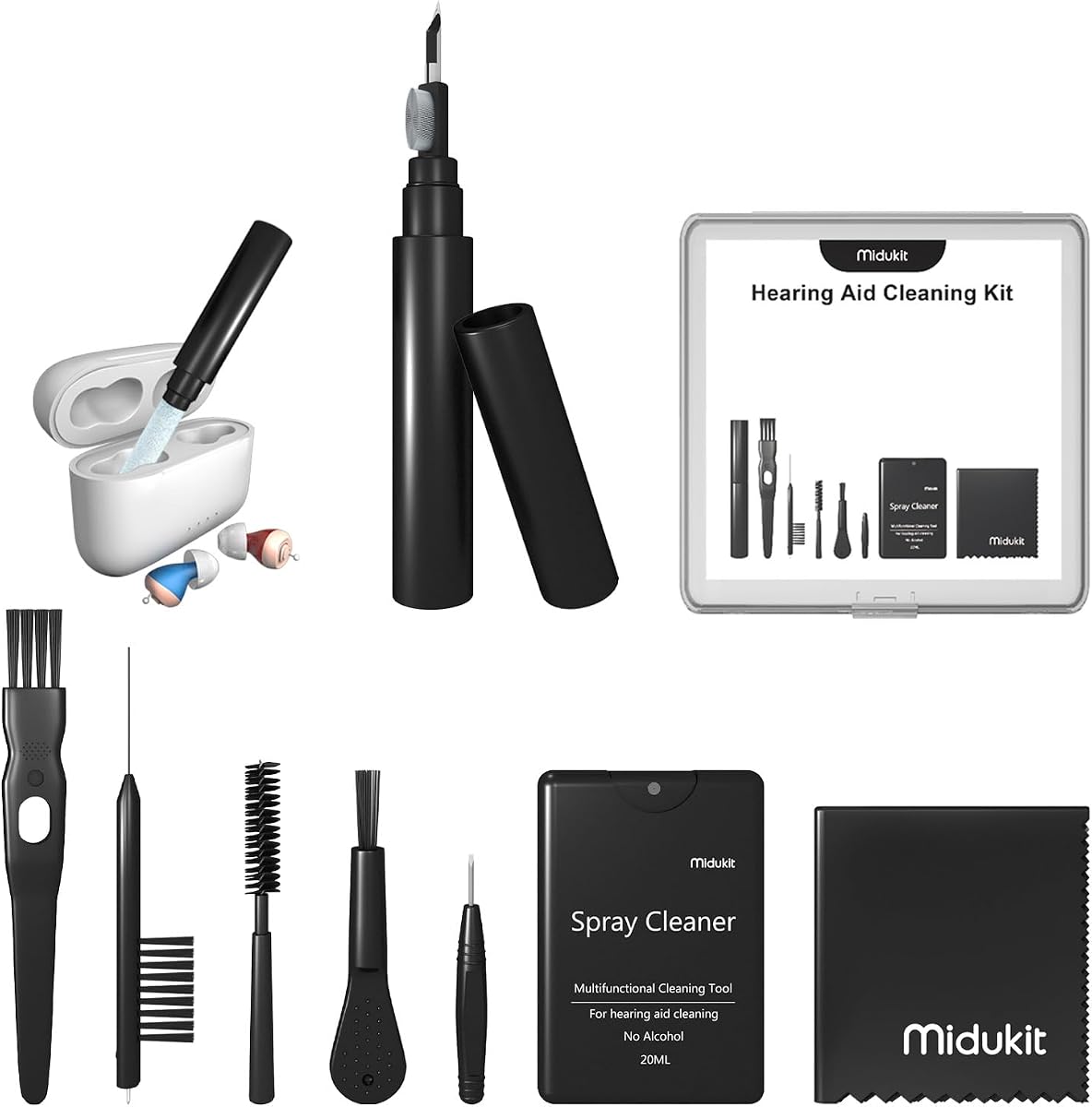
This premium cleaning kit carries a 4.6 rating and is aimed at modern rechargeable and wireless hearing devices. It is described as compatible with hearing aids such as Oticon and Phonak models, including devices used with charging cases, while also covering earbuds and ear molds.
We may earn a commission when you buy through this link, at no additional cost to you.
The kit includes a precision pen, brush, spray, and cloth. These components can be used around sound tubes, microphones, battery compartments, charging accessories, and earmolds. Soft nylon bristles are intended to clean without scratching, while the magnetic tip is designed to help with battery handling. A lightweight case keeps the set compact and travel-ready.
Buyers should still verify that their exact model and its manufacturer instructions allow each cleaning method. Spray should never be sprayed directly into a hearing aid unless the instructions explicitly permit it; applying it to a cloth is generally the safer approach. The inclusion of a spray also makes this kit less minimal than a purely mechanical brush set.
This kit is a strong choice for users with newer rechargeable models who want several cleaning methods in one package. Its combination of precision tools, a cloth, spray, and magnetic handling makes it particularly comprehensive for owners of multiple compatible devices. The case also makes the system easy to keep together during travel or daily use.
Compatibility with rechargeable Bluetooth models and charging cases addresses cleaning needs that may extend beyond the hearing aid itself. It is especially relevant for users who already manage several related accessories.
Soft nylon bristles and a magnetic tip are intended to provide careful access to sensitive areas. The magnetic feature may simplify battery removal, while the brush and precision pen target small openings without requiring aggressive scrubbing.
We may earn a commission when you buy through this link, at no additional cost to you.
This 32-filter wax guard set has a 4.5 rating and offers a preventive alternative to cleaning only after debris has accumulated. It is designed for hearing aids from Phonak, Resound, Widex, Unitron, Jungle Care, and other brands, with four packs included along with a complimentary brush.
We may earn a commission when you buy through this link, at no additional cost to you.
The filters are intended to keep earwax, dust, grease, and moisture from obstructing a hearing aid. An included applicator helps position each filter during replacement. In this way, the product addresses a different part of the care process than brushes and wipes: it helps protect the receiver opening after a compatible wax trap has been cleaned or changed.
Compatibility is not universal, so users should confirm that the filter shape matches their exact hearing aid model and that the manufacturer permits this type of replacement. Filters need periodic replacement and do not make routine exterior cleaning unnecessary. The product also includes a medical warning advising against use with a perforated eardrum or when using ointments.
This set is a useful companion for people whose hearing aids use compatible wax guards. It can reduce the frequency of debris reaching sensitive openings, especially when paired with a brush for routine maintenance. It is not a universal cleaning solution, but it is a focused preventive accessory for devices that use the specified filter system.
A wax filter creates a replaceable barrier at a vulnerable opening. While it does not replace cleaning, it can help limit the buildup of wax, dust, grease, and moisture that would otherwise reach internal components.
The included applicator is intended to make installation more manageable. Confirming the correct filter for the exact device before purchasing is still essential, since appearance alone may not guarantee a proper fit.
We may earn a commission when you buy through this link, at no additional cost to you.
The Phirunty 100-count wipe set has a 4.7 rating and is designed for broad use across hearing aids and hearing amplifiers. It is listed for Oticon, Widex, Phonak, Starkey, Resound, Unitron, Signia, Rexton, Philips, and other brands, making compatibility one of its central selling points.
We may earn a commission when you buy through this link, at no additional cost to you.
Each wipe is alcohol-free and is described as safe for rubber, silicone, metal, plastic, nano waterproof coatings, and other surface materials. It is intended to remove dirt, sweat, oil, fingerprints, and dust without irritating skin. The product can also be used on headphones, phones, and charging boxes, provided those surfaces are compatible with the cleaning solution.
Individually wrapped packets measure approximately 2.36 by 1.97 inches, while the unfolded wipes are about 3.15 by 3.15 inches. This keeps each wipe clean until needed and makes the package convenient to carry. Like other wipe products, however, it cannot remove trapped debris inside narrow tubes or vents and does not replace a brush or cleaning strand.
This is our Best Premium pick because of its combination of a large supply, broad compatibility, compact packaging, and attention to varied device coatings. It suits users with multiple hearing aid brands, earbuds, and charging accessories who want a dependable consumable surface cleaner. Individual wrapping and easy portability make it especially practical for regular on-the-go care.
The stated support for numerous major brands and hearing aid types makes this a practical option for people who use more than one model. Buyers should still verify the device instructions and test on a small surface first.
One hundred individually wrapped wipes create a ready supply for routine maintenance. The packets remain compact, helping the product fit into a travel pouch without introducing loose liquid or damp cloths.
We may earn a commission when you buy through this link, at no additional cost to you.
The right hearing aid cleaning product depends on device design, the locations that collect debris, and the user's preferred maintenance routine. Consider cleaning method, compatibility, material safety, portability, and whether the product addresses surface dirt, blocked passages, battery areas, or replaceable wax filters.
Hearing aid cleaning problems are not all identical. Exterior wipes remove fingerprints, oils, sweat, and dust, while soft brushes collect wax around vents and earmolds. Long nylon strands are intended for narrow sound tubes, and precision pens or picks can help with small openings or battery doors. A comprehensive kit may include several of these formats, whereas a single-purpose product may be better for one recurring issue.
Choose the product that matches the part of your device that becomes dirty most often. If the shell is usually smudged but tubes remain clear, wipes may be sufficient. If wax repeatedly collects inside a tube, prioritize a strand cleaner or brush with a narrow tip.
Compatibility should be checked at the model level whenever possible. Some products are described as suitable for all hearing aid types, while wax filters and certain case-cleaning methods fit only specific devices or components. Also consider whether the cleaning method applies to the shell, receiver, microphone, earmold, removable battery, or charging case.
Read the product listing and the hearing aid manufacturer's care instructions before use. Do not assume that a general electronic cleaning claim permits liquid near a microphone, receiver, or sealed opening.
Cleaning tools should be gentle enough for the device's housing, coatings, earmolds, and other sensitive surfaces. Soft nylon and non-metallic components are generally presented as less likely to scratch than rigid or sharp implements. Wipes should be checked for alcohol content, especially when the hearing aid contains rubber, silicone, acrylic, plastic, or waterproof coatings.
Look for clear material and safety descriptions rather than assuming every wipe is suitable. If a product includes a steel pick, precision point, or spray, learn how to use it correctly and avoid forcing it into a port.
Reusable brushes and cleaning tools can provide long-term convenience, especially for basic wax removal. Disposable wipes and pre-cut strands offer hygienic, predictable handling but must be replenished. A mixed routine often works best: a reusable brush for openings, disposable wipes for exterior surfaces, and replaceable strands when tubes need deeper attention.
Compare convenience alongside waste and replacement frequency. A larger consumable supply may be useful for multiple caregivers or heavy daily use, while a compact reusable set may better suit occasional travelers.
Hearing aids are often carried in small cases, so cleaning supplies need to fit without creating clutter. Individually wrapped wipes are easy to distribute, compact brush sets fit into a pocket or pouch, and strand cleaners benefit from a dispenser that keeps unused strands clean. Larger all-in-one kits should include or be paired with a dedicated case.
Think about where care will happen. A travel kit should be compact and self-contained, while a home kit can include more brushes, cloths, and precision implements for more thorough maintenance.
A brush-only product may be adequate for simple care, while a kit containing a vent cleaner, microfiber cloth, screwdriver, magnetic battery tool, spray, or case can support a broader routine. Extra tools are not automatically better, though. Each included item should serve a clear purpose and be safe for the user's specific device.
Pay particular attention to whether the package includes a way to remove residue from narrow tubes. Many otherwise complete kits include exterior brushes but no long strand, leaving deep passage care to another product.
Devices with removable batteries may need a screwdriver, magnetic tip, or other tool for battery-door access. Rechargeable devices need care around charging contacts and cases, but liquid should never be introduced into a charging port. A soft, dry brush is generally more suitable for dust around contacts than a wet cleaning method.
If the manufacturer recommends a specific cleaning tool or replacement part, follow that guidance over generic accessories. This is particularly important for water-resistant devices whose seals or coatings may be sensitive to aggressive chemicals.
Ratings offer a useful indication of customer satisfaction, but the reasons behind feedback matter more than the number alone. Look for comments about whether tools reach narrow tubes, whether wipes leave residue, whether cases hold together, and whether items match the advertised device compatibility. Consistent reports across many reviews can help identify a product's strongest use case.
Use ratings together with the feature list and device instructions. A highly rated wipe set is not automatically better than a lower-rated strand cleaner when the actual maintenance problem lies inside a sound tube.
Begin by washing and drying your hands, turning off the hearing aid when appropriate, and consulting the device instructions. Remove disposable batteries or place rechargeable devices in their charging case if the manufacturer recommends it. Work over a clean, dry surface so small screws, brush parts, and other components cannot be lost.
Use a dry brush or wax loop for loose debris, moving gently around vents, microphone openings, receivers, and earmolds. A strand cleaner can be inserted through a compatible sound tube and pulled through carefully. Never force a brush, pick, or strand into an opening, and do not spray cleaner directly into a hearing aid unless its instructions explicitly authorize that method.
For the exterior, use a hearing-aid-safe wipe and avoid saturating the device. Follow the product instructions, allow the aid to dry fully, and replace any removed battery door, filter, or cover as directed. If output remains weak, blocked, or different after cleaning, stop and contact an audiologist or hearing aid professional rather than continuing to clean the device yourself.
Start with the manufacturer's care instructions, as the safest method depends on the device's materials, openings, and coatings. In general, use a dry soft brush for accessible debris, a device-safe wipe for the exterior, and a purpose-designed strand only for compatible narrow tubes. Keep liquids away from microphones, receivers, vents, and charging contacts unless the manufacturer explicitly permits them.
Many of the wipes featured in this guide are also marketed for earphones, earbuds, and headphones. Check the wipe ingredients and the device manufacturer's instructions first, particularly for fabric-covered earpads, exposed electronics, and special coatings. A wipe should be used on the exterior only and should not be pushed into openings.
A brush and a wipe serve different purposes. Brushes and wax loops remove loose debris from openings and earmolds, while wipes remove oils, sweat, fingerprints, and dust from exterior surfaces. Using both can create a more complete routine, although a person with only one recurring issue may need only the tool designed to address it.
No. Strand cleaners are intended for compatible narrow tubes and vents, and the device instructions should always take priority. The ends should be inserted carefully and never forced. If a tube cannot accept the strand easily, have the hearing aid checked by a professional instead of pushing harder.
Alcohol-free wipes can be a safer choice for users whose devices contain rubber, silicone, acrylic, plastic, or waterproof coatings, provided the wipe is made for that purpose. Even an alcohol-free product should not be assumed safe for every component, so users should test it on a small exterior area and follow the device instructions.
Cleaning frequency depends on earwax production, the device design, and how much the aid is exposed to moisture, sweat, and dirt. A quick check after removing the device and a more careful routine at the intervals recommended by the manufacturer or audiologist can help prevent buildup. Persistent blockage or sound changes should be professionally evaluated.
No. Wax filters help prevent compatible debris from reaching an opening, but they do not remove oil, fingerprints, moisture, or debris elsewhere on the hearing aid. They also need periodic replacement and may fit only specific models. Brushes and wipes remain useful for routine exterior and opening maintenance.
It is generally better to use wipes explicitly designed for hearing aids and compatible personal audio devices. Household wipes may contain ingredients that can damage coatings or leave residue, and fragrance or moisture may also irritate skin. Check the hearing aid manufacturer's care guidance before using any cleaning product.
The MEDca 100-count wipes stand out as the most convenient all-around option for everyday exterior care, while the five-piece brush set offers the most compact physical cleaning approach. The Phirunty 100-count wipe set provides another strong choice for owners of several device brands who value broad compatibility and individually packed supplies.
Prioritize the cleaning problem you actually have. Choose wipes for surface residue, a dry brush for accessible wax, a strand for narrow compatible tubes, and a wax filter system for compatible receivers. A small combination of purpose-specific tools is often more effective than assuming one product can handle every part of a hearing aid.
Before purchasing, confirm device compatibility and review the manufacturer's cleaning instructions. Ratings, product details, and costs can change, so check the current listing and latest price at the time of purchase to ensure the product still matches your needs and budget.
