
BITFUNX 4-in-1 Adapter
4.2Editor score
RGB and component video modes
1080P HDMI output
Broad classic console support
This HDMI Adapter for PS1 guide compares signal quality, compatibility, aspect ratios, setup needs, and features across ten excellent retro-gaming options.
An HDMI adapter for PS1 can make classic PlayStation games much easier to enjoy on a modern television, monitor, or projector without relying on outdated composite or S-Video inputs. The best adapters balance useful signal processing, simple setup, accurate proportions, dependable audio, and compatibility with the PlayStation models you actually own.
This guide compares ten PS1-to-HDMI solutions using their supplied specifications, supported signal types, console compatibility, resolution claims, aspect-ratio controls, included accessories, and user ratings. It covers dedicated PlayStation adapters as well as general AV-to-HDMI converters, highlighting the distinctions that matter most for crisp, low-friction retro gaming.
Each review explains the standout benefits, practical limitations, and ideal setup for the product. The top selections favor adaptable RGB-based designs, while less expensive composite converters provide a straightforward path to HDMI. Availability and prices can change, so confirm the current listing, package contents, and connector requirements before buying.
4.2Editor score

4.6Editor score
4.3Editor score
The comparison below highlights each adapter's signal path, compatibility, output flexibility, and setup requirements, helping you choose between a dedicated RGB solution and a general-purpose AV converter.


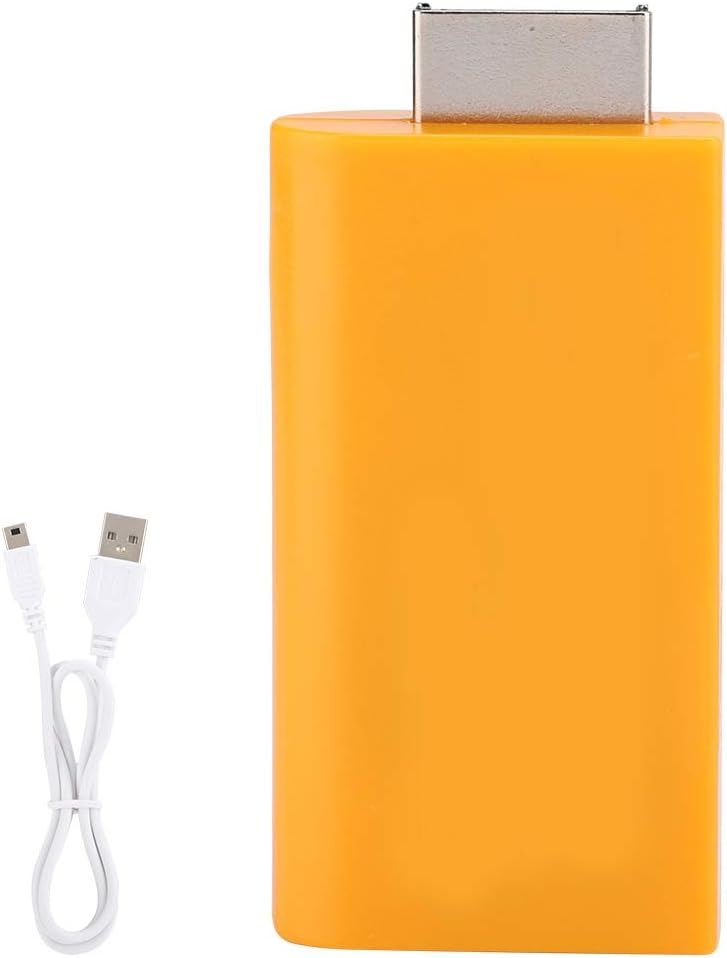

The HD Link HDMI Cable earns the Editor's Choice position because it combines a high 4.6 user rating with a well-rounded feature set. It converts the analog RGB signal from classic PlayStation hardware into digital HDMI, allowing PS1, PS One, fat PS2, and slim PS2 systems to connect to modern HDTVs, monitors, and projectors. Its detachable design and aspect-ratio switch make it especially adaptable for a carefully arranged gaming setup.
We may earn a commission when you buy through this link, at no additional cost to you.
RGB is the key attraction. Rather than relying on the visibly softer composite path, this adapter takes the stronger color-separated signal available from compatible PlayStation outputs and performs upscaled signal processing before producing HDMI. The supplied information reports precision in color, resolution, and detail, although the original console output still determines the final image. A physical toggle supports both 4:3 and 16:9 presentations, and the manufacturer describes latency as unnoticeable during play.
There are some practical constraints. This is a converter and signal-transfer device, not a magical source of new detail, so upgrading from a basic composite adapter may reveal a cleaner image without creating high-definition graphics that the PlayStation never produced. The detachable design also means users may need their own suitable HDMI cable if the included lead is too short. As with many third-party PlayStation accessories, buyers should confirm that their console model exposes the required output.
This is the strongest all-around choice for a reader who wants a dedicated PS1-to-HDMI solution, direct RGB conversion, flexible screen proportions, and broad console compatibility. It suits owners of original PlayStation hardware, PS One systems, and both PS2 form factors. For the best balance of signal path and convenience, it is our leading recommendation.
Using RGB input gives this adapter a more useful foundation than a standard composite converter. The product converts and upscales the analog RGB signal to HDMI for contemporary displays, helping preserve the vivid character of PlayStation-era graphics while replacing obsolete video connections.
The built-in 4:3 and 16:9 switch is valuable for both authenticity and convenience. Choose 4:3 for the traditional PlayStation framing, or 16:9 when that better fits a widescreen television without leaving the game display awkwardly small.
We may earn a commission when you buy through this link, at no additional cost to you.
This PS to HDMI Converter takes the S-Video Y/C signal from the AV Multi-Out port and converts it for modern HDMI displays. It is a sensible middle ground between basic composite adapters and more specialized RGB cables. The 4.3 rating reflects a generally positive user reception, while the product's defining benefit is its cleaner source path and inclusive package.
We may earn a commission when you buy through this link, at no additional cost to you.
The converter supports PS1 and PS2 consoles and is designed for HDTVs, monitors, and projectors. Because S-Video separates luminance and chrominance information, it generally offers a cleaner image path than standard composite video. Nevertheless, the listing appropriately notes that display quality depends on the original console signal and the settings selected on the television. A converter cannot produce detail that was never encoded by the source.
Setup adds one requirement: the unit needs a five-volt USB power source, and the included Micro USB cable must be connected before use. A wall adapter is not included, so an existing USB port or suitable power supply may be necessary. The package does include a 1.5-meter HDMI cable, a one-meter Micro USB power cable, the converter, and a manual, reducing the number of separate items needed for a basic installation.
Choose this converter when you want something more deliberate than a composite adapter but do not need a dedicated RGB solution. It is particularly convenient for users who value included cables and a straightforward connection process. Verify that the console has the appropriate Multi-Out connection and keep a suitable five-volt power source close to the gaming area.
S-Video Y/C output is more informative than a combined composite signal, making this converter a practical middle tier for retro PlayStation owners. It offers a cleaner connection path without requiring the more specialized RGB-oriented design used by some premium alternatives.
The included one-and-a-half-meter HDMI cable and one-meter Micro USB power cable cover the essential connection steps. Users still need access to a five-volt power source, but they should not have to source a separate HDMI lead just to begin playing.
We may earn a commission when you buy through this link, at no additional cost to you.
The True RGB HDMI Cable is a compact converter designed to turn PlayStation 1 and PlayStation 2 video output into HDMI. Its 4.1 rating places it below the higher-rated RGBC-based products, but the core specification remains attractive: it uses true RGB signal output rather than a conventional composite path. It is a portable, flexible, plug-and-play option with no driver installation required.
We may earn a commission when you buy through this link, at no additional cost to you.
The listing describes advanced signal processing for color, resolution, and detail, but simultaneously clarifies that the product transfers video only and cannot improve the source quality. That distinction is important: RGB provides a better base signal, yet the PlayStation's actual graphics and video mode still determine what appears on screen. The converter uses a male PS2-style input and a male HDMI output, so a suitable HDMI cable must be purchased separately.
Compatibility is narrower than the product title may initially suggest. The supplied details limit use to PlayStation 1 and PlayStation 2 systems and exclude PlayStation 3. A Micro USB cable is included, but a power adapter is not, and the listing notes incompatibility with some Sony and Blackmagic-brand television or display products. Checking your display before purchasing can prevent avoidable compatibility problems.
This adapter makes sense for a buyer who specifically values true RGB transfer and does not mind supplying an HDMI cable. It is a direct and portable approach for PS1 or PS2 gaming, but its exclusions and lower rating make it less flexible than the top recommendation. Confirm output ports and power arrangements before ordering.
The main attraction is the use of true RGB output. This gives the adapter a stronger starting signal than composite conversion, although the product clearly states that signal transfer cannot create additional source detail.
A separate HDMI cable and a suitable USB power source may be needed. The product's compact body and driver-free design remain convenient, but the extra planning makes it less turnkey than packages that include both an HDMI lead and clear power instructions.
We may earn a commission when you buy through this link, at no additional cost to you.
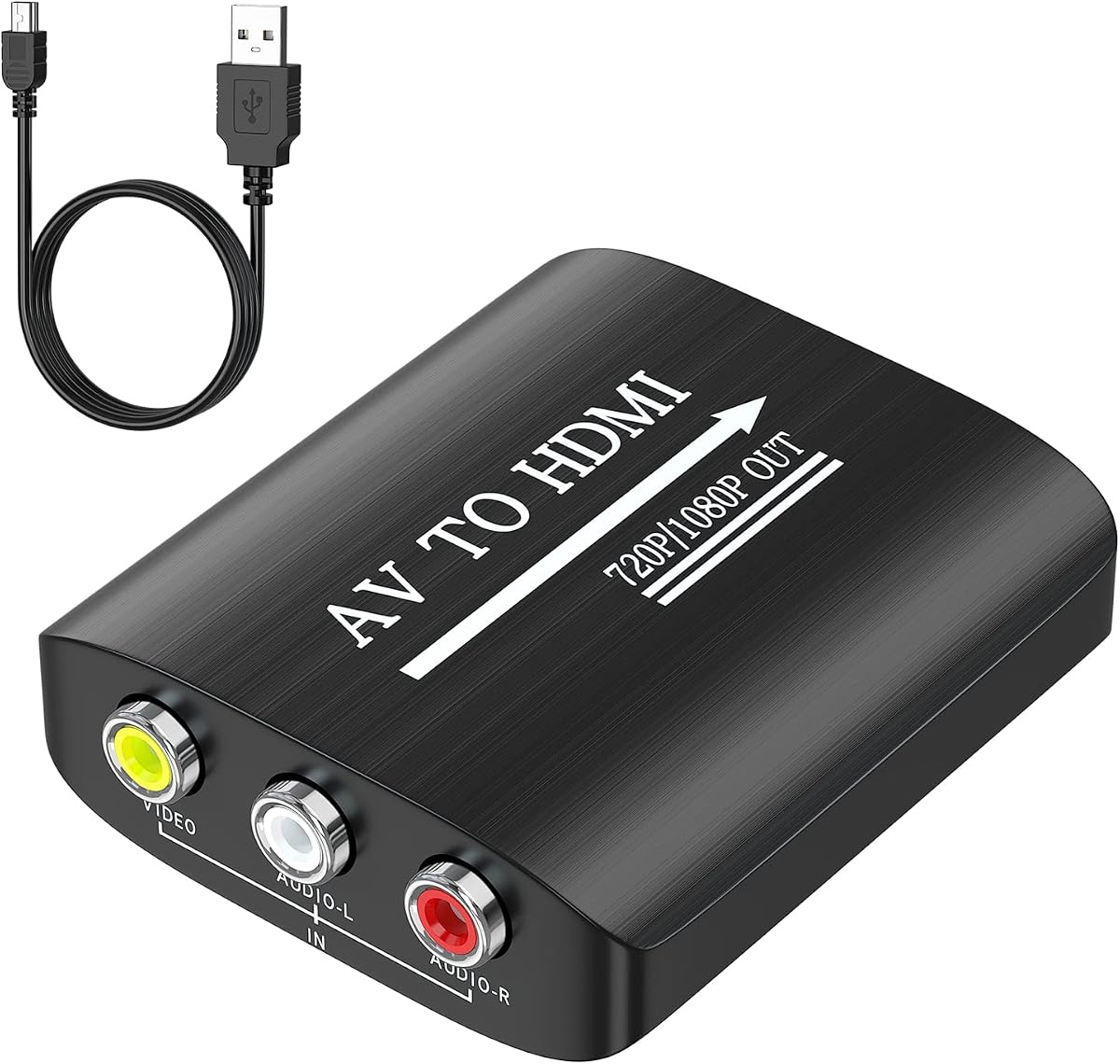
The GINGIN AV to HDMI Converter is the budget-focused selection in this guide. It accepts analog composite audio and video through yellow, white, and red connectors, then provides HDMI output at a selectable 720p or 1080p resolution and 60Hz. With a 4.3 rating and support for numerous classic devices, it is a practical way to reuse a PlayStation on a modern display.
We may earn a commission when you buy through this link, at no additional cost to you.
Compatibility is broad. The supplied information names PS1, PS2, PS3, Xbox 360, Wii, N64, SNES, set-top boxes, VHS, VCR, and DVD players among supported sources. It also handles PAL, NTSC3.58, NTSC4.43, SECAM, PAL/M, and PAL/N standards, making it useful for consoles and media from different regions. The included USB power cable supports plug-and-play use, although a power adapter is not included.
The key compromise is the composite input path. The converter states plainly that it cannot improve video quality, and a dedicated RGB adapter will generally begin with a more detailed signal. There is also an unusual note stating that the unit can only be used when a PS2 is set to RGB output, which should be checked against the user's console settings and actual output wiring. It converts AV to HDMI only, not the reverse.
This is the best budget pick for a reader who wants an inexpensive, broadly compatible box for several retro devices rather than a dedicated PlayStation cable. It is easy to justify when you need one converter for multiple consoles. Those seeking the cleanest PlayStation picture should save up for a dedicated RGB-based option.
The unusually broad device list makes this converter useful beyond a single PlayStation. It is a practical shared solution for a collection of consoles and composite video equipment, provided every source uses a compatible AV connection.
Affordability and broad input support are clear strengths, but composite conversion is the fundamental limit. The unit cannot improve the original video, so buyers should choose it for convenient HDMI access rather than expecting a native high-definition upgrade.
We may earn a commission when you buy through this link, at no additional cost to you.
Kaico's PS1 HDMI and PS2 AV cable stands apart with a built-in RGB-to-YPbPr switch. It supports PS1 and PS2 games and claims compatibility with all PlayStation output resolutions. The 4.2 rating reflects a solid overall reception, while the switching control gives users a way to select the correct signal type for their console configuration.
We may earn a commission when you buy through this link, at no additional cost to you.
The ability to move between RGB and component modes is particularly useful for PS2 owners, whose settings and hardware revisions can determine the available video output. RGB generally provides a more direct representation of the console's color information, while component video offers another valid path to a modern television. The product is described as a plug-and-play converter cable with a durable design intended for regular gaming use.
Users must still select the correct mode and ensure the console is configured consistently; a mismatched setting can lead to a missing or distorted picture. The supplied data does not mention a 4:3-to-16:9 aspect-ratio switch, so this product is less flexible in screen framing than several alternatives. As with other adapters, it transfers an existing signal and does not generate detail beyond the source.
This is a good fit for owners who want one dedicated cable with both RGB and component options, especially when the console's output settings are uncertain. It is also supported by twelve months of repair or replacement warranty coverage. For easy aspect-ratio adjustment, compare one of the dedicated adapters with a built-in ratio switch.
The built-in RGB-to-YPbPr switch gives this adapter meaningful flexibility across PS1 and PS2 hardware. Matching the switch to the console's output setting is the key to obtaining a stable, correctly colored image.
The product is presented as a durable console cable, and twelve months of support, repair, or replacement coverage add confidence for regular players. A fixed cable design can also reduce the number of separate adapters sitting near the console.
We may earn a commission when you buy through this link, at no additional cost to you.
The Tengchi RCA to HDMI Converter is a general-purpose AV adapter with a strong 4.4 rating. It features a female RCA input for yellow, white, and red connections and a female HDMI 1.3 output supporting 1080p. That combination makes it a familiar option for connecting a PlayStation or another legacy source to a television or monitor that lacks the original analog sockets.
We may earn a commission when you buy through this link, at no additional cost to you.
The product supports PAL, NTSC3.58, NTSC4.43, SECAM, PAL/M, and PAL/N inputs, and the supplied information names PS2, PS3, Xbox, N64, set-top boxes, VHS units, VCRs, and DVD players among compatible equipment. The package includes the converter, an HDMI cable, a USB cable, and a manual. Operation is straightforward once the USB power cable is connected to a five-volt, one-amp source; the power supply itself is not included.
Its limitations are equally clear. This is a composite-to-HDMI converter, so it cannot exploit RGB output, and it explicitly does not support 3D or 4K. It also cannot convert HDMI into AV. The advertised 1080p output is an output format for the converted analog source rather than evidence of native high-resolution PlayStation graphics, and the listing states that the adapter cannot improve image quality.
This converter is best for a user who wants a well-rated, broadly supported box and already has composite sources. It may serve as a shared solution for older game systems, VCRs, and media players. It is not the strongest choice for a PS1 enthusiast seeking the strongest possible source signal, where a dedicated RGB converter is more appropriate.
With broad television-standard support and familiar RCA inputs, the Tengchi box can serve several older devices. It is especially useful in a game room where composite equipment must be adapted to a modern display.
The package includes both an HDMI cable and a USB cable, so the main physical connections are covered. A suitable five-volt power supply remains necessary, but it need not be a proprietary adapter.
We may earn a commission when you buy through this link, at no additional cost to you.
The BITFUNX 4-in-1 adapter is the premium selection because it combines broad hardware coverage, both RGB and component inputs, and a 1080P HDMI output. Its 4.2 rating indicates positive user feedback, while the specifications make it particularly suitable for a multi-console PlayStation collection rather than a single original console.
We may earn a commission when you buy through this link, at no additional cost to you.
Compatibility covers the original PlayStation, PS One, fat PS2, and slim PS2. The adapter accepts 240p, 288p, 480i, and 576i source resolutions and upscales them to a digital 1080P HDMI signal. It supports RGBS from the PS1 and either RGBS or YPbPr from the PS2, with a built-in RGB-to-YPbPr switch for selecting the correct PS2 mode.
The distinction between the PS1 and PS2 is important. The original PS1 hardware supplies only RGBS, so users should not expect a separate component input for that system. On a PS2, selecting the wrong mode can produce an incorrect picture, and the supplied guidance explicitly advises changing the switch to match the console setting. The listing also claims video and audio in a fully digital HDMI-compatible format with no transmission loss, though final quality still depends on the source and display.
This adapter is a strong choice for owners of several PlayStation generations who want a single versatile solution. It is particularly compelling when a PS2 is part of the setup because both RGB and component paths are available. The mode controls add a little setup work, but the broad console and resolution support justify that effort for a dedicated retro-gaming installation.
Supporting the original PlayStation, PS One, fat PS2, and slim PS2 makes this a practical centerpiece for a varied retro shelf. The broad console support reduces the need to keep separate adapters for different PlayStation hardware.
RGB and component support give PS2 owners choices based on their console settings and display. The original PS1 uses RGBS, while the built-in switch makes the PS2's available video modes easier to manage.
We may earn a commission when you buy through this link, at no additional cost to you.
The CAMWAY PS1 and PS2 to HDMI Converter is built around uncomplicated setup and display-ratio control. It converts retro AV signals for modern HDMI televisions and monitors at up to 1080P and 60Hz, and its 4.2 rating suggests that many users find the straightforward approach appealing. The built-in 4:3 and 16:9 button is a particularly useful feature.
We may earn a commission when you buy through this link, at no additional cost to you.
Unlike converters that require users to locate and change manual Y/Cb/Pb/Cr/Pr console settings, this product claims true plug-and-play operation. The process is to connect the converter, attach the included USB power cable, and begin playing. The supplied information also lists PAL, NTSC, SECAM, PAL/M, and PAL/N support, which broadens its relevance for consoles from different regions.
The adapter transmits the original resolution and explicitly cannot improve image quality, so 1080P support should be understood as a compatible output format rather than newly rendered high-resolution graphics. The HDMI cable is not included, and a five-volt power source must be available for the included USB lead. Buyers should also check the physical output arrangement on their specific console before installation.
This converter is a good match for someone who values fast setup and wants easy movement between traditional and widescreen framing. It is also small enough to suit family game nights, a secondary display, or a portable retro gaming arrangement. For owners prioritizing the strongest source path, compare its AV-based approach with a dedicated RGB adapter.
The aspect-ratio button lets users choose the traditional 4:3 presentation or a more screen-filling 16:9 mode. This is useful on newer displays that may otherwise show a small or stretched retro image.
The converter emphasizes connection and play with no driver installation and no need to navigate manual component-video settings. The included USB power cable helps, although an HDMI cable still needs to be supplied separately.
We may earn a commission when you buy through this link, at no additional cost to you.
The Shielded AV to HDMI Adapter is a compact converter designed for straightforward PlayStation connections and modern HDMI displays. It has no numerical user rating in the supplied data, so its appeal rests on the stated design rather than a measurable rating history. Its anti-interference interface and tinned copper wiring are intended to support stable signal transmission during regular use.
We may earn a commission when you buy through this link, at no additional cost to you.
The product emphasizes plug-and-play convenience without driver installation. A user connects the adapter to a compatible console and HDMI television or monitor, allowing the converter to handle the signal change. Its palm-sized body is easy to place near a television, store in a drawer, or carry to another location, which is helpful for temporary retro-gaming setups.
Because the supplied information provides fewer detailed output specifications than many competing products, prospective buyers should verify resolution, aspect-ratio options, included cables, power requirements, and exact console compatibility. The design description does not claim to improve image quality, and it does not specify a dedicated RGB input path. Those points may matter significantly to buyers seeking the strongest possible PlayStation picture.
This adapter is a practical choice for a small setup or a user who values a compact, simple unit. Its construction features may help minimize interference, but the limited published detail makes advance verification important. Check the current package information and connector layout before purchasing.
The anti-interference interface and tinned internal conductors are designed to promote dependable signal clarity. These construction details are especially relevant in crowded entertainment centers where several cables and power adapters sit close together.
The palm-sized form is easy to move and requires no driver installation. It is well suited to a secondary television, a traveling game collection, or a compact retro-gaming corner where a permanent built-in connection is unnecessary.
We may earn a commission when you buy through this link, at no additional cost to you.
The Y.D.F HD-Link Cable combines a strong 4.4 rating with useful support for PlayStation 1, PlayStation 2, and PlayStation 3. It converts the relevant console video signal to HDMI, includes a 4:3 and 16:9 output switch, and operates in RGB signal mode. The result is a flexible cable-based option for retro games on modern displays.
We may earn a commission when you buy through this link, at no additional cost to you.
Its plug-and-play design requires no driver installation and keeps the connection process portable. A dedicated console cable can be easier to arrange than a box converter, particularly when the PlayStation sits near a wall-mounted television. The aspect-ratio switch also helps users choose between traditional gameplay framing and a wider presentation for modern widescreen screens.
The listing emphasizes signal transfer rather than image improvement, which is the correct expectation for a converter. RGB is a stronger source than composite, but the console's native graphics remain the limiting factor. Users should also confirm that their console settings and selected video mode align with the adapter, and that a suitable HDMI connection is available at the display end.
This is a well-regarded, versatile option for owners who may use more than one PlayStation generation. The 4.4 rating places it close to the best-reviewed products in the list, while the aspect-ratio switch makes it particularly useful on newer televisions. It is a strong alternative when RGB output and straightforward setup are the main priorities.
Compatibility with PS1, PS2, and PS3 makes this a useful shared PlayStation solution. The product can also play PS1 games through a PS2, giving owners flexibility in how they connect their classic library.
The 4:3 and 16:9 switch addresses one of the most common retro-display issues. It lets players select the traditional frame or a wider layout without relying entirely on television picture controls.
We may earn a commission when you buy through this link, at no additional cost to you.
The right PS1-to-HDMI adapter depends on the signal path, console configuration, display needs, and accessories you prefer. These factors help separate dedicated RGB solutions from general-purpose AV converters and prevent avoidable compatibility issues.
RGB offers the strongest starting point among the commonly used PlayStation video outputs, followed by S-Video and then composite. Dedicated RGB adapters are usually preferable when your console and cable arrangement expose the necessary RGB signal, because the converter preserves more useful color and picture information before producing HDMI. S-Video converters offer a practical middle ground, while composite boxes prioritize universal availability and broad device support.
A PS1 adapter may need to support more than the original PlayStation. PS One, fat PS2, and slim PS2 systems can differ in ports, output settings, and supported video modes, while some products are intended only for PS1 and PS2. Review the exact model list, connector type, and required console configuration. If you expect to use the adapter on a PS3, verify that support explicitly rather than assuming PlayStation compatibility carries across every generation.
Terms such as 1080p, 1080P, 720p, and 60Hz describe the converter's HDMI output rather than the native graphics of a PlayStation. A product can output a modern television resolution while preserving the original low-resolution game image. Look for accurate wording about upscaling and signal transfer, and do not expect native high-definition graphics from any adapter in this category. The original signal, processing method, display, and picture settings all influence the result.
Original PlayStation games were generally designed for a 4:3 display, and many modern televisions scale that image poorly. A converter with a 4:3 and 16:9 switch gives you more control over whether the game retains its traditional shape or fills more of a widescreen screen. Also check the television's own aspect-ratio and overscan controls, because the best adapter setting may still need minor adjustment within the display menu.
Many small AV-to-HDMI converters require external five-volt USB power. Some packages include a USB cable but not a wall adapter, while dedicated console cables may draw power from the console. Check whether an HDMI cable is included, whether the product has a male or female output, and whether the power lead matches the adapter. A short list of missing accessories can prevent an otherwise smooth installation.
The product descriptions in this category refer variously to video, audio, video and audio, and AV conversion. Determine whether the HDMI output carries sound or whether separate analog audio must be connected to the television or sound system. Older AV Multi-Out ports can provide stereo audio, but the converter must also route it correctly. Users who listen through headphones, speakers, or a capture device may have different requirements from those using television speakers.
Even a good adapter may need television assistance. Overscan, black-level, sharpness, and aspect-ratio controls can help the image fill the screen without excessive softness. Products that advertise low or unnoticeable latency are preferable for action games, although latency also depends on the television. Test several picture modes and keep the console and display refresh settings consistent before judging the adapter.
A durable, detachable cable may be preferable for a permanent installation, while a compact converter box is easier to move and share among several systems. Warranty periods provide some reassurance, but they should not replace compatibility checks. Look for clear instructions, a complete package, and a manufacturer that provides usable support. The best adapter is the one whose connectors, signal path, and included accessories fit your particular setup.
Begin by identifying the output on your PlayStation and the input on your display. Connect the adapter using the appropriate PlayStation video cable or AV Multi-Out connection, then attach an HDMI cable between the adapter and the television, monitor, or projector. For converters that require external power, connect the supplied USB lead to a suitable five-volt source before powering the console. Do not force any connector or use an incompatible proprietary port.
Power on the console and display, then select the correct HDMI input on the television. If the picture is missing, check the source selection, cable seating, power connection, and required console video setting. Use the adapter's aspect-ratio control or display menu to choose 4:3 or 16:9 framing. Adjust overscan, picture size, and sharpness carefully, and avoid settings that create excessive edge clipping or sharpening artifacts.
For long-term care, route cables away from pinched areas and strong sources of interference, and avoid leaving the console or adapter powered in an unventilated cabinet. Keep connectors dry and free of dust, and do not pull the adapter from the console by the attached cable. Periodically reseat the HDMI connection if a modern display intermittently loses synchronization, and check the current manufacturer instructions if console settings or hardware revisions differ from the original setup.
An adapter can convert and upscale the console's existing video signal, but it cannot create source detail that was never rendered. Products that use RGB generally provide a better starting signal than composite-based converters, while a television's sharpness and scaling settings also affect the final image. Claims such as 1080p usually describe the HDMI output format rather than native PlayStation graphics.
RGB carries separated color information and generally provides the strongest PlayStation video path when the console and cable support it. S-Video separates color from brightness but remains less detailed than RGB, while composite combines the entire video signal into one yellow connector. A dedicated RGB adapter is usually best for one console, whereas a composite converter can be useful when connecting several legacy devices.
It depends on the product. Several converters support both PS1 and PS2, and a smaller number also list PS3 compatibility, but others are limited to older hardware. Check the supported console models, connector layout, and required video settings before purchasing. A cable that fits the original PlayStation may physically fit a PS2, but it will not necessarily support the correct signal.
Requirements vary by converter and console. Some RGB or component adapters require a corresponding setting in the console menu, while products designed for automatic setup may not. The supplied information for the CAMWAY model states that no manual video-signal setup is required, whereas the BITFUNX and Kaico models include mode guidance. Follow the instructions matching the adapter and console model you own.
This is usually an aspect-ratio issue. Traditional PlayStation games were designed for a 4:3 picture, while many modern displays expect 16:9. Use the adapter's ratio switch when available, then adjust the television's picture size, overscan, and aspect settings. Avoid stretching the image manually if preserving the original composition is important.
First confirm that the display is on the correct HDMI input and that the converter has required power. Re-seat the PlayStation output and HDMI cables, verify the selected console video mode matches the adapter, and check whether the package includes every necessary cable. Also test another HDMI input or display if available, as the problem may lie with the television setting or cable rather than the converter.
That depends on the adapter's audio routing. Some HDMI converters carry the PlayStation's analog stereo audio through HDMI, while others are video-only or require a separate audio connection. Check the product specifications and included ports. If you plan to use the original PlayStation AV Multi-Out, the standard analog audio can often be routed directly to a television or sound system independently of the video adapter.
A dedicated cable is often tidier for a permanent single-console setup and may support stronger signal modes such as RGB. A converter box is more portable and may be easier to share among several legacy devices. The best choice depends on the signal you need, the connectors your console exposes, and whether you value a complete cable package or a flexible multi-purpose device.
The HD Link HDMI Cable is the strongest overall choice because it combines RGB conversion, broad PS1 and PS2 compatibility, a useful 4:3 and 16:9 switch, and a detachable design. The BITFUNX 4-in-1 adapter is the premium option for collectors who want RGB and component modes across four console variants, while the GINGIN AV to HDMI converter offers the most budget-friendly route for several composite-based retro devices.
Prioritize the source signal before any other feature. Dedicated RGB or well-implemented S-Video conversion generally offers a more useful foundation than composite, but the best adapter is still the one that matches your console, display, and setup. Confirm audio routing, power requirements, included cables, aspect-ratio controls, and regional video support before placing an order.
Current listings, package contents, availability, and prices can change over time. Check the product page and manufacturer instructions when shopping, especially for models whose specifications mention PS2 output settings or display compatibility restrictions. With those checks completed, a suitable adapter can make classic PlayStation gaming clean, convenient, and enjoyable on modern screens.