
GOUNENGNAIL Heavy-Duty Copper Kit
4.5Editor score
Twenty-four terminal positions
Twelve-inch copper construction
Stainless steel mounting hardware
Grounding bus bars provide a common, organized connection point for equipment grounds, neutral conductors, and other approved bonding connections. A useful installation must offer enough terminal positions, suitable conductor capacity, dependable insulation, and a secure mounting method. The right bus bar depends heavily on panel dimensions and code requirements.
This guide compares ten grounding bus bars using the information supplied for each product. It considers conductor material, terminal count, overall dimensions, mounting hardware, insulation, voltage or current specifications, and the environments each kit is designed to serve. Copper wall-mounted kits are compared alongside compact brass terminal blocks and panel-specific alternatives.
The selections reveal that there is no single bus bar for every job. Heavy-duty copper kits suit larger equipment grounding and transmission applications, while compact blocks work well in distribution boxes, load centers, marine installations, and other constrained spaces. Ratings and product availability can change, and current prices should be confirmed before purchase.
4.5Editor score

4.8Editor score
4.5Editor score
As an Amazon Associate we earn from qualifying purchases.
The table below compares the ten products by material, capacity, mounting approach, and intended installation environment, making it easier to identify the most appropriate option for a panel or equipment grounding system.



The GOUNENGNAIL 10-inch Copper Ground Bar Kit combines a substantial C1100 copper plate with 16 quarter-inch terminal positions, making it the most balanced option in this guide. Its 4.8 rating reflects strong customer satisfaction, while the included SM40 polyester standoff insulators and stainless steel hardware give it a purposeful panel-mounting design.
We may earn a commission when you buy through this link, at no additional cost to you.
The copper plate measures one-quarter inch thick, two inches wide, and ten inches long, providing a durable common connection surface. Two wall-mounting brackets, two standoff insulators, and 16 sets of washers and bolts are supplied. The fasteners are described as assembled before packaging, which helps reduce loose hardware and makes installation more organized.
The manufacturer identifies the insulators as UL Recognized SM40 polyester material and states a rated impulse voltage of up to 7.4 kV, while the product title refers to 7.2 kV. Because that small distinction exists, installers should use the documentation and markings supplied with the current package rather than assuming either figure from an old listing.
This kit is most appropriate for users who need more capacity than a small terminal block but do not require the 24-position coverage of the larger copper option. It is listed for power distribution cabinets, equipment grounding connections, ham radio, transmission, and fixed copper or copper bus applications. For those uses, its balance of capacity, conductor support, and complete hardware makes it the strongest general recommendation.
Sixteen positions provide room for multiple equipment grounds without making the bus bar as expansive as a 12-inch, 24-position design. The two-inch width offers a useful surface for securing conductors while remaining manageable inside ordinary distribution enclosures.
The kit includes stainless steel brackets, washers, bolts, and warning tags rather than leaving the mounting system to chance. Preassembled terminal hardware also reduces the chance of losing small components during installation.
We may earn a commission when you buy through this link, at no additional cost to you.
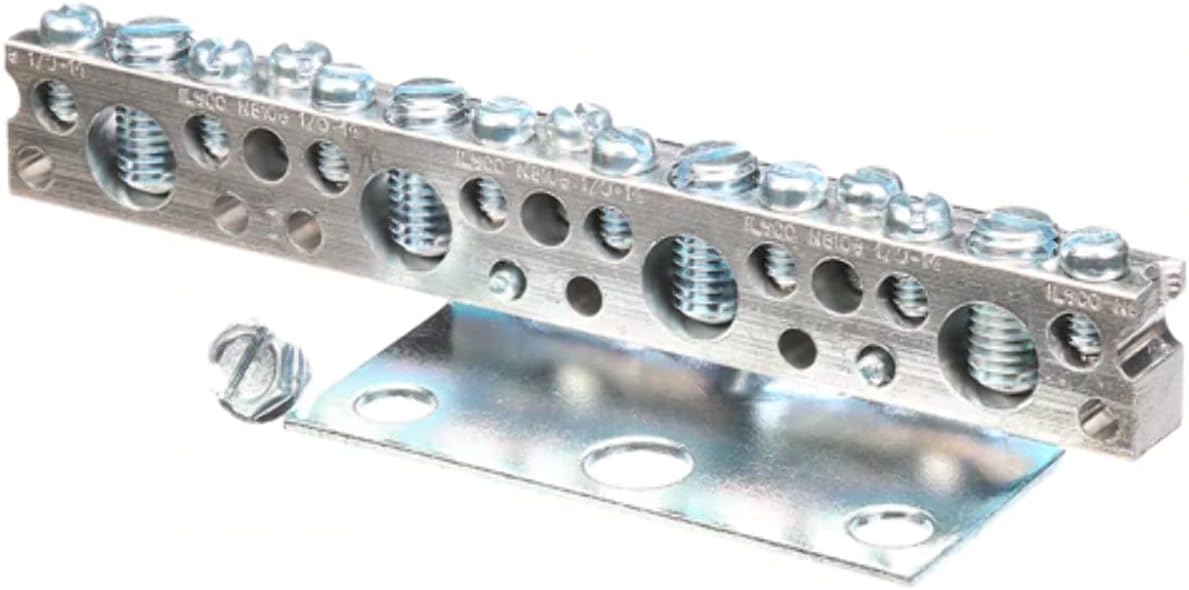
The MURRAY ECLX072M is notable for its mix of 11 small and four large terminal openings, giving installers flexibility in conductor size. With a 4.6 rating and 15 total positions, it is a practical choice for panels that combine smaller branch-circuit conductors with larger feeder or equipment grounding conductors.
We may earn a commission when you buy through this link, at no additional cost to you.
Small openings accept copper or aluminum wire from No. 14 through No. 6. Large openings accept copper or aluminum wire from No. 14 through 1/0. The overlapping No. 14 range allows installers to select the opening that fits the conductor and termination method, rather than forcing every wire into one standardized position.
The supplied information does not describe the base material, insulation arrangement, or included mounting hardware in detail. That makes this kit less straightforward than the wall-mounted copper products whose construction is fully specified. Buyers should inspect the package and verify that its configuration matches their enclosure and conductor layout before ordering.
The MURRAY kit is best for users who value conductor flexibility over a fully specified wall-mount installation system. Its one-inch-or-greater position spacing can also make larger lugs easier to position. It is a sensible fit for service equipment, transfer equipment, and other applications where mixed wire sizes must terminate on one grounding assembly.
Large openings accommodate conductors up to 1/0, while smaller openings serve the No. 14 through No. 6 range. This lets installers reserve the four large positions for the heaviest conductors rather than compromising the remaining terminations.
Accepting both copper and aluminum provides useful flexibility in repair, expansion, and mixed-conductor panels. The correct wire size, strip length, and termination method still need to follow the applicable electrical requirements.
We may earn a commission when you buy through this link, at no additional cost to you.
This 7.8-inch copper grounding bar kit delivers 16 terminal positions in a relatively compact format, combining a 4.8 rating with a straightforward kit layout. The C1100 copper bar is designed to provide good conductivity and resist corrosion, while the included T-post insulators separate the bar from a grounded enclosure.
We may earn a commission when you buy through this link, at no additional cost to you.
The supplied specifications state a copper conductivity test of no less than 54.5 Ms/m and a resistance value of no more than 0.0820 × 10^-6 Ω·m. It includes one copper bar, two insulator T-posts, two M8 insulator screw bolts, and 16 sets of washer bolts. That combination gives the installer the principal components required for a complete mount.
Its short overall length means less panel space is occupied than with a 10- or 12-inch bar. However, 16 positions distributed along 7.8 inches may feel crowded when larger ring terminals or cable lugs are involved. Buyers should check the physical clearance and the shape of every lug before committing to this layout.
The kit is well suited to home electrical engineering and compact power distribution cabinets where many grounding points must be organized without using a full-length wall-mounted bus. It is a particularly compelling choice when sixteen positions are desirable but panel width or depth is limited.
The bus bar provides more terminations than many similarly sized products, which can reduce the need for multiple small grounding blocks. That consolidation can also make conductor routing and visual inspection easier.
Published conductivity and resistance figures provide a clearer technical basis for comparison than a generic claim of high quality. These figures describe the supplied product, while installed performance still depends on clean contacts and proper terminations.
We may earn a commission when you buy through this link, at no additional cost to you.
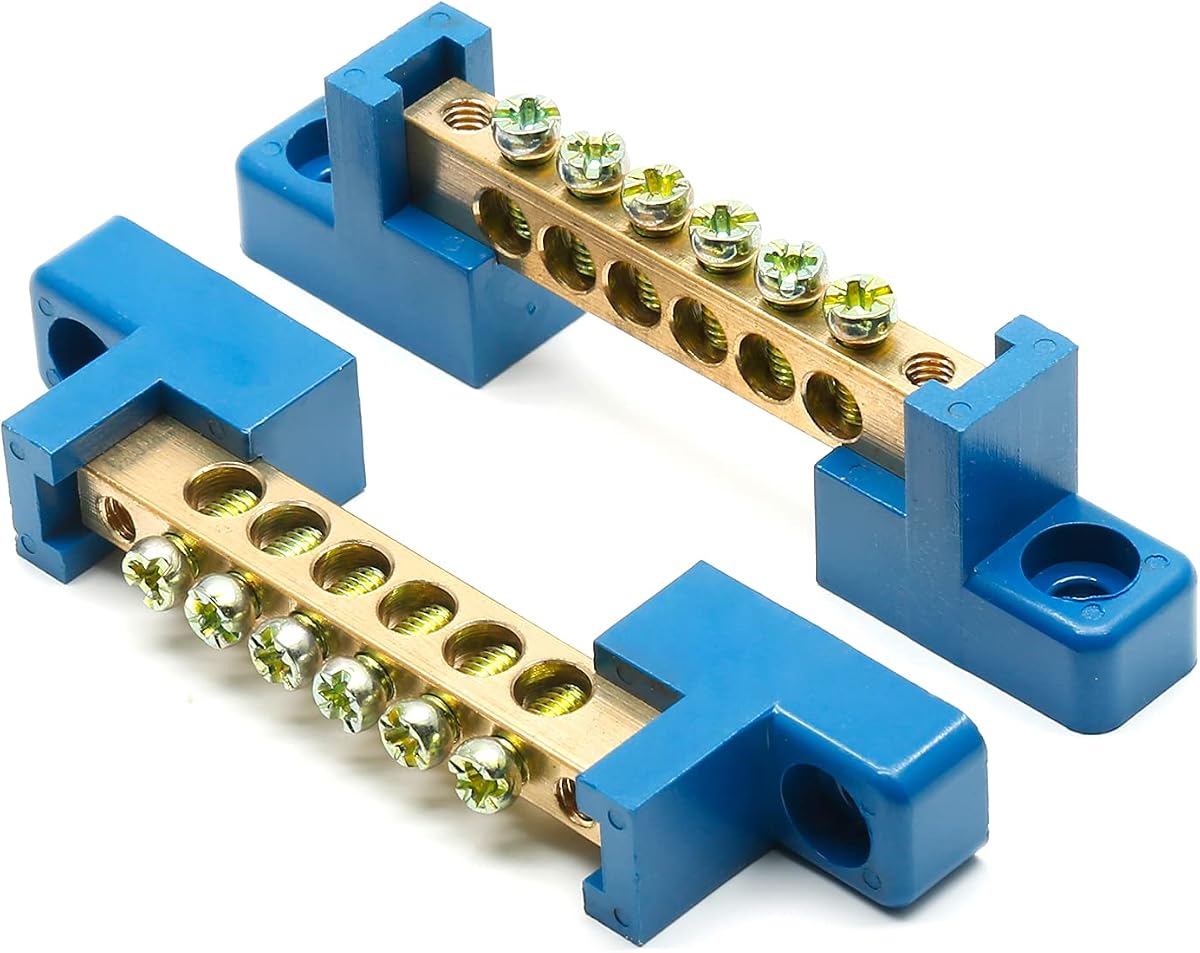
The Bonsicoky package includes two six-position brass ground bar terminal blocks, offering 12 total connection points in a compact format. Its 4.5 rating indicates generally positive customer feedback, and the paired-block arrangement gives installers more freedom than a single fixed bus bar.
We may earn a commission when you buy through this link, at no additional cost to you.
Each block measures 83 by 21 by 12 mm, or 3.27 by 0.83 by 0.47 inches. Every block has six positions with a stated 5 mm, or approximately 0.2-inch, hole diameter. Brass construction provides a durable metal contact surface and is described as resistant to rust, oxidation, and long-term wear.
These are small terminal blocks rather than heavy-duty wall-mounted copper assemblies. The supplied information does not provide a current rating, voltage rating, conductor range, or detailed insulation specification. As a result, they are best treated as general-purpose grounding organization components rather than assumed substitutes for a code-specific heavy-duty bus bar.
The product is listed for PE30 distribution boxes, power distribution cabinets, and lighting boxes. It can be an economical choice for installers who want several independent grounding points in compact enclosures. The two-pack format is particularly useful when one block can serve incoming equipment and the other can organize outgoing branch connections.
Separate blocks can be mounted where they are easiest to wire and inspect. They can also divide a system into functional groups, such as power and signal grounds, provided the installation follows the intended bonding design.
The small footprint and brass body make this set attractive for distribution and lighting boxes. Material choice supports durability, but users should still verify conductor range, tightening requirements, and environmental suitability.
We may earn a commission when you buy through this link, at no additional cost to you.
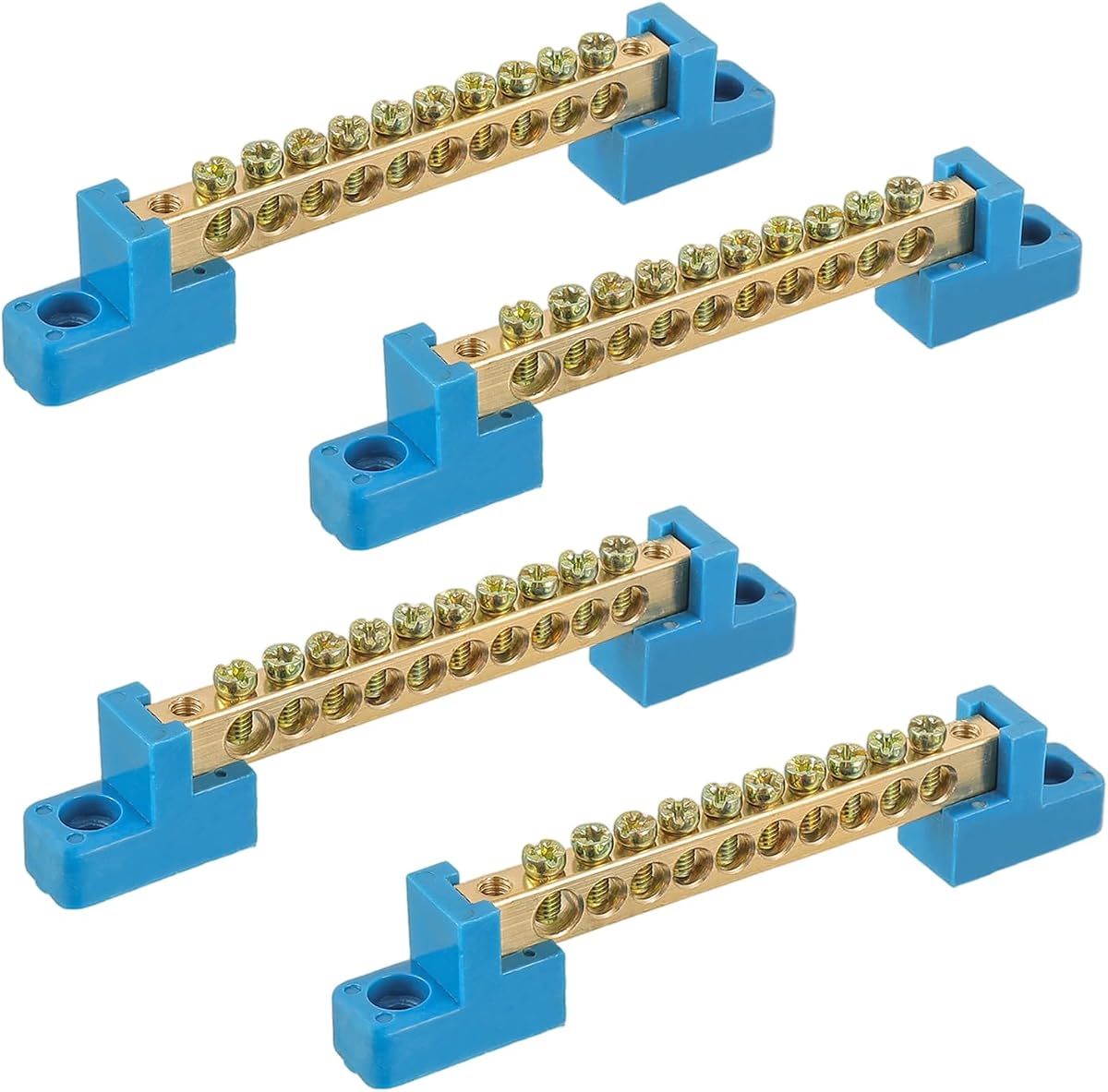
The four-piece grounding bus bar set provides an unusually high number of positions in a collection of small components: four bars with 10 positions each, for 40 total positions. Its 4.4 rating is slightly lower than the leaders, but the package offers flexible distribution across several equipment or distribution locations.
We may earn a commission when you buy through this link, at no additional cost to you.
The bars use brass bodies, while the base portions use plastic insulation. Terminal screws use M4 sizing and have galvanized surfaces intended to resist rust. The description notes that users can choose the number of screws according to their needs, allowing unused positions to remain available for future connections.
Potential applications include marine environments, mechanical equipment factories, distribution cabinets, and boxes. The product's compact blocks are especially relevant where a single large copper bar would be difficult to fit. However, the supplied information does not provide detailed voltage, current, conductor-size, or environmental ratings, so it should not be assumed suitable for every installation.
This set is attractive for installers servicing multiple enclosures or building an expandable collection of grounding points. It may also work well for controlled equipment grounding where compact blocks are preferred. Users should confirm the physical mounting method and required wire size before purchase, especially in exposed or high-current locations.
Four separate bars can be placed in different cabinets, equipment sections, or planned expansion areas. This avoids forcing every connection into one crowded common point.
Because the number of screws can be selected, installers can leave positions open until needed. That makes the set practical for staged installations while preserving room for later equipment connections.
We may earn a commission when you buy through this link, at no additional cost to you.
The Square D PK7GTACP is built around a specific and recognizable need: providing ground feeds to neutral bars in load centers and related CSED, NQOD, and NF panel-board equipment. Its 4.7 rating and seven-terminal design make it a focused option for installers working with compatible residential or light-commercial equipment.
We may earn a commission when you buy through this link, at no additional cost to you.
Rather than competing with long, standalone copper kits, this product emphasizes a compact, lightweight form that fits established panel layouts. The listed uses make it especially relevant when replacing or supplementing the ground bar in a compatible enclosure. ANSI certification is stated, adding a formal standards reference to the product description.
Seven terminals may be sufficient for a conventional load-center application, but they offer little spare capacity for elaborate custom bonding schemes. The compact specification also means buyers need to match the physical footprint and intended function of the original panel component rather than selecting solely by conductor count.
This Square D kit is the most specialized selection in the list. It is a strong choice for a technician seeking a straightforward replacement or feed bar for compatible panel equipment. For a new enclosure with many unrelated grounding points, one of the larger copper kits would usually offer more flexibility.
The stated compatibility with load centers, CSED devices, NQOD equipment, and NF panel boards narrows the application and makes matching easier. It is designed for a defined role rather than a universal collection of grounding points.
The reduced physical burden suits equipment where space is limited. Seven terminals provide a focused connection point without the footprint of a large wall-mounted copper assembly.
We may earn a commission when you buy through this link, at no additional cost to you.
The 12-inch GOUNENGNAIL kit is the most premium-oriented option here, offering 24 precisely machined holes and slots on a substantial C11000 fine copper plate. The 4.5 rating is solid, and the kit's generous capacity makes it a compelling choice for heavy-duty power distribution, transmission, radio, and equipment grounding systems.
We may earn a commission when you buy through this link, at no additional cost to you.
The bar measures 12 by 2 by one-quarter inch, with a minimum metric thickness of 6 mm. Two 2-by-2-inch standoff thermoset insulators are made from UL Recognized material and rated at 2500V. The package also includes 304 stainless steel brackets, 24 sets of stainless steel washers and bolts, and an aluminum warning tag.
Compared with the 10-inch model, this version provides eight additional positions and a longer mounting footprint. That extra capacity can reduce the need for a second bus or crowded daisy-chained arrangements. The downside is obvious in constrained cabinets, where a 12-inch bar may be harder to position and service.
The kit is best for installations that genuinely need a large number of grounding points or heavy-duty construction. For compact service panels, its capacity will be unnecessary. For industrial cabinets, transmission systems, ham radio installations, and multipoint equipment grounds, the 24-position layout and robust hardware make it a strong premium recommendation.
Twenty-four positions allow a large number of conductors to be organized on one common bar. Machined holes and slots add versatility for different lug sizes and termination arrangements.
The two-inch standoff geometry creates separation between the copper bar and mounting surface. Stainless steel brackets, fasteners, and washers complement the heavy copper construction for demanding panel environments.
We may earn a commission when you buy through this link, at no additional cost to you.
This 12-inch GOUNENGNAIL kit stands apart with a four-inch-wide C1100 copper bar, creating more usable surface area than the standard narrow heavy-duty kits. It includes 15 precisely machined terminal positions and 15 sets of terminal bolts and washers, making it a specialist option for larger cable lugs or broader equipment grounding arrangements.
We may earn a commission when you buy through this link, at no additional cost to you.
The copper section measures 12 by 4 by one-quarter inch, with minimum metric thickness of 6 mm. Two red and two black two-inch standoff insulators are included, along with stainless steel brackets and an aluminum warning tag. The 2500V insulation specification and UL Recognized thermoset material support its use in industrial panel environments.
The wide bar can improve visibility and physical clearance for large terminations, but it also requires a panel with substantial width. Color-coded insulators may help organize positive and negative elements, although a grounding bus itself is not automatically a neutral or positive bus. Users must follow the intended system design rather than infer functions from color alone.
This is a good choice for enclosures designed around broad, heavy-duty bus bars. Its 15 positions are fewer than the 24-position narrow kit, but its extra width may be the more important dimension for the actual lugs. Because no customer rating is available, the decision should rely primarily on the verified dimensions and material specifications.
The four-inch face provides more room for cable lug hardware than a two-inch bar. That can reduce congestion and make individual terminations easier to inspect during maintenance.
Red and black insulators help distinguish different bus elements within the enclosure. They should complement a clearly designed system, not serve as a substitute for proper conductor identification.
We may earn a commission when you buy through this link, at no additional cost to you.
The Multipurpose Copper Ground Bus Bar differentiates itself through sliding grounding bolts that can accommodate one-hole or two-hole cable lugs. Its 4.6 rating, 10 terminal positions, and 7.88-inch length make it a versatile middle ground for equipment grounding and power distribution cabinets.
We may earn a commission when you buy through this link, at no additional cost to you.
The C1100 copper plate measures 7.88 by 2.36 by 0.157 inch. Its terminal bolts can slide, with a stated minimum width of five-eighth inch between centers. This flexibility is useful when the hole spacing of different cable lugs does not match a fixed pattern. The kit includes one copper plate, two stainless steel brackets, two 1.57-inch standoff insulators, and 10 sets of stainless steel washers and bolts.
The insulators are described as UL Recognized resin, while the bar is positioned to inhibit corrosion and support conductivity. Although the 0.157-inch thickness is meaningful, it is less than the quarter-inch copper used by the heavier GOUNENGNAIL kits. Users should compare not only the conductor footprint but also the mechanical demands of the enclosure.
This product is best for installers dealing with mixed lug styles or limited panel space who still want a dedicated copper bus. The adjustable terminals simplify installation planning. It is less suitable when maximum position count is the priority, but its versatility and manageable dimensions make it a compelling multipurpose option.
Sliding bolts allow the bar to accept one-hole and two-hole lugs more readily than a fixed-hole design. This can simplify procurement when several lug patterns are already in use.
The 7.88-inch bar balances conductor surface area with a smaller installation footprint. It offers a useful middle ground between compact brass blocks and full-size heavy-duty copper kits.
We may earn a commission when you buy through this link, at no additional cost to you.
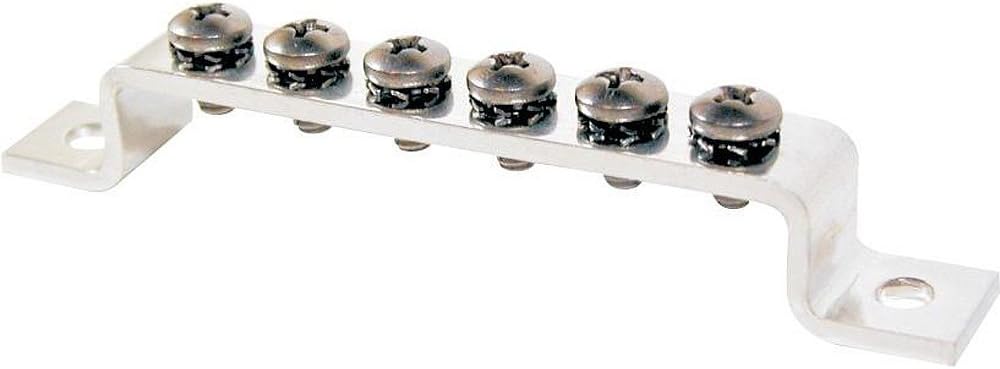
The Blue Sea Systems 2306 is a compact grounding bus bar with an unusually clear electrical specification: 100A continuous DC rating and 48V maximum operating voltage. Its six #8-32 terminal screws and two mounting holes for #8 screws make it particularly relevant to low-voltage marine electrical systems.
We may earn a commission when you buy through this link, at no additional cost to you.
The bar uses tin-plated pure electrical copper for conductivity and corrosion resistance. Tin plating is especially relevant in humid or salty environments where exposed copper can deteriorate more quickly. The compact format and explicit current rating make the product easier to evaluate against a defined use case than a general-purpose block.
The 48V maximum means this is not a general answer for higher-voltage panels, even if its six conductors seem adequate. The 100A continuous rating describes the stated operating limit, and real installations must also consider conductor size, termination quality, ambient conditions, and the number of connected loads.
This bus bar is a strong option for a 48-volt DC installation, especially in a boat or similarly demanding environment. Marine users value its small size, copper construction, and corrosion-resistant finish. It is less appropriate for large industrial systems, high-voltage AC equipment, or projects needing more than six connection points.
The stated 100A continuous rating and 48V maximum allow buyers to confirm suitability before installation. These limits should be respected in system design rather than treated as general marketing language.
Tin-plated pure copper combines a conductive contact surface with added corrosion resistance. The compact six-screw format fits neatly into many low-voltage distribution arrangements.
We may earn a commission when you buy through this link, at no additional cost to you.
The right grounding bus bar depends on the conductors being connected, available panel space, mounting surface, voltage and current requirements, and whether the installation needs a dedicated copper assembly or a compact terminal block.
Begin with the conductors that will actually terminate on the bar. Copper bus bars are the most broadly described options in this comparison, but product suitability still depends on whether the attached leads are copper, aluminum, or a combination. The MURRAY ECLX072M explicitly accepts both copper and aluminum wire, with separate small and large openings covering No. 14 through No. 6 and No. 14 through 1/0 conductors respectively.
Match the terminal opening, lug geometry, and stated conductor range to the installation. Do not assume every position can accept the same cable size or lug shape. Larger conductors need adequate metal thickness, bolt strength, and physical clearance.
Count the present conductors and add realistic room for future equipment. The products in this guide range from six positions on the Blue Sea Systems 2306 to 24 on the heavy-duty GOUNENGNAIL kit. The four-piece brass set offers 40 positions across four separate bars, while the 10-inch copper kit supplies 16 positions on one common assembly.
More positions are not always better if lugs cannot physically fit. A densely populated two-inch bar may be difficult to wire, while a longer bar may exceed the enclosure dimensions. Choose enough capacity for serviceability without overcrowding the mounting area.
Copper construction is common among the larger wall-mounted kits, but thickness and dimensions differ. The 10-inch GOUNENGNAIL product uses a quarter-inch C1100 plate, and the 12-inch heavy-duty model also uses quarter-inch C11000 copper. The multipurpose option is thinner at 0.157 inch, while the compact alternatives use brass.
Compare the complete assembly rather than focusing only on the bar. Brackets, washers, bolts, and insulating standoffs contribute to mechanical durability. A thicker bar may be preferable where connections are large, numerous, exposed to vibration, or subject to frequent maintenance.
Published ratings help define the range of appropriate uses. The Blue Sea Systems 2306 states a 48V maximum and 100A continuous DC rating. The Square D kit is ANSI certified and intended for specified panel equipment. Other wall-mounted kits identify UL Recognized insulator material and voltage-related figures, including 2500V for the 12-inch standoff options.
A bus bar's rating does not override the requirements of the complete electrical system. Conductor ampacity, overcurrent protection, fault current, enclosure temperature, and applicable local rules can be decisive. Consult current product documentation and the relevant electrical authority before installation.
Wall-mounted kits use brackets and standoff insulators to maintain separation from a panel surface. Compact terminal blocks are designed to fit smaller distribution and lighting boxes, while the Square D kit targets compatible load-center equipment. The MURRAY product offers limited mounting information, so its physical compatibility should be verified from the package or manufacturer.
Measure the panel's usable width, depth, mounting-hole locations, and clearance around the enclosure door. Wide or long bars may require extra working space for tools and lugs. A compact block is easier to conceal but may not provide the conductor flexibility needed for heavy equipment grounding.
Standoff insulation prevents the grounded copper bar from unintentionally contacting a conductive enclosure. The wall-mounted GOUNENGNAIL kits use polyester or thermoset insulators described as UL Recognized material, while compact brass blocks use a plastic insulated base. The Blue Sea Systems product uses tin-plated copper for conductivity and corrosion resistance.
The environment should influence the decision. Marine installations benefit from corrosion-resistant finishes, while industrial areas may involve vibration, dust, moisture, or temperature changes. A complete kit with suitable brackets and insulators is generally more practical than combining a bare bar with improvised supports.
The hardware should accommodate the lugs actually used in the system. The multipurpose GOUNENGNAIL kit has sliding grounding bolts for one-hole and two-hole cable lugs, with a stated minimum center-to-center width of five-eighth inch. Fixed-position kits may be easier to identify, while adjustable hardware can simplify mixed-lug installations.
Serviceability matters too. Leave enough room to remove a conductor without shifting adjacent lugs, and avoid arrangements that make it impossible to reach a bolt. Clear labeling and consistent conductor routing can make future inspections safer and more efficient.
The larger copper kits include most of the components needed for mounting, including brackets, insulators, washers, bolts, and warning tags. The Bonsicoky and four-piece brass products emphasize compact terminal blocks, while the Blue Sea Systems unit includes its mounting holes and terminal screws as part of the defined design.
Check the package contents before ordering separate hardware. Complete kits reduce mismatched fasteners and uncertain insulation lengths. Even so, verify that the included hardware matches the enclosure, conductor lugs, and grounding system, and follow the manufacturer's tightening instructions.
Plan the installation before mounting the bus bar. Identify the enclosure, grounding electrode or bonding point, each equipment ground, the required conductor sizes, and the available clearance. Mark mounting positions for the brackets or insulated base, then verify that no unintended contact will occur between the conductive bar and the panel.
Mount the bar securely with the specified brackets, screws, and insulators. Clean the mounting surfaces and follow the hardware tightening sequence recommended for the product. Connect conductors in a sequence that supports clear access, use the correct lug and opening for each wire, and observe the stated torque if the manufacturer provides it. Keep bare copper from touching unrelated conductive parts.
After wiring, inspect every termination and test the intended bonding path with appropriate equipment. Do not disconnect or alter protective bonding simply to make a continuity check. Periodically look for loose terminals, discoloration, corrosion, damaged insulation, physical movement, and signs of overheating, and correct any issue before the connection is placed back into service.
A grounding bus bar creates an organized common connection point for equipment grounds, bonding conductors, and other connections permitted by the electrical design. It helps keep multiple terminations accessible and properly identified. It does not replace the grounding electrode system, overcurrent protection, or other required circuit components.
Copper is generally preferred for substantial current-carrying grounding and bonding assemblies because of its conductivity and mechanical properties. Brass blocks can be suitable for smaller distribution applications. The best material depends on conductor size, available space, environment, and applicable electrical requirements.
It depends on the system design and applicable electrical rules. Some equipment grounds and circuit conductors may share a grounding terminal on equipment, while other systems require separation. Always follow the equipment instructions, the panel design, and the applicable code rather than assuming every ground can be combined.
Count all required connections and add practical expansion space without overcrowding the bar. The products reviewed range from six to 24 positions per bar, with one set providing 40 positions across four blocks. Account for large cable lugs and the space needed to tighten and inspect each connection.
Wall-mounted conductive bars generally need suitable insulation from a grounded enclosure to prevent unintended bonding at multiple points or improper current paths. The reviewed copper kits use standoff insulators, while compact terminal blocks use an insulated base. Use the specified insulating components rather than mounting the copper directly against metal.
Only when the intended design permits it and the required conductive or insulating arrangement is met. Most standalone copper kits supplied here use standoffs specifically to separate the bar from the panel. Follow the product instructions and the grounding design for the enclosure to avoid unintended bonding.
The stated ranges vary significantly by product. The MURRAY kit accepts No. 14 through No. 6 in small openings and No. 14 through 1/0 in large openings, while several brass blocks do not publish conductor ranges. Confirm the terminal, lug, and bar specifications against the planned wires before purchasing.
Keep the mounting hardware tight, connections clean, and conductors properly supported. Inspect for corrosion, discoloration, damaged insulation, loose lugs, or movement, particularly in damp or industrial environments. Any overheating or damaged connection should be investigated by a qualified person before the system remains energized.
The GOUNENGNAIL 10-inch, 16-position copper kit is the strongest all-around choice because it combines substantial copper construction, insulated wall mounting, complete stainless steel hardware, and enough capacity for many grounding arrangements. The 12-inch, 24-position model is the premium option for larger systems, while the Bonsicoky two-pack is a budget-friendly choice for compact distribution boxes.
Prioritize verified conductor compatibility, the number of usable terminals, physical panel clearance, and the required electrical rating before considering any other feature. Compact users should evaluate terminal blocks or panel-specific products, while demanding installations benefit from thicker copper, robust hardware, and clearly identified standoff insulation. Marine and low-voltage systems should favor a product explicitly rated for that environment.
Product ratings, listing details, and prices can change over time, so confirm the current specifications and availability before purchasing. Also check the complete package contents and compare the bus bar against the conductors, lugs, enclosure, and applicable electrical requirements. The most capable product is only the right one when it fits the actual installation.