
Guyuyii Four-Pack Hand Crank Flashlight
4.2Editor score
Four-light household distribution
Twenty-lumen emergency output
Simple crank and switch
Our Battery Free Hand Crank Flashlight guide compares ten self-powered lights for brightness, runtime, build quality, portability, and emergency usefulness.
A battery free hand crank flashlight offers useful light when conventional batteries are depleted, unavailable, or unsuitable for an emergency kit. The best models feel dependable in the hand, produce light without disposable cells, and can be topped up through a crank, solar panel, or both. Capacity, beam control, and ease of use matter as much as the headline emergency specifications.
We compared all ten products by their power source, lighting arrangement, claimed output, runtime, physical size, carrying features, and intended environments. The list covers compact hand-crank models, solar-assisted units, multipack emergency lights, a reinforced all-metal flashlight, and a larger radio and lighting system. It also distinguishes units that truly need no replaceable battery from products containing rechargeable storage.
Each review highlights the strongest reason to consider a particular flashlight while noting practical limitations. The top choices demonstrate the strongest balance of runtime, portability, construction, and emergency usefulness, while the remaining picks serve particular needs such as group distribution, vehicle storage, or camping. Product pricing and availability can change, so confirm current listing details before purchasing.
4.2Editor score

4.5Editor score
4.0Editor score
The table below compares all ten lights by their power options, lighting hardware, portability, and intended use. It shows that the most useful emergency flashlight is not always the brightest one: storage method, ease of operation, and access at the moment of need can matter more.


This Simpeak earns a 4.5 rating and stands out as the most balanced entry in the guide. It combines hand-crank generation with a solar backup panel, giving users two ways to restore its internal rechargeable battery. The result is a practical survival light for outages, camping, hiking, roadside problems, and other situations where carrying spare disposable batteries would be inconvenient.
We may earn a commission when you buy through this link, at no additional cost to you.
Its standout claim is that one minute of cranking can generate more than ten minutes of lighting when the handle is turned at the stated pace. The three-LED design provides the core illumination, while the solar panel can absorb strong sunlight, medium sunlight, or lamplight. A rugged, ergonomic shape and built-in carabiner make it easy to keep attached to a backpack rather than leaving it behind in a drawer.
The important distinction is that this unit does not contain a disposable battery and does not require batteries to operate. Instead, it stores generated energy in a built-in rechargeable battery. That makes it battery-free in the practical sense of requiring no replaceable cells, although it is not the same as a design with no electrochemical storage at all. The solar panel also needs usable light, so hand cranking remains the dependable method during a prolonged outage.
This is the strongest general recommendation for anyone who wants one compact light to cover both emergency preparedness and outdoor use. Its two-light pack allows placement in different vehicles or kits, the carabiner supports convenient carrying, and the multiple charging paths improve flexibility. Buyers seeking a genuinely cell-free design may prefer the reinforced all-metal model, but the Simpeak offers the more complete and approachable feature set.
Hand cranking provides immediate control during emergencies, while solar charging offers a convenient passive option when the light is left near a suitable source. Using both methods makes the flashlight easier to keep ready across changing conditions.
The compact dimensions, light weight, secure grip, and included carabiner allow the flashlight to remain attached to a backpack or kept within easy reach during outdoor activities.
We may earn a commission when you buy through this link, at no additional cost to you.
This all-metal flashlight has a 4.0 rating and is the clearest interpretation of a genuinely battery-free product in the group. Its upgraded supercapacitor stores energy without a lithium cell, and the manufacturer specifies no AA or AAA batteries, charging cable, or power socket. After ten to twenty crank rotations, it is designed to provide short bursts of high-quality LED light wherever power is otherwise unavailable.
We may earn a commission when you buy through this link, at no additional cost to you.
A thickened, reinforced gearbox is the model's primary construction feature. It is described as smoother and more wear-resistant than the mechanism in ordinary hand-crank flashlights, while the head-mounted crank supports comfortable one-handed operation. The claimed lighting range reaches fifty meters, making it potentially more useful for pathfinding, campsite navigation, vehicle inspection, and close-range emergency work than very small novelty lights.
Runtime is the principal compromise. A fully charged high-brightness mode lasts roughly three to five minutes, although the light fades into a more basic level afterward. The product description recommends supplementing power with five to eight crank rotations every few minutes when continuous brightness is needed. It should also be protected from soaking and prolonged humid exposure, so it is not an aquatic device despite its outdoor positioning.
This flashlight best suits someone who strongly prioritizes avoiding batteries of every kind and wants a sturdier, more specialized tool for outages, campsites, fishing, dorm rooms, garages, and emergency kits. Its shorter operating window and lower listed rating mean it is not the automatic choice for everyone. For prolonged illumination, the Simpeak or rechargeable six-mode model offers more flexibility, but this unit delivers the purest battery-free concept.
The supercapacitor is central to this flashlight's appeal. It stores manually generated power without a conventional battery, allowing the unit to function in environments where disposable cells are undesirable or unavailable.
The reinforced gearbox is intended to withstand regular use and provide smoother rotation. Even so, following the recommended one-to-two-second pace helps protect the internal mechanism and supports consistent output.
We may earn a commission when you buy through this link, at no additional cost to you.
The Riakrum 16 Pack carries a 4.8 rating, the highest listed score in this comparison, and its defining advantage is extraordinary quantity. Sixteen compact flashlights can be distributed across a household, workplace, classroom, event, or extensive emergency supply network. This makes the set unusually practical when the goal is to put a basic light within reach of many people.
We may earn a commission when you buy through this link, at no additional cost to you.
Each flashlight uses three LEDs and a hand-crank generator to produce illumination without disposable batteries. The push-crank arrangement is simple, and non-slip rubber switches help users operate the light with less fumbling in the dark. Braided bracelet ropes provide an easy way to secure each unit around a wrist, reducing the chance of dropping it while camping, walking, or working.
Portability is another strength. The units are described as small and light enough for pockets, backpacks, and purses, and the 16-piece assortment arrives in red, blue, green, and gray. The trade-off is specialization: this package offers little reason to choose it for a single household user, and it lacks a solar panel, mounting clip, or advanced lighting modes. The product is better viewed as a coordinated stock of emergency tools.
Choose this Riakrum set for group distribution, a large property, an organization preparing for outages, or anyone who wants numerous inexpensive backups in several rooms. It is less appropriate when a single durable light with a carabiner or wider mode selection is the priority. Within its intended role, however, the combination of quantity, color variety, wrist ropes, and no-battery operation is difficult to overlook.
A large multipack is most useful when many people may need light at the same time. Color variety also makes it easier to assign units to vehicles, rooms, kits, or individual family members.
The push-crank design and straightforward switch reduce the learning curve for children, visitors, or anyone reaching for the light under stress. The wrist rope adds security during movement.
We may earn a commission when you buy through this link, at no additional cost to you.
The Oudain four-pack receives a 4.6 rating and combines hand-crank generation with solar charging. Its four army-green units can be placed around a home, carried in different outdoor bags, or distributed among several vehicles. A keychain clip on each light makes it easy to attach to a backpack, camping bag, or other accessory without adding much bulk.
We may earn a commission when you buy through this link, at no additional cost to you.
The central emergency benefit is flexibility. When stored solar energy has been depleted, the user can turn the crank for about a minute to generate electricity. The solar panel provides a backup charging method that can absorb ambient light, while the hand crank ensures the light is not dependent on weather or access to an outlet. The manufacturer describes the panel as capable of storing energy for extended periods once charged.
Each flashlight measures approximately 4.88 by 1.77 by 1.26 inches and weighs about 86 grams, so it is small enough for pockets and daypacks. Its listed uses include camping, hiking, fishing, boating, backpacking, climbing, and general outdoor sports. As with other rechargeable crank lights, the phrase no battery operation means no disposable battery is required; an internal rechargeable battery is still present.
This set is a good fit for buyers who want a modest number of solar-capable backups without carrying a large radio or multi-mode torch. Four units provide more placement flexibility than a single light, while the clip system simplifies carrying. It may not satisfy someone seeking a verified waterproof rating or long unattended solar charging, but it offers a practical combination of compact size, crank power, and passive charging.
The dual charging approach provides useful redundancy. The crank remains available when light is needed immediately, while the solar panel can replenish stored energy when the flashlight is placed near sufficient illumination.
Each clip-equipped light can remain attached to a different pack or set of keys. This makes the four-pack convenient for campers, travelers, and households seeking light in several locations.
We may earn a commission when you buy through this link, at no additional cost to you.
This four-pack has a 4.4 rating and emphasizes easy operation, compact size, and family use. Each unit measures about four by two by one inches and includes a hand strap. The crank is designed to be manageable by children, making the flashlight suitable for kids' camping kits, bedside reading during outages, or keeping in a child's bag without requiring adult help.
We may earn a commission when you buy through this link, at no additional cost to you.
Pressing the handle winds internal gears and stores the generated energy for later use. Three LEDs provide the main illumination, with the output described as bright enough for tents, basements, and locating items in a vehicle. The product is positioned primarily for short or urgent lighting needs rather than continuous illumination, which is an important distinction from higher-capacity camping lanterns.
Four lights can be placed in a kitchen, glove compartment, survival kit, and children's bag, giving family members easier access during a disruption. The housing is described as weather-resistant for light rain and damp conditions, but not fully waterproof, and it should never be submerged. It is also not intended for long-term damp storage, so it should be kept in a dry location when not being used.
This product is most compelling for households that want an easy-to-use set of compact backups and want children to understand how to operate one independently. It may not satisfy users seeking long runtime, adjustable brightness, or verified protection against heavy rain. For simple outage lighting distributed around a home, however, the combination of three LEDs, a straightforward crank, and four included units is practical.
The uncomplicated crank and hand strap make the design approachable for children. That accessibility is valuable in a household where a younger family member may need to use the light before an adult is available.
The four-piece format supports strategic placement in a vehicle, kitchen, emergency bag, and children's belongings. Keeping several units reduces the chance that everyone must search for a single flashlight during an outage.
We may earn a commission when you buy through this link, at no additional cost to you.
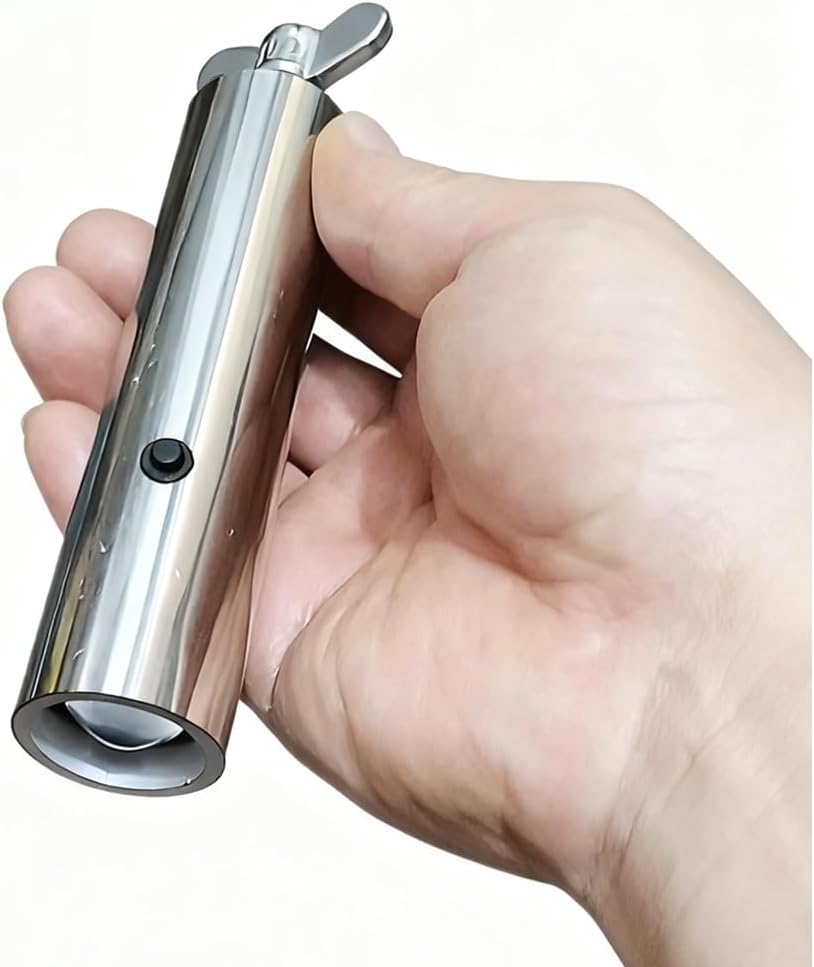
The Guyuyii four-pack has a 4.2 rating and offers a clear, uncomplicated approach to emergency lighting. No batteries or assembly are required: turning the hand crank generates power for a 20-lumen light. That level of output is suited to navigating a dark room, checking a fuse box, finding a path around a campsite, or handling a routine household problem during a power cut.
We may earn a commission when you buy through this link, at no additional cost to you.
A simple on-and-off switch and a comfortable crank handle make the light accessible to children and older adults. Each unit is compact and pocket-friendly, and the wrist strap allows it to be carried securely around the wrist. The four-piece arrangement can be divided among a vehicle, kitchen drawer, bedroom, and go-bag, ensuring useful illumination is close at hand rather than concentrated in one location.
The main limitation is that 20 lumens will not provide the broad, far-reaching illumination available from a multi-mode camping torch. There is also no solar panel, USB charging, adjustable beam, or stated water-resistance rating. The mechanical generator does, however, remove the usual maintenance problem of finding compatible batteries while the lights remain sitting unused in storage.
This Guyuyii set is a sensible choice for basic household preparedness, especially for families that value familiar operation and want several inexpensive backups. It is less suitable for serious search-and-rescue work, expansive outdoor illumination, or prolonged lighting. Within basic emergency use, its simple crank, no-battery operation, and multiple placement options make it easy to recommend.
The uncomplicated crank and switch require little instruction, which helps when children, older adults, or anyone under stress needs to activate the light quickly. The wrist strap keeps the unit secure during use.
Distributing one light to each of four key areas avoids dependence on a single central flashlight. The set is particularly useful for rooms, vehicles, and emergency bags that are rarely opened but should contain immediate illumination.
We may earn a commission when you buy through this link, at no additional cost to you.
This multifunction emergency device earns a 4.7 rating and goes far beyond a basic crank light. It combines NOAA AM and FM reception, a focused flashlight, a softer reading lamp, solar charging, hand-crank generation, and a 12,000mAh lithium battery. For a bug-out bag, storm shelter, or camping trip where information and lighting are both important, that combination is more valuable than a small standalone torch.
We may earn a commission when you buy through this link, at no additional cost to you.
The radio uses a high-sensitivity signal chip, noise-reduction circuitry, and an extended antenna to support clear reception on NOAA FM and AM bands. A large tuning knob, responsive buttons, clear labels, and a non-slip grip make operation easier in darkness. The flashlight reaches a claimed 260 feet, while a flip-up frosted lamp provides a gentler reading glow. Both lighting functions offer two brightness levels.
Power can come from the oversized 8,500-square-millimeter solar panel, the hand crank, or the internal rechargeable battery. The crank includes a larger copper coil, reinforced magnet, and extended arm, with the description stating that three minutes of cranking can power the radio or a phone. The battery can also keep the radio and lights operating through outages, while the radio may serve as a secondary source for a phone.
The tradeoff is size and complexity. At 6.8 by 2.9 by 4.7 inches, it is substantially larger than the dedicated flashlights in this guide, and it contains a conventional rechargeable lithium battery. It is therefore better described as a solar radio and emergency power device with a flashlight, rather than a truly cell-free hand-crank light. For broad emergency capability, the feature set is unusually strong.
Receiving local weather and emergency broadcasts may be as important as seeing during a storm. Combining the radio with two types of light gives users a more complete tool for an extended shelter situation.
Solar charging, manual generation, and stored battery energy offer complementary recovery options. Each is useful in a different condition, making the device more adaptable than a single-source crank flashlight.
We may earn a commission when you buy through this link, at no additional cost to you.
The 60-piece set carries a 4.5 rating and is the largest multipack in the comparison. Sixty mini hand-crank flashlights are divided among five colors, with 12 units of each color. The scale makes the set more appropriate for large families, schools, workplaces, events, shelters, or community preparedness groups than for a single household.
We may earn a commission when you buy through this link, at no additional cost to you.
Each light uses three LEDs and a built-in micro-power generator. The stated operation is particularly simple: pressing or cranking the mechanism produces the energy required to illuminate, and a switch controls the output. Dimensions of approximately 3.94 by 2.05 by 1.01 inches allow the units to fit into purses, pockets, glove compartments, and bags without taking up much room.
The advantages are easy to understand but substantial. A huge inventory can support distribution during an event, replace units that are lost, or provide one light for every member of a large organization. The disadvantages are storage, inventory handling, and a lack of advanced features. There is no solar panel, wrist lanyard, clip, selectable brightness, or stated water-resistance certification in the supplied information.
This set should be selected for exceptional quantity rather than premium individual performance. It can be a practical communal preparedness solution, but casual users may find the volume excessive. If the objective is to equip a modest household, the four-pack options are more convenient. If a school, event team, or large household needs dozens of basic no-battery lights, this product is built directly around that requirement.
The set is most effective when the lights can be distributed among many people. It can prevent crowding around one light and provide a dedicated unit for each person, room, or station.
The handpress generator and simple switch make the units approachable for broad distribution. Users do not need to understand batteries, charging cables, or complex control interfaces.
We may earn a commission when you buy through this link, at no additional cost to you.
This Simpeak two-pack also holds a 4.5 rating and shares the core design strengths of the higher-ranked Simpeak: hand-crank generation, a solar backup panel, three LEDs, an internal rechargeable battery, and a carabiner. Two lights are enough to keep one in a vehicle and another in a home or outdoor bag without creating the bulk of a larger multipack.
We may earn a commission when you buy through this link, at no additional cost to you.
According to the supplied information, one minute of cranking at the stated speed generates more than ten minutes of lighting. The solar panel can absorb strong or medium sunlight as well as lamplight, offering a passive way to replenish the battery. The ergonomic, rugged housing is intended for daily use, emergencies, and outdoor lighting, while the carabiner helps secure the light to a backpack.
This listing is labeled yellow in its product title, while its feature text refers to army green. Buyers should use the current listing imagery and color information to determine the exact finish supplied. More broadly, the principal limitation is shared with other crank-and-solar designs: the internal battery is rechargeable rather than absent, and solar charging will be slow or ineffective in very dark or poorly illuminated spaces.
The two-pack is an attractive option for buyers who want the Simpeak feature set in a more moderate quantity. It works well for dividing supplies between a car and emergency bag, or for keeping one unit in each of two bags. It offers less placement flexibility than a four-pack and fewer advanced modes than the six-mode rechargeable flashlight, but its dual charging and clip remain compelling for preparedness.
Two units cover the core needs of many households without excessive inventory. One light can stay in a vehicle while the other remains accessible at home or travels in a daypack.
The product title and feature text describe different colors, so buyers should review the current listing and package information carefully. The operating features are the same regardless of the final color.
We may earn a commission when you buy through this link, at no additional cost to you.
This rechargeable hand-crank flashlight has a 4.5 rating and offers the most elaborate lighting arrangement in the guide. It combines a front lamp with two side lights across six modes. The main head provides high, low, and flashing outputs, the left side offers full and low white light, and the right side supplies a red flashing mode for emergencies and preserving night vision.
We may earn a commission when you buy through this link, at no additional cost to you.
Runtime claims vary by mode. The main lamp is listed at eight to twelve hours on high and flashing, and twelve to twenty hours on low. The side lights operate for approximately ten to fifteen hours in white modes and fifteen to twenty hours in red flashing mode. These are manufacturer claims, and actual output will depend on battery condition and use, but the range is more useful than a single fixed brightness.
Maximum illumination distance is claimed at 800 meters, giving the product potential for long-range outdoor visibility. Its IPX4 rating means it can withstand splashing water in any direction, although it is not designed for submersion. It also accepts USB charging through an included cable, and its internal battery can provide portable power to devices when other options are unavailable.
This is the best choice for a buyer who wants a conventional rechargeable flashlight with substantial mode flexibility, long claimed runtimes, and hand-crank backup. The presence of a rechargeable battery and USB cable means it does not meet a strict interpretation of battery-free equipment. Even so, it gives a useful emergency alternative to disposable batteries and offers more versatility than the small three-LED multipacks.
High, low, flashing, side white, and side red modes let users balance visibility, runtime, and night-vision needs. A focused main beam and softer side illumination are useful in different outdoor and emergency situations.
The flashlight can be recharged by hand crank or USB cable, allowing preparation through multiple methods. Its larger internal battery can also serve compatible devices when portable power is needed.
We may earn a commission when you buy through this link, at no additional cost to you.
The right hand-crank flashlight depends on how you plan to use it, how long its light must remain available, and whether true cell-free operation is essential. Evaluate the storage method, output, controls, carrying design, weather resistance, and placement needs before choosing a model.
A hand-crank flashlight can use the term battery-free in two different ways. Some products contain a rechargeable battery that is recharged through the crank or a cable, while others store energy in a supercapacitor and contain no conventional battery. The latter interpretation is closest to complete independence from batteries. If avoiding all cells is a core requirement, read the technical description carefully and select a model that explicitly states it uses supercapacitor storage and requires no lithium, AA, or AAA battery.
Hand cranking is the most universally useful charging method because it requires only manual effort. Solar panels add a passive recovery option when the flashlight is left near sunlight or another light source, while USB charging is convenient at home. Models that combine all three offer the most flexibility, although they tend to be larger and more complex. A solar panel should not be treated as the only emergency strategy because charging speed and effectiveness depend heavily on available light.
Brightness should be matched to the task. A twenty-lumen light is sufficient for finding household items, a campsite, or a vehicle, while a focused beam with a much greater claimed range is better for trails and open areas. Three-LED mini lights are generally portable and convenient, but they should not be confused with high-output camping lanterns. Side white lights and red flashing modes can be especially useful for close work and night visibility.
Runtime depends on capacity, brightness, and how often the user cranks. Supercapacitor models may provide excellent immediate output but require more frequent regeneration. Rechargeable models can run for many hours, yet their performance gradually depends on the condition of the internal cell. Read the listed runtimes carefully and distinguish continuous high-brightness claims from low-brightness or flashing modes. For prolonged use, a higher-capacity rechargeable unit is usually more suitable.
A flashlight is most useful when it is already within reach. Compact models fit in pockets, backpacks, purses, and glove compartments, while carabiners, keychain clips, and wrist straps prevent them from being misplaced. Consider the size of the hand crank and the security of the grip. Children and older adults may benefit from simple switches, accessible handles, and lightweight bodies, while frequent outdoor users may prefer a clip that remains attached to a pack.
Emergency equipment should tolerate rough handling, and a reinforced gearbox can be valuable in a frequently used hand crank. Metal construction does not automatically guarantee complete waterproofing, so the material should be considered separately from the stated ingress rating. IPX4 means the product can withstand splashing water from any direction but should not be submerged. Products described only as weather-resistant may be suitable for light rain but should be kept dry around damp environments.
Multipacks can provide better resilience than one premium light when the goal is household coverage. Four units can be split among a vehicle, kitchen, bedroom, and emergency bag. Larger packs of sixteen or sixty are useful for groups, events, schools, or community kits, but they consume more storage and may be excessive for a small household. A single feature-rich model is more appropriate when maximum output and charging flexibility are the priorities.
Before relying on a new flashlight, familiarize yourself with its switch and crank. Turn it slowly at first, observe the light response, and learn how much cranking is required to restore useful output. For units with a solar panel, place the flashlight where it can receive suitable light but avoid leaving a rechargeable model exposed to severe heat. Check the switch and housing for damage each time you inspect an emergency kit.
During use, crank at a steady pace and avoid aggressive spinning. The all-metal model specifies approximately one to two seconds per circle, and a smoother, controlled motion is generally better than forcing the mechanism. Keep fingers clear of any moving joints, direct the beam away from other people's eyes, and use red or low modes when preserving night vision matters. Top up the stored energy before an outing instead of waiting until the light begins to fade.
Store the flashlight dry, particularly if it has only light-rain resistance. Do not submerge it, and avoid humid locations for extended periods. Keep replaceable-battery models away from extreme heat and periodically check rechargeable units for swelling, corrosion, or charging problems. A short test every few months confirms that the crank, switch, LEDs, and stored power still work before they are needed during a real outage.
No. Many products are described as battery-free because they do not require disposable AA or AAA batteries, but they still contain a rechargeable internal battery. A smaller group uses a supercapacitor for storage and is genuinely cell-free. Check the power-source description carefully if avoiding every type of battery is essential.
The answer varies considerably by model. The Simpeak is described as producing more than ten minutes of light from one minute of cranking at its stated pace, while the rechargeable six-mode flashlight gives a similar ten-to-twenty-minute claim. Other units focus on short high-brightness bursts and require periodic regeneration. Cranking speed, storage capacity, and selected mode all affect the result.
Solar charging is a helpful backup, but it should not be the only source of power. Solar charging can be slow and depends on adequate light, whereas the crank works whenever someone has enough energy to turn it. A flashlight using both methods gives greater flexibility and is better suited to changing emergency conditions.
Several models are specifically designed for simple operation by children or older adults. The Guyuyii and four-pack three-LED flashlight use accessible cranks and straightforward switches, while the all-metal model also advertises one-handed operation. Even so, adults should supervise children and explain that the crank should be turned slowly rather than forced.
No. Compact crank lights are best for emergency visibility, locating items, and short-duration tasks. They may not match a high-output conventional flashlight for illuminating large outdoor areas or working for many hours. A multipack can cover basic household needs, while a larger rechargeable or solar model is better for sustained outdoor use.
Not universally. One product in this guide has an IPX4 rating, which supports resistance to splashing water but not submersion. Others are described as weather-resistant for light rain, while the all-metal model should be protected from soaking and prolonged humidity. Always follow the specific care instructions for the chosen flashlight.
It is sensible to start with the light fully charged and test it periodically. Rechargeable models can lose stored energy over time, while supercapacitor models may need a few turns before they illuminate when first removed from storage. A brief check every few months helps ensure the mechanism and light still work.
The Simpeak two-pack or Oudain four-pack offers a strong balance of manual charging, solar backup, compact size, and attachment features. The all-metal flashlight suits buyers who want no battery at all, while the six-mode rechargeable model provides more output and mode flexibility. The best choice depends on whether portability, cell-free operation, or long illumination is the leading priority.
The Simpeak hand-crank solar flashlight is the strongest all-around choice because it combines manual generation, solar backup, three LEDs, a carabiner, and a compact body. The Guyuyii four-pack is the most practical budget-oriented household option, while the reinforced all-metal flashlight stands apart for people who want genuinely battery-free supercapacitor operation.
Prioritize the feature that cannot be improvised when the emergency arrives. Choose supercapacitor storage for complete cell independence, a rechargeable high-capacity model for extended runtime, or several small lights for placement around a home. Check the stated brightness, water resistance, attachment method, and storage location before finalizing the purchase.
Product pricing, discounts, and availability can change over time, so review the current listing before ordering. Confirm the exact color, package quantity, included accessories, and operating instructions for the selected model. Most importantly, perform a short test and store the light where it can be reached immediately when needed.
