
Cricut StickerPix Print + Cut
4.7Editor score
Integrated print-and-cut workflow
Dye-sublimation color output
Editable templates and artwork
Water and scratch resistance
Printing greeting cards at home can be rewarding, but the right printer determines whether your designs look polished or merely acceptable. Important considerations include color accuracy, borderless printing, paper handling, cardstock support, ink costs, and the convenience of producing multiple copies without frequent intervention.
This guide compares ten printers suited to different levels of card-making, from conventional inkjet models to portable thermal devices and a dedicated print-and-cut system. The evaluation focuses on the supplied specifications and features, including print formats, media versatility, wireless connectivity, scanning, cutting, and creative software.
Each pick highlights a particular use case, from a versatile everyday inkjet to a compact thermal printer for small batches and a premium system for elaborate labels and stickers. Product ratings and availability can change, so readers should confirm the latest specifications, accessories, and current prices before purchasing.
4.7Editor score

4.2Editor score
4.5Editor score
As an Amazon Associate we earn from qualifying purchases.
The comparison below shows how the ten printers differ in output method, format, connectivity, and card-making functions, helping you identify the model that best fits your materials, volume, and creative workflow.



The Canon PIXMA TS6520 is a well-rounded all-in-one for home card makers, with a 4.2 rating and capabilities that extend well beyond simple document printing. Its 2-cartridge hybrid ink system is designed to produce sharp text and vivid color, while borderless output up to 8.5 by 11 inches gives card designers room to produce full-bleed fronts, envelopes, and companion inserts.
We may earn a commission when you buy through this link, at no additional cost to you.
Automatic two-sided printing is particularly useful for a greeting-card workflow. You can print folding card interiors, backing sheets, and brief project notes without manually reversing pages. The integrated scanner and copier also make it easy to archive artwork, copy reference designs, and scan finished pieces, while the 1.42-inch monochrome OLED display provides quick access to ink status and printer settings without requiring a computer.
Connectivity is another strength. Dual-band Wi-Fi supports operation on either 2.4GHz or 5GHz networks, and mobile printing is available through the Canon PRINT App, Apple AirPrint, and Mopria Print Service. The tradeoff is that the two-cartridge configuration may require more thought when printing large areas of saturated color, and the printer does not automatically cut cardstock into individual pieces.
This is the strongest general recommendation for someone who wants one capable machine for card fronts, envelopes, photos, inserts, and occasional office documents. Its compact footprint also makes it practical for a home craft area, while automatic duplexing, borderless printing, and useful controls provide features that smaller dedicated devices often omit.
Support for bordered and borderless media up to 8.5 by 11 inches makes the TS6520 suitable for standard cardstock, envelopes, photographs, and wide-format inserts. The same versatility reduces the need to keep separate devices for greetings and ordinary printing.
Dual-band Wi-Fi and several mobile-printing options make it straightforward to move designs from a phone, tablet, or computer to paper. The OLED display provides a useful local status check when working away from a desk.
We may earn a commission when you buy through this link, at no additional cost to you.
The Liene M100 is built around one clear purpose: producing compact, full-color photo prints from a phone, Android device, or PC. Its 4.4 rating reflects a strong combination of ease of use and dedicated photo output. For greeting cards, it is especially relevant to designers who place a 4-by-6-inch photograph inside a card, create a photo-led insert, or print small image panels rather than full folding cards.
We may earn a commission when you buy through this link, at no additional cost to you.
Thermal dye sublimation produces vivid color by sending heat into the dye and paper rather than laying conventional ink on the surface. The supplied information notes that the dyes penetrate the paper and that the laminated surface resists water, scratches, fingerprints, and fading. That combination can suit frequently handled cards, photo gifts, and projects that need a polished, protected appearance.
The printer creates its own Wi-Fi hotspot, so it does not need to join an existing network. Up to five devices can connect simultaneously, making it useful at gatherings where several people want to add images to a shared card project. The Liene App adds square borders, filters, contrast and brightness adjustments, print-status monitoring, and options for ID or visa-style photos.
The M100 is not the right tool for envelopes, long documents, or full-size cardstock, but it could be an excellent companion printer for photo-centric greetings. It is especially attractive for users who want a simple dedicated device with media and cartridges included in the package, while being willing to work within the 4-by-6-inch format.
Dye-sublimation output is designed to resist handling, moisture, and fading according to the supplied product information. That makes the M100 suitable for photo cards intended to be kept, shared, or carried in a bag.
Built-in Wi-Fi hotspot printing removes the need for cables or an existing network. App controls for filters, borders, and basic image adjustments help turn camera photos into greeting-card elements without a desktop workflow.
We may earn a commission when you buy through this link, at no additional cost to you.
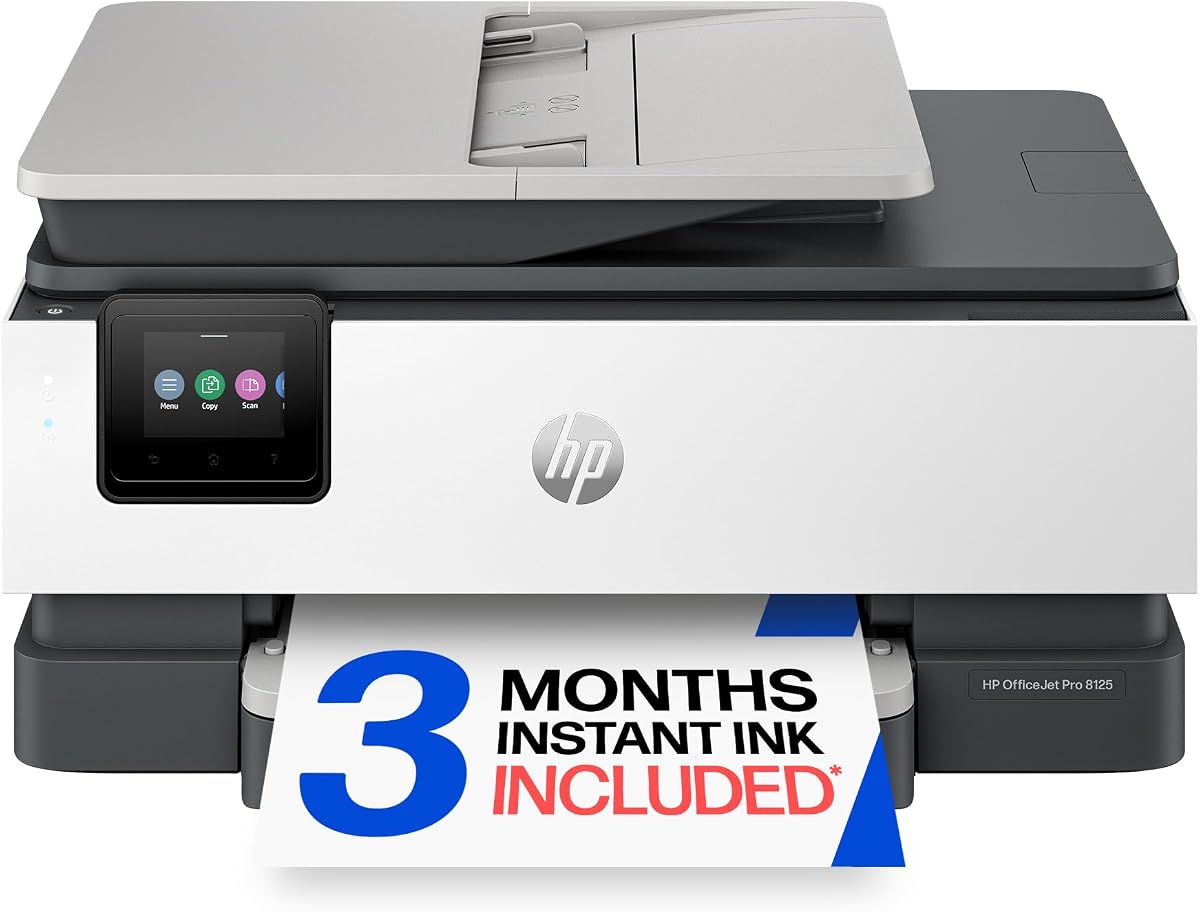
The HP OfficeJet Pro 8125 is aimed at home offices and crafters who may produce greeting cards in larger batches than a compact consumer printer can handle comfortably. It has a 3.9 rating, offers color print speeds up to 20 pages per minute for black and 10 pages per minute for color, and includes a 225-sheet input tray for reducing refill interruptions.
We may earn a commission when you buy through this link, at no additional cost to you.
The automatic document feeder, automatic duplexing, scanner, and copier make it more than a single-purpose card printer. The 2.7-inch color touchscreen provides a phone-like interface for navigating settings, while HP AI is designed to format web pages and emails more efficiently and remove unwanted content. The supplied information also notes wireless printing through dual-band Wi-Fi and mobile control through the HP App.
There are meaningful ownership considerations. The printer includes a three-month trial of Instant Ink, after which a monthly fee applies unless the service is canceled, and it is designed to work only with cartridges containing original HP chips or circuitry. Those restrictions may encourage you to compare long-term ink planning carefully, especially if you print large color areas for card fronts.
For a small greeting-card business, club, classroom, or high-volume home project, the 8125 is compelling because of its speed, paper capacity, and automatic handling. It is less tailored than a photo printer or print-and-cut machine, but it offers the broadest workflow for people who also need reports, mailers, scans, and copies.
Fast color output and a 225-sheet input tray reduce downtime during larger projects. Automatic duplexing is useful for card interiors, mailing inserts, and other two-sided pieces.
The automatic document feeder and 2.7-inch touchscreen support a broader workflow than basic card printing. Scanning and copying also make the machine useful for design references and general home-office tasks.
We may earn a commission when you buy through this link, at no additional cost to you.
The Canon PIXMA TS4320 is a budget-minded all-in-one for creators who want full-size color printing without a large device. Its 3.9 rating reflects a practical combination of document, photo, scanning, and copying functions. The two-cartridge hybrid ink system is specified to deliver sharp text and vivid colors, making it a sensible general-purpose option for card fronts, envelopes, and inserts.
We may earn a commission when you buy through this link, at no additional cost to you.
Automatic two-sided printing helps with folded interiors and other two-sided projects, while borderless and bordered output up to 8.5 by 11 inches provides useful flexibility. The integrated scanner and copier add practical value for saving artwork, reproducing a hand-drawn sketch, and preparing reference copies without requiring separate devices.
Dual-band Wi-Fi allows the printer to operate over either 2.4GHz or 5GHz networks, and mobile printing is supported through the Canon PRINT App, Apple AirPrint, and Mopria Print Service. The compact, modern design should fit comfortably into a craft corner, dorm room, or small office. As with the TS6520, there is no automatic cutter, so trimming remains a manual step.
Choose the TS4320 when you want a straightforward everyday printer that can handle a mixture of greeting cards, photographs, and office documents. It is less specialized than the Liene M100 and does not offer the TS6520's OLED status display, but the core card-printing functions remain well matched to common home projects.
The combination of color printing, scanning, copying, and wireless mobile support means the TS4320 can cover more than card production. It is a practical shared appliance for households that also handle photographs, school assignments, and routine paperwork.
Its small footprint helps conserve workspace, while EPEAT Silver and ENERGY STAR certification indicate attention to environmental criteria. These traits are useful for a home setup where the printer remains visible but does not dominate the area.
We may earn a commission when you buy through this link, at no additional cost to you.
The Epson Expression Premium XP-7100 stands out for creative media versatility, giving card makers more ways to customize their projects. With a 4.1 rating, it combines sharp text, vivid color photographs, and graphics with a 4.3-inch touchscreen and multiple media feeds. Borderless photos up to 8 by 10 inches make it useful for full-bleed art panels and large card inserts.
We may earn a commission when you buy through this link, at no additional cost to you.
Specialty paper support is a major advantage for handmade cards. The printer can work with creative stock and even print to DVDs, opening options for coordinated packaging, small gifts, or multimedia projects. Direct editing from a USB drive or SD card through the large touchscreen reduces the need to send every image through a computer, a helpful feature for spontaneous craft sessions.
The 30-page automatic document feeder, automatic duplex printing, scanning, and copying create a capable all-in-one system. Wireless and Ethernet connectivity support flexible placement, Wi-Fi Direct allows network-free printing, and mobile printing works from a tablet or smartphone. It is therefore equally suitable as a productivity machine and a dedicated creative printer.
The important restriction is that the supplied information says the printing system is designed exclusively for Epson Genuine Cartridges. This is worth considering before purchase, particularly for a high-volume card business. For a home artist who values specialty media, direct photo access, and a large control screen, the XP-7100 remains one of the most flexible choices in the list.
Multiple media feeds and support for specialty stock allow card makers to vary texture, weight, and finish. The 8-by-10-inch borderless capability also helps when the design needs more visual area than a standard compact photo.
The 4.3-inch screen can view and edit images directly from USB or SD media. This keeps the creative process moving when a computer is inconvenient, while Wi-Fi Direct offers a cable-free route for supported devices.
We may earn a commission when you buy through this link, at no additional cost to you.
The Gloryang Inkless Portable Printer is designed for people who need to create cards and documents away from a conventional crafting desk. It has a 4.2 rating, weighs 1.75 pounds, and is only 1.7 inches thick, making it easy to carry in a backpack or briefcase. The included case, charging cable, manual, guide card, and three thermal paper rolls support immediate mobile use.
We may earn a commission when you buy through this link, at no additional cost to you.
Thermal technology eliminates the need for ink, toner, or ribbons, which can be convenient for travel, emergencies, and mobile events. The printer supports thermal paper widths up to 8.5 inches, and its built-in paper bin helps keep the device compact and organized. The supplied information also states that it can print clear photos, images, drawings, and text, although its output characteristics differ from those of a color inkjet.
Bluetooth connectivity through the Jadens Printer app provides access from compatible iOS and Android devices. It can also serve laptops and computers after the appropriate driver is installed. This makes it possible to design and print a card in a hotel room, classroom, shop, or event venue without depending on a fixed printer or standard paper stock.
The crucial limitation is compatibility: the printer is intended for Gloryang thermal paper and cannot use regular inkjet or plain paper. Thermal cards also have a different visual character from inkjet projects, so users should consider presentation and durability priorities. For mobile monochrome cards, receipts, emergency notes, and temporary documents, however, the portability is a major advantage.
The slim body, built-in paper storage, and included carrying case make the printer more practical for travel than a full-size inkjet. It is particularly useful for event kits, mobile craft sessions, and emergency document needs.
Thermal printing removes the need to carry ink or ribbons. The trade-off is that compatible thermal media is required, so projects cannot be printed on ordinary cardstock with this machine.
We may earn a commission when you buy through this link, at no additional cost to you.
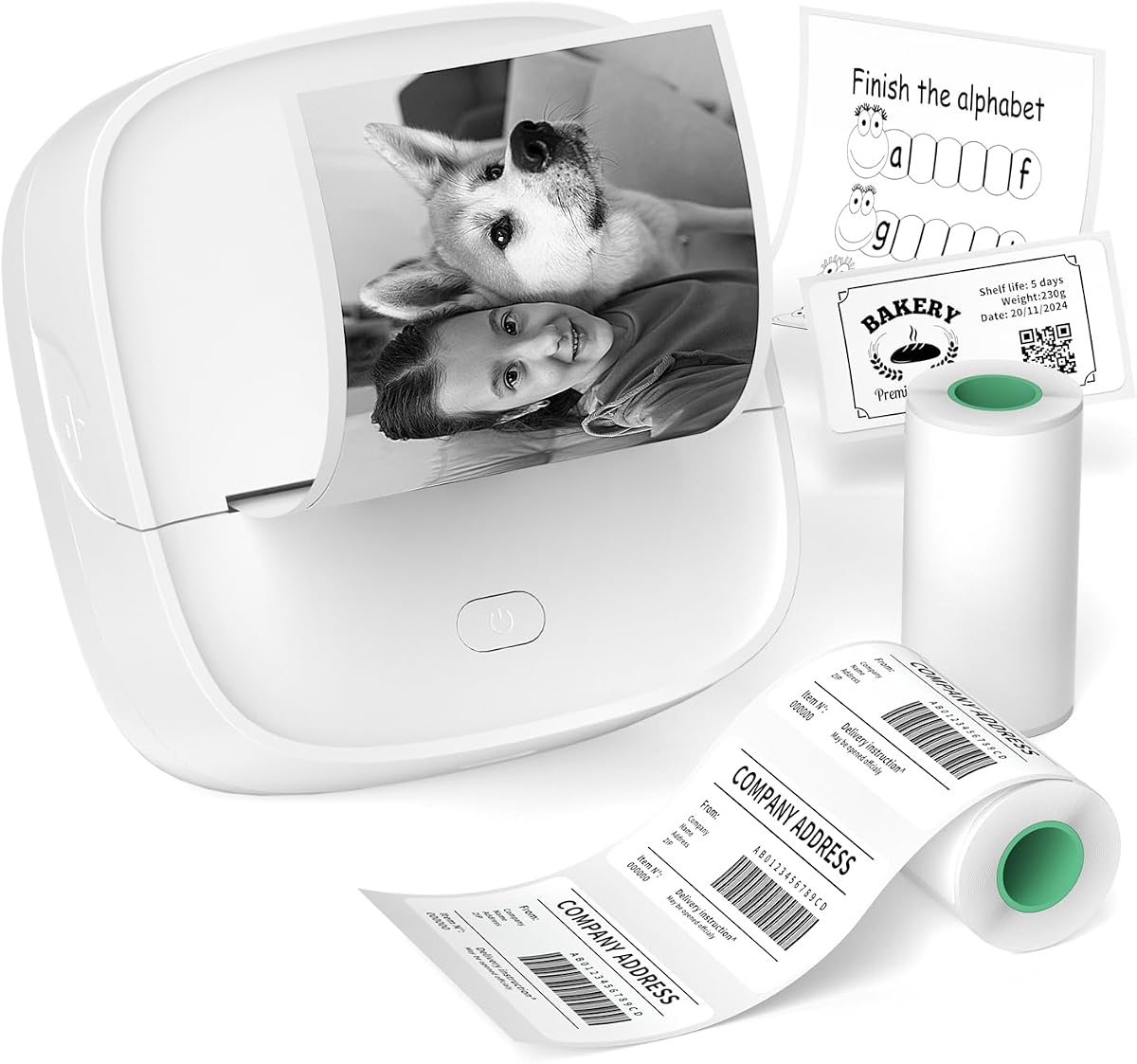
The Gloryang JD-23 is the most compact greeting-card option here and earns a 4.5 rating. Measuring 3.39 by 3.5 by 1.54 inches and weighing only 0.32 pounds, it can fit in a pocket or small bag. That portability makes it especially attractive for handmade mini cards, tags, envelopes, journal decorations, and quick additions to larger paper crafts.
We may earn a commission when you buy through this link, at no additional cost to you.
The thermal system requires no ink, toner, or ribbon. It supports continuous and gap labels as well as sticky and non-sticky paper, and the supplied details indicate compatibility with standard white, colored, and transparent two-inch sticker media. A built-in serrated cutter helps separate each printed label neatly, simplifying a workflow that would otherwise require scissors.
The Jadens Printer app provides a substantial creative toolset for a device of this size. Users can print documents and photos, generate QR codes and charts, recognize text with OCR, resize and position images, create drawings, use AI-assisted image printing, and select templates. The package includes a 50-by-30-millimeter label roll for QR codes and address tags plus a 50-millimeter continuous adhesive roll.
Its limitations are equally clear. The media width is only two inches, so it cannot print conventional full-size card faces, and thermal output is monochrome rather than richly colored. It is best viewed as a finishing and embellishment printer for cards rather than the primary full-page device. Within that narrower role, its compact body, app features, and included supplies make it an engaging budget choice.
Mini labels can personalize envelopes, seal folded cards, add QR codes, or create themed tags. The narrow format makes the JD-23 a practical companion to a larger inkjet instead of a replacement for one.
Templates, OCR, QR code generation, resizing, and drawing tools expand the functions beyond a basic label machine. The included cutter and two starter roll formats support a practical first project immediately.
We may earn a commission when you buy through this link, at no additional cost to you.
The Cricut StickerPix Print + Cut is the most specialized and highest-rated pick in the guide, carrying a 4.7 rating. Instead of printing a conventional rectangular card and trimming it manually, it prints, laminates, and cuts stickers with one button press. That integrated process makes it particularly compelling for greeting cards decorated with names, icons, illustrations, monograms, photographs, and repeated labels.
We may earn a commission when you buy through this link, at no additional cost to you.
Dye-sublimation technology produces high-resolution, ultra-vivid color, while the laminated output is described as resistant to water, scratches, and fading. Editable templates and photo effects make it possible to transform pictures into coordinated card elements. The included library contains more than 1.8 million sticker images from hundreds of original artists, offering a substantial creative resource for personal projects and handmade gifts.
The Essential Bundle includes an ink cartridge, sticker sheets, and photo paper, with enough supplies for 18 sticker sheets and 18 photo prints. The compact design is intended to fit into a home workspace, and the all-in-one button-driven process reduces the number of separate machines required for polished stickers and labels. A card can therefore be printed digitally, personalized, cut accurately, and applied without a separate plotter.
There are important system conditions. A compatible computer or mobile device with Bluetooth and a high-speed internet connection is required, and compatible materials and accessories are sold separately. Access to the full content library and certain software features requires a paid Cricut Access subscription. Despite those conditions, the StickerPix is the best pick for highly designed cards where clean cutting and durable sticker elements justify a dedicated creative system.
The integrated cutting function removes a major repetitive step from sticker-heavy card projects. It is especially useful for identical names, borders, icons, and decorative elements across multiple cards.
Dye-sublimation output combines vivid color with a protective finish, while editable templates and a large artwork library support polished results. The bundle also provides initial media and ink for immediate use.
We may earn a commission when you buy through this link, at no additional cost to you.
The Canon PIXMA TR4720 is a traditional 4-in-1 home printer with printing, copying, scanning, and built-in fax, and it carries a 3.9 rating. It can produce documents, photos, and borderless prints up to 8.5 by 11 inches. That makes it a sensible option for a household that wants a versatile card printer without spending dedicated space on a separate scanner, copier, or fax machine.
We may earn a commission when you buy through this link, at no additional cost to you.
Automatic duplex printing and an automatic document feeder streamline multi-page work, while the 100-sheet paper capacity is adequate for regular home projects. A borderless 4-by-6-inch photo can be produced in approximately 65 seconds according to the supplied information. Letter-size black and color document speeds are listed at approximately 8.8 and 4.4 images per minute, respectively.
Mobile printing is supported, and Alexa can provide low-ink notifications and even place a smart reorder when the user enrolls in that service. The information states that no subscription is needed for the smart-reorder enrollment itself. This adds a convenient monitoring option for users who do not want to discover an empty cartridge only when starting a card batch.
The TR4720 is not the most specialized card printer in the list, but its broad office functionality may compensate for that. It is best for a home user who wants to print cards alongside ordinary documents, scan visual references, copy paper designs, and occasionally send a fax. Its ENERGY STAR designation and stated 7-watt power consumption are also relevant for a device that may remain in a multipurpose home office.
The built-in fax and automatic document feeder distinguish this model from many compact creative printers. It serves as a general household office tool while still handling photo and borderless card layouts.
Alexa notifications can warn you when supplies are running low, and optional smart reorders offer a convenient response. This is helpful for card projects that require a full set of matching colors.
We may earn a commission when you buy through this link, at no additional cost to you.
The Canon SELPHY CP1500 is a compact dedicated photo printer with a 4.4 rating, making it well suited to small photographic prints that can be mounted inside greeting cards. Its sleek design and small footprint distinguish it from full-size inkjets, while the built-in 3.5-inch display lets users view, edit, and apply filter effects such as sepia and black-and-white before printing.
We may earn a commission when you buy through this link, at no additional cost to you.
Connection options are notably flexible. Wi-Fi supports smartphone and computer printing, while USB and memory card connections allow the printer to work with cameras, flash drives, and compatible devices. The product information notes that a compatible battery can add portability, making the CP1500 useful for card-making away from a permanent desk when the necessary accessory is available.
The output dries immediately and is described as water resistant, which is helpful for photographs that will be handled, mailed, or displayed. The printer is therefore best understood as a specialized image inserter rather than a conventional letter-size card printer. It can produce photo elements and compact card components, but it does not provide scanning or copying.
Choose the SELPHY CP1500 when the main goal is to turn camera or phone images into polished card inserts and photo-led greetings. Its screen-based editing is convenient for quick adjustments, and the range of connection methods supports several creative workflows. Users who need full-page envelopes, long documents, or cutting tools should look toward an all-in-one inkjet or dedicated print-and-cut system instead.
The large built-in display provides direct access to images, basic edits, and filter effects. This keeps quick personalization practical even when a phone or computer is not immediately available.
Wi-Fi, USB, memory card, and flash drive support provide several ways to bring in images. The small body and optional battery suit pop-up events, shared celebrations, and travel-based card projects.
We may earn a commission when you buy through this link, at no additional cost to you.
The best printer for greeting cards depends on card size, design style, material, and expected volume. A full-size inkjet offers the most flexible documents, while dedicated photo, sticker, thermal, and print-and-cut systems serve more specialized workflows.
Start by measuring the finished card and deciding whether you want to print the entire card in one piece or use a separate photo insert. Full-size inkjets such as the Canon PIXMA TS6520, TS4320, and TR4720 support bordered or borderless output up to 8.5 by 11 inches, while the Epson XP-7100 supports borderless photos up to 8 by 10 inches. These are more versatile choices for envelopes, folded cards, and broad graphic layouts.
A 4-by-6-inch model such as the Liene M100 is better when the design centers on a standard photo. Compact thermal printers handle narrow labels and miniature embellishments rather than full card faces. Always check the maximum media dimensions and confirm that the printer accepts the thickness and finish of your chosen cardstock.
Inkjet printers are the conventional choice for full-color text, illustrations, photographs, and borderless layouts. They can work with many grades of paper, although print quality depends on the ink, media settings, and printer calibration. Thermal printers use heat to produce monochrome output and usually require dedicated thermal media. They avoid ink cartridges but do not reproduce the broad color range of an inkjet or thermal dye-sublimation model.
A thermal dye-sublimation system sits between these options. The Liene M100 uses a heated ribbon and specialized paper process to create vivid 4-by-6-inch photos. Consider the visual style you want, the availability of compatible media, and whether monochrome simplicity is enough for the project before choosing a thermal device.
Borderless output is valuable when a photograph, gradient, or colored background should extend fully to the edge of the paper. The Canon PIXMA TS6520 and TS4320 support borderless media up to 8.5 by 11 inches, and the TR4720 can also produce borderless prints at that maximum size. The Epson XP-7100 supports borderless photos up to 8 by 10 inches.
For envelopes or narrow inserts, a borderless function may be less relevant than accurate sizing and the ability to handle specialty stock. Dedicated photo and sticker machines use fixed formats, so check whether trimming, folding, or a white border is acceptable in the final design.
A one-off birthday card does not require the same capabilities as dozens of holiday cards or a small handmade-card business. The HP OfficeJet Pro 8125 is designed for higher-volume color output, with a 225-sheet input tray, automatic document feeder, and automatic duplexing. Smaller machines can still produce attractive results, but frequent refills may interrupt larger batches.
Look beyond paper capacity and consider ink management, how quickly the machine handles color, and whether you need duplexing. Subscription ink programs and cartridge-chip restrictions can affect long-term ownership for high-volume users, so review the supplied product conditions before committing to a model.
The right printer can open doors to textured cardstock, glossy photo stock, labels, specialty paper, and other decorative materials. The Epson XP-7100 specifically emphasizes multiple media feeds and specialty-paper support. The Liene M100 uses compatible 4-by-6-inch photo paper, and the Gloryang machines require their respective thermal media rather than ordinary paper.
Confirm the printer's supported media types and maximum sheet size before buying a large paper assortment. Using incompatible media can produce poor results, and thermal printers simply cannot use regular cardstock. A broader inkjet may cost more to operate but provide the freedom to experiment with more materials.
Most conventional printers produce rectangular sheets and leave trimming to the user. That may be acceptable for a single card with a clean margin, but it becomes tiring when making identical stickers, decorative labels, or repeated name cards. The Cricut StickerPix Print + Cut addresses this with an integrated print, laminate, and cut process.
A separate paper cutter can be inexpensive and versatile enough for many crafters, so print-and-cut capability is not essential for every workflow. It becomes more valuable as designs grow more intricate, quantities increase, or the project includes many identical embellishments that must match precisely.
Wireless connectivity makes it easier to keep the printer away from a computer or place it wherever card production is happening. Dual-band Wi-Fi appears on the Canon PIXMA TS6520 and TS4320 and the HP OfficeJet Pro 8125, which can improve setup flexibility and connection reliability. The Liene M100 creates its own hotspot, while the Gloryang devices use Bluetooth and the Jadens Printer app.
App support is more than a convenience for creative printing. Liene offers borders and image adjustments, the Gloryang JD-23 includes templates, OCR, QR codes, and design tools, and the Cricut system provides editable sticker content. Confirm that the required app, device, account, and connection method are available before purchasing.
A compact printer is more practical when every craft surface is valuable. The Canon PIXMA TS6520 and TS4320 emphasize small footprints, while the Gloryang JD-23 is genuinely pocket-sized and the SELPHY CP1500 is designed for a compact footprint. Larger office models may provide faster output, bigger trays, touchscreens, and document feeders in exchange for taking up more room.
Consider where you will print, whether the lid opens easily, how paper is stored, and whether the device can be moved when another project needs the table. Portable designs are advantageous for events and shared spaces, while home-office users may prefer the stronger paper handling of a larger all-in-one.
Begin with the printer's setup guide and install the specified ink, paper, or cartridge system before designing. Load one compatible sheet at a time when testing unfamiliar cardstock, confirm that the correct media type is selected, and allow the machine to complete any initial alignment or nozzle check. Thermal models should also have their cartridge seated fully and use only compatible rolls.
Create artwork at the exact dimensions of the chosen media and add a narrow bleed if the design will reach the edge. For borderless inkjet projects, verify that the correct borderless setting is active. Print a small test page, inspect color, margins, text sharpness, and back-feeding, and adjust the paper type or print quality before producing a complete set.
Clean and store the machine according to its manual, use dry microfiber materials on exterior surfaces, and avoid abrasive cleaners. Print occasional test pages when using inkjets, keep nozzles clear as directed, and store thermal paper away from heat and direct sunlight. For long-term projects, label media types, protect finished cards from moisture, and trim only after ink or thermal output has fully set.
A color inkjet is generally the most flexible choice because it can handle text, illustrations, photographs, envelopes, and full-size cardstock. Models with borderless printing and automatic duplexing, such as the Canon PIXMA TS6520, are especially versatile. If every card is photo-led, a dedicated 4-by-6-inch dye-sublimation printer may be simpler, but it will not handle envelopes or full documents.
Regular inkjet printers can print on compatible cardstock when the correct paper type and thickness are selected. The Epson Expression Premium XP-7100 emphasizes support for specialty media and multiple feeds. Thermal printers cannot use ordinary paper; the Gloryang models require compatible thermal rolls, while the Liene M100 uses its specified 4-by-6-inch photo paper and cartridges.
Automatic duplexing is most useful when you print folded card interiors, backing sheets, envelopes, or other two-sided components. It saves time and reduces paper use. The Canon PIXMA TS6520, TS4320, HP OfficeJet Pro 8125, and TR4720 include this feature, while dedicated photo and thermal devices generally focus on single-sided output.
Ease depends on how you design and what you print. The Canon PIXMA models offer familiar wireless setup and mobile printing, while the Liene M100 uses a built-in hotspot and dedicated app. The Gloryang JD-23 is particularly approachable for small labels, with Bluetooth controls, templates, and a built-in cutter for quick creative additions.
Thermal printers can produce attractive monochrome cards, tags, and mini designs, but they are not replacements for full-color inkjets. The Gloryang Inkless Portable Printer can handle wider thermal media, whereas the JD-23 focuses on two-inch labels and stickers. Both require compatible thermal paper and provide a distinct high-contrast visual style.
A print-and-cut machine is valuable when you use many identical stickers, labels, names, or decorative motifs. The Cricut StickerPix Print + Cut prints, laminates, and cuts in one workflow. If you only need a few simple trimmed cards, a capable inkjet and manual paper cutter may be sufficient and less complex to set up.
Full-size inkjet models are the most suitable because they support standard document media and multiple formats. The Canon PIXMA TS6520, TS4320, and TR4720 can handle documents and photos up to 8.5 by 11 inches. Dedicated 4-by-6-inch and narrow thermal printers are less practical for full envelopes and should be viewed as photo-insert or embellishment options.
Confirm that the printer supports the cardstock weight and select the matching media setting. Use clean, flat sheets and avoid printing both sides unless the machine explicitly supports that paper combination. Test a small portion first, then adjust settings based on the result and allow the finished output to dry fully before cutting, folding, or stacking.
The Canon PIXMA TS6520 is the most balanced overall recommendation because it combines full-size color output, borderless printing, automatic duplexing, wireless connectivity, and useful scanning functions. The Cricut StickerPix Print + Cut is the premium choice for elaborate, sticker-heavy designs, while the Gloryang JD-23 provides an approachable and highly portable way to create mini cards, labels, and embellishments.
Prioritize the format and material you actually intend to use. Choose a full-size inkjet for envelopes, full-card layouts, and mixed creative work; a 4-by-6-inch dye-sublimation model for photo inserts; a thermal device for portable monochrome projects; or an integrated print-and-cut system when precision cutting and durable sticker elements are central to the design.
Before buying, verify current device compatibility, included accessories, cartridge requirements, media specifications, and the latest current prices. Print a test page with your actual cardstock, and check that the resulting color, sharpness, and handling match the style you want to send or sell.
