
Universal Height Adjustable TV Base
4.6Editor score
Four height levels
Tempered glass base
Fits TVs up to 60 inches
A height adjustable TV stand can improve comfort, make better use of limited space, and let you reposition a television without drilling into walls. The right model should match your screen size and weight while providing a useful range of viewing positions, a stable base, and convenient cable handling.
We compared all ten stands using the supplied specifications, focusing on adjustment range, supported screen sizes, weight capacity, VESA compatibility, swivel or tilt controls, mobility, storage, stability, and installation requirements. The list includes tabletop models, tall floor stands, rolling carts, and one electrically powered lift.
Each pick below highlights a different practical advantage, from a compact swivel base to a motorized stand with broad height travel. Product ratings and specifications reflect the supplied listing data, while current prices and availability can change, so shoppers should confirm the latest details before purchasing.
4.6Editor score

4.6Editor score
5.0Editor score
As an Amazon Associate we earn from qualifying purchases.
The table below compares the ten stands by format, height flexibility, screen compatibility, and distinguishing features, making it easier to identify the model that fits your television, room, and viewing habits.




This Perlegear floor stand combines a tall, space-conscious design with nine height settings and compatibility with televisions from 32 to 75 inches. Its supplied rating is 4.6, and the most notable qualities are the stable dual-column structure, solid wood base, extended anti-tip feet, smooth 20-degree swivel, and integrated cable management.
We may earn a commission when you buy through this link, at no additional cost to you.
The adjustment range extends from 42.42 to 46.36 inches, giving seated and reclined viewers meaningful control over screen position. A dual-column frame spreads the television's load, while six non-slip pads help the base remain planted. The stand accepts VESA patterns from 100×100 to 400×400 millimeters and supports displays up to 110 pounds, covering many common television sizes.
Its swivel is more restrained than the 60- and 70-degree movement offered by some tabletop and rolling competitors, but that limitation can be beneficial in tight rooms where a large rotation arc would be inconvenient. The fixed floor-standing format also differs from a wheeled cart and will not be the easiest option for people who frequently move their television between rooms.
This is the strongest all-around recommendation for someone who wants a dedicated viewing station without wall mounting. It is especially appropriate for bedrooms, living rooms, and flexible spaces where nine height positions, anti-tip support, and a relatively narrow frame are more important than motorized movement or rolling mobility.
Nine height positions and a 20-degree swivel make it easy to fine-tune the screen for eye level, a sofa, or a bed. The adjustment range is particularly helpful when the television needs to sit above nearby furniture without being raised beyond a comfortable viewing level.
The dual columns, wood base, extended feet, and six non-slip pads create a reassuring stability package. The feet can also be removed when a closer-to-wall or lower-profile placement behind a console is preferred.
We may earn a commission when you buy through this link, at no additional cost to you.
This motorized rolling stand is the most technically ambitious model in the group, offering powered height movement, remote operation, memory settings, and mobility. It carries a supplied rating of 4.6 and supports displays from 30 to 75 inches, with a weight limit of 176 pounds and VESA compatibility extending from 100×100 to 600×600 millimeters.
We may earn a commission when you buy through this link, at no additional cost to you.
The silent motor raises the display from 36.61 to 55.12 inches at one inch per second. That is a much larger vertical range than the manual mechanisms on most competing stands, making it appealing for shared rooms, presentations, exercise viewing, and users who do not want to bend or repeatedly loosen hardware. The remote reaches up to 16.5 feet and includes two saved height presets plus a home-position button.
Mobility comes through 360-degree dual-track silent wheels, and all wheels can be locked once the stand reaches its destination. Compared with manual rolling models, the electrical lift adds convenience but also greater complexity and the need for a nearby outlet. Buyers should also account for the larger physical footprint implied by its high maximum position.
This is the premium choice for someone who values effortless adjustment and effortless repositioning above all else. It is especially well suited to flexible living spaces, offices, classrooms, and home gyms where the screen must move between low, high, and stored viewing positions throughout the day.
The electric lift covers a substantial 18.51-inch vertical range and remembers two preferred heights. Users can raise or lower the screen from across the room without touching the mount or changing furniture positions.
Silent dual-track casters move across hardwood, carpet, and other common surfaces, while locking wheels secure the stand after repositioning. This makes the television easier to share among exercise, presentation, and entertainment spaces.
We may earn a commission when you buy through this link, at no additional cost to you.
This Perlegear rolling stand is designed for large displays and frequent repositioning. Its supplied rating is 4.6, and it accommodates 32- to 85-inch screens, VESA patterns from 100×100 to 600×400 millimeters, and televisions weighing as much as 132 pounds. An adjustable AV shelf adds a practical place for media equipment or small accessories.
We may earn a commission when you buy through this link, at no additional cost to you.
The television plate's center can range from 52.64 to 58.54 inches above the floor, while the AV shelf adjusts from 20 to 28 inches. A low base profile of approximately 2.5 to 3.1 inches is designed to limit wobble, while the X-shaped legs and dual columns distribute the load. Four swivel casters make the stand practical for studios, classrooms, gyms, shopping areas, and outdoor use.
Its advantage over the powered pick is that it reaches an 85-inch screen without requiring a motorized lift. The trade-off is manual height adjustment, and its high screen position may not suit a low console as neatly as a small tabletop base. Buyers with very large displays should also verify the overall room clearance and floor surface.
This model is a strong recommendation for anyone who owns a large television and wants the ability to move it without wall mounting. It is a particularly good fit for users who value screen-size range, storage shelf, and stable wheeled design more than motorized presets.
The 85-inch maximum and 132-pound load rating set this cart apart from most adjustable bases. It also supports VESA patterns as wide as 600×400 millimeters, improving compatibility with larger television mounting plates.
An X-shaped base, dual columns, low-profile frame, and four swivel casters provide a stable foundation for large screens. Cables can be organized inside the frame, while the shelf keeps nearby equipment close at hand.
We may earn a commission when you buy through this link, at no additional cost to you.
This tabletop swivel base prioritizes horizontal movement and compact placement. It has a supplied rating of 4.6, supports 32- to 70-inch televisions up to 88 pounds, and offers a 60-degree swivel combined with up to 8 degrees of upward tilt. The mounting hardware accommodates VESA patterns from 100×100 through 400×400 millimeters.
We may earn a commission when you buy through this link, at no additional cost to you.
Nine height configurations are created through three installation positions on the column and three choices on the brackets. This flexibility lets the screen move upward while preserving space below for a soundbar, cable box, or DVD player. The 15.75-by-10.24-inch tempered glass base and steel construction give it a substantial appearance without requiring a floor-standing frame.
The base is best suited to a sturdy media console or table rated to carry the combined load of the television and stand. A lighter or less stable surface could reduce the benefit of the wide swivel. It also cannot accommodate the very large displays or heavy professional displays supported by several rolling and premium models.
This is an excellent option for a living room where the main seat is not directly in front of the television. It is also appealing to anyone who wants soundbar clearance and multiple height choices without installing a wall mount or parking a large rolling cart in the room.
A 30-degree movement in either direction makes it simple to redirect the display toward a sofa, desk, or adjacent part of the room. The upward tilt can also accommodate a television positioned slightly forward.
Multiple mounting positions raise the television while leaving room for a soundbar or media component. This makes the stand practical for compact entertainment centers where every inch of shelf space matters.
We may earn a commission when you buy through this link, at no additional cost to you.
This steel rolling stand combines flexible viewing angles with a substantial storage shelf. Its supplied rating is 4.6, and it supports 32- to 75-inch LCD, LED, and OLED televisions up to 110 pounds. VESA compatibility ranges from 200×200 to 600×400 millimeters.
We may earn a commission when you buy through this link, at no additional cost to you.
Six height settings are created through two television plate positions and three bracket positions. The stand can swivel plus or minus 35 degrees, tilt from plus 3 to minus 5 degrees, and level plus or minus 3 degrees after assembly. That combination is useful for reducing glare or correcting a screen that is not perfectly aligned with the furniture.
The 30-millimeter steel base and metal shelf create a sturdy platform, while the large lower area can hold game systems, media components, soundbars, or accessories. Silent non-marking wheels roll over wood, tile, carpet, and laminate, then lock in place. Its footprint is more suitable for open rooms than very tight spaces, particularly when the swivel is used.
This stand is well suited to a living room, bedroom, kitchen, or office where viewers may look at the screen from different positions. It is a strong choice for users who want a large shelf and broad swivel control without moving into the premium powered-lift category.
Wide swivel, tilt, and post-installation leveling controls make it easier to align the picture with different seats. These adjustments are particularly handy in open-plan rooms where glare and off-axis viewing are common.
The oversized base and metal shelf provide room for consoles, players, discs, and a soundbar. Wheel locks keep the loaded stand stationary once it has been moved into position.
We may earn a commission when you buy through this link, at no additional cost to you.
PERLESMITH offers a well-rounded tabletop stand with broad compatibility and a generous adjustment system. It carries a supplied rating of 4.6 and supports 37- to 78-inch LCD, LED, and curved televisions up to 99 pounds. The listed VESA options cover patterns from 200×100 to 600×400 millimeters.
We may earn a commission when you buy through this link, at no additional cost to you.
Nine mounting positions provide eight inches of total height movement. The screen can also swivel 30 degrees in either direction, making it easier to watch from different parts of a family room. Steel construction supports the display, while the black tempered glass base creates a clean finish that can blend into an existing entertainment setup.
One limitation is its minimum supported screen size of 37 inches. That means it is a poor fit for a small television, monitor, or compact bedroom display even though many competing bases begin at 27 or 32 inches. The furniture supporting it must also be level and sturdy enough to carry the television and moving force created by swiveling.
This is a strong recommendation for a family room with a medium-to-large television and a need for both height and swivel adjustment. It offers a more substantial size range than compact tabletop models without the larger footprint of a full rolling cart.
Support from 37 through 78 inches, combined with VESA patterns up to 600×400 millimeters, makes the stand suitable for many popular large-screen televisions. Checking the television's exact mounting pattern before ordering remains essential.
The 60-degree swivel allows viewers to redirect the screen without moving the entire base. Combined with nine vertical positions, it offers useful control for shared seating areas.
We may earn a commission when you buy through this link, at no additional cost to you.
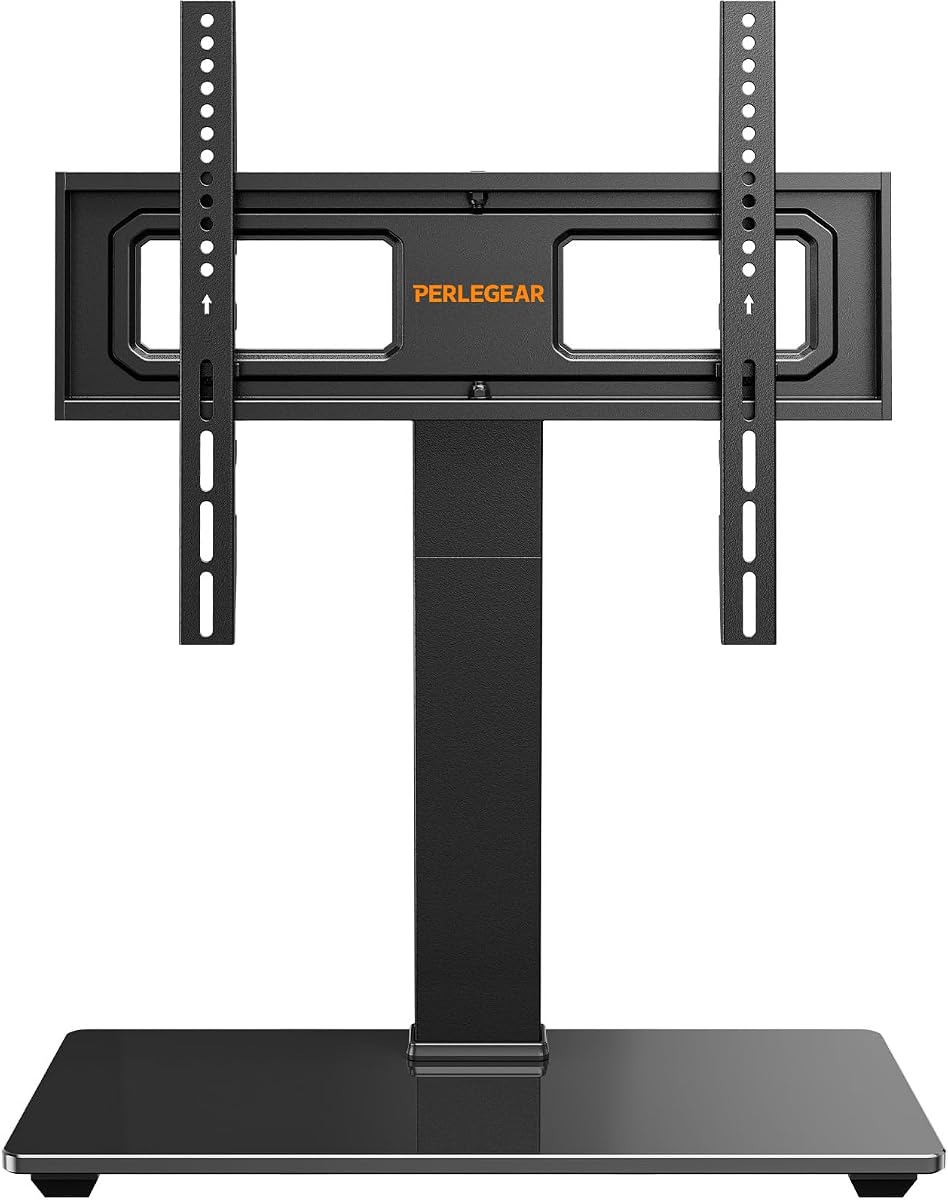
This universal tabletop stand offers the most straightforward way to add basic height adjustment to an existing media setup. Its supplied rating is 4.6, and it fits many 27- to 60-inch flat-panel LCD, LED, and plasma televisions up to 88 pounds.
We may earn a commission when you buy through this link, at no additional cost to you.
Four height levels provide basic control for raising the screen or opening space beneath it. The bracket supports VESA patterns from 100×100 through 400×400 millimeters, covering a broad range of common television hole configurations. A black tempered glass base gives the unit a finished appearance that can coordinate with modern furniture.
Unlike several higher-ranked stands, the supplied information does not identify a swivel range, so buyers who need to redirect the screen toward separate seating areas should not assume that capability. Four levels are also less granular than the six- or nine-position systems found elsewhere in this guide. The tabletop surface must be capable of supporting the full load.
This is the budget recommendation for a first adjustable TV base, a smaller television, or a straightforward media console. It offers essential height positioning, straightforward installation, and tidy cable routing without the complexity of wheels, motors, or extensive swiveling.
Four selectable levels are enough to place many televisions at a more comfortable height or create clearance for components below. The adjustment system is uncomplicated and well suited to occasional changes.
The tempered glass base avoids a large floor-standing footprint, and integrated cable routing helps keep cords from spreading across the furniture. Assembly is designed to be completed in about 15 minutes with the included instructions and hardware.
We may earn a commission when you buy through this link, at no additional cost to you.
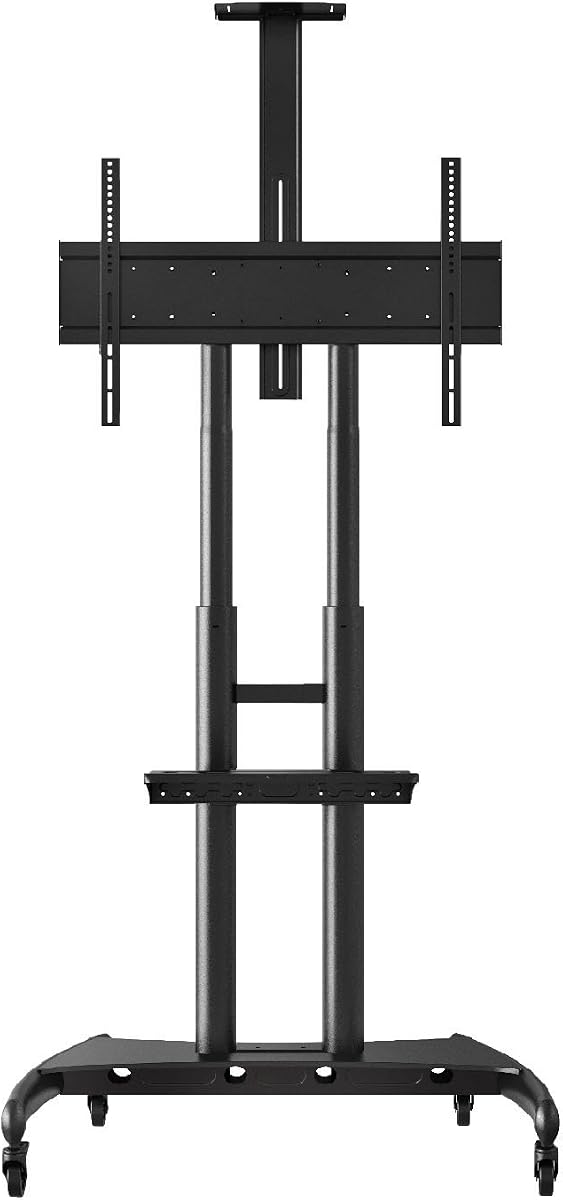
The LUXOR FP4000 is built for demanding displays and professional or institutional spaces. It has a supplied rating of 5.0, accommodates 40- to 80-inch flat-panel televisions, and supports up to 200 pounds. The stand's 39.25-inch width and 28.25-inch depth make stability a central part of its design.
We may earn a commission when you buy through this link, at no additional cost to you.
Height adjusts in two-inch increments from 48 to 65 inches, a broad 17-inch range that is useful for conference rooms, classrooms, showrooms, event spaces, and large home viewing areas. A steel column contains the cable-management system, keeping power and audiovisual wiring less visible in professional environments.
The accessory shelf measures 19.625 by 11 inches and can hold up to 25 pounds. Four three-inch full-swivel casters provide movement, and each has a locking brake for stable final placement. The broad chassis and high capacity distinguish it from lighter home-oriented models, but that same construction can be excessive in a small bedroom.
This is the strongest recommendation for commercial users, event organizers, or households with a very large and heavy display. Its capacity, broad adjustment range, and locking casters provide a professional-grade foundation that smaller stands are unlikely to match.
A 200-pound television limit and wide steel chassis create a stable platform for large flat panels. That capacity makes the stand useful where displays are moved regularly and cannot be attached permanently to a wall.
Four full-swivel casters allow the display to be repositioned, while individual locking brakes keep it stationary when needed. The wide base also makes the stand better suited to open professional floors than compact rooms.
We may earn a commission when you buy through this link, at no additional cost to you.
The BONTEC rolling stand is a versatile option for smaller screens and multi-room use. Its supplied rating is 4.6, and it supports 23- to 65-inch flat or curved LCD, LED, and OLED televisions up to 88 pounds. VESA compatibility extends to 400×400 millimeters.
We may earn a commission when you buy through this link, at no additional cost to you.
Both the television mount and media shelf offer customizable settings, allowing the screen and accessories to be positioned more comfortably within a room. An adjustable shelf can hold laptops, gaming consoles, or DVD players, while integrated cable management keeps wiring organized during work, study, entertainment, or presentation use.
Heavy-duty steel construction and additional safety screws support stability, while smooth wheels with locking brakes make repositioning straightforward. However, the supplied specifications do not quantify swivel or tilt movement, so viewers who require precise side-to-side angle changes should confirm those details. The 88-pound capacity is lower than the heavier rolling models.
This stand is a practical recommendation for a home office, classroom, hotel, retail location, or compact living area where the television must move between uses. Its unusually low 23-inch minimum size also makes it more versatile for smaller screens than many competing bases.
The wheeled frame allows the display to follow the user from work to study, gaming, presentations, or ordinary television viewing. Locking brakes secure the cart when its next task is complete.
A height-adjustable shelf provides a dedicated platform for frequently used accessories. Integrated cable management supports a cleaner appearance in offices, classrooms, and shared spaces.
We may earn a commission when you buy through this link, at no additional cost to you.
The YOMT floor stand focuses on a slim profile, making it well suited to corners, bedrooms, and living rooms where a rolling cart would feel bulky. Its supplied rating is 4.7, the highest among the ten products, and it supports 27- to 70-inch LCD, LED, OLED, 4K, smart, flat, or curved displays up to 88 pounds.
We may earn a commission when you buy through this link, at no additional cost to you.
Vertical height adjustment helps accommodate different seating arrangements, including a screen installed near the foot of a bed. Swivel movement allows the television to redirect toward different parts of an open room, such as between a living area and dining space. VESA patterns from 100×100 to 400×400 millimeters are supported.
The base uses heavy-duty tempered glass, while the upright structure is steel. A narrow design allows the base to slide beneath an existing stereo or media stand, helping the television appear centered within the furniture. Built-in hook-and-loop cord holders keep cables organized. The trade-off is that the stand remains in one location and has no wheels or electric movement.
This is the best recommendation for a small room where a tall, slim, floor-standing footprint is more attractive than a broad rolling base. It is especially useful when the television should be kept near a wall or placed at the end of a bed while retaining some directional control.
The slim column and compact glass base reduce visual clutter and can fit into a corner. Because the base can slide under nearby furniture, the setup may look more integrated than a conventional television table.
Swivel control lets the screen face different parts of a connected room. Vertical adjustment handles changes in seating height, while the stationary frame provides a consistent viewing position once set.
We may earn a commission when you buy through this link, at no additional cost to you.
The most useful stand is one that fits your television securely, offers meaningful height control, and suits the room where it will live. Comparing format, capacity, mounting compatibility, mobility, and viewing-angle features prevents a costly mismatch.
Begin with the television's diagonal size and manufacturer-stated weight, then compare those figures with the stand's stated limits. A model may support a particular screen size while imposing a lower weight cap, so both measurements must fit. The stands in this guide range from 88-pound limits to a 200-pound professional capacity, while supported screen sizes range from 23 to 85 inches.
Choose a model with comfortable margin rather than relying on an exact limit. Confirm that the television and any attached soundbar or accessory shelf do not exceed the stand's rating.
VESA refers to the distance between the four mounting holes on the back of a television. The included models support patterns ranging from 100×100 millimeters on several universal bases to as wide as 600×600 millimeters on the motorized stand. Compatibility can also depend on maximum hole spacing as well as the overall rectangle, so a screen size match alone is not sufficient.
Check the manual or label behind the television and compare its horizontal and vertical hole measurements with the stand's supported range. Also confirm whether the television includes mounting screws, since stand hardware and television screws are not always interchangeable.
Height adjustment matters most when the screen must be viewed from a low sofa, a reclined bed, or a standing desk. Some stands offer only four levels, while others provide six, nine, or a powered range of nearly nineteen inches. More levels can make fine tuning easier, but the useful difference depends on the starting and ending heights rather than the number alone.
Compare actual minimum and maximum measurements with your furniture. Manual models suit occasional changes, whereas the electric lift is preferable for frequent use or a wide range of users.
Swivel movement redirects the screen horizontally, which is useful when the television sits to one side of the primary seating area. Tilt can help reduce glare or accommodate a screen mounted slightly forward. The featured models range from a modest 20-degree swivel to 70 degrees, with some including additional tilt and leveling controls.
Consider the room rather than choosing the largest swivel range automatically. A broad rotation is helpful in open spaces but can place the screen too close to furniture or a wall in a tight room.
Rolling stands are valuable when the same television serves a living room, office, gym, classroom, or patio. Look for smooth, non-marking wheels and locking brakes that secure the loaded stand after it is moved. Casters designed for hardwood, carpet, tile, or laminate can make a meaningful difference in noise and control.
A stationary floor stand is easier to keep precisely positioned and generally less conspicuous. If mobility is not important, a narrow fixed model may suit the room better than a broad wheeled cart.
A wide or heavy base helps control wobble, particularly with large televisions and long swivel arms. Look for dual columns, steel uprights, tempered glass, anti-tip feet, and non-slip pads. If the stand includes a shelf, check its dimensions and load limit so the intended media player, console, or soundbar will actually fit.
Match the base to the furniture supporting it. A tabletop model needs a strong, level surface, while a rolling stand needs enough floor area for its wheels and swivel arc.
Integrated cable channels, pass-through openings, and hook-and-loop holders keep power and audiovisual cords away from walkways and off the floor. This is especially valuable with rolling stands, where a loose cable can catch a wheel or reduce the appearance of an otherwise organized setup. Clear instructions, labeled hardware, and a complete mounting kit make installation less demanding.
Check whether the product includes the necessary attachment hardware and whether wall drilling is required. None of these floor or tabletop options requires a permanent wall mount, but assembly time and the need for two people can still vary with the television's size.
Most stands use manual pins, brackets, or collars that must be repositioned when changing height. The motorized pick uses a remote, silent motor, two memory presets, and a home button, reducing repeated physical adjustments. That convenience comes with added electrical requirements and a more complex product to operate.
Choose a powered lift if multiple household members use the screen at different heights or if adjustments happen several times daily. A manual stand is usually simpler and more appropriate when the viewing position changes infrequently.
Before assembly, confirm the television's size, weight, and VESA pattern against the stand specifications. Place the base on a level surface, assemble the frame according to the supplied instructions, and install the mounting hardware before attaching a large display. For rolling models, use the locking brakes whenever adjusting the height or moving the stand.
Adjust the height in small increments and choose a position that places the center of the screen near eye level for the main viewer. Avoid overextending the swivel in a narrow room, and route power and signal cables through the supplied channels before moving the television. A qualified person should handle lifting and attachment for large or heavy screens.
Dust the base and upright with a soft, dry cloth, and avoid moisture near electrical components, particularly on the powered model. Periodically check that bolts remain tight, casters roll freely, locks engage, and non-slip pads have not shifted. Lock the wheels and disconnect power before relocating a motorized stand.
Choose a stand that supports your television's diagonal size and weight while also matching its VESA mounting pattern. Screen size alone is not enough because two televisions of the same size can have different hole spacing and weight. Make sure the listed capacity leaves some margin and verify all measurements before ordering.
A floor or tabletop stand can provide many of the same viewing-angle benefits without drilling into a wall. It is especially useful in rental homes, children's rooms, and spaces where the television needs to move or swivel. The stand still needs a stable base, enough clearance, and safe cable routing.
A motorized stand is easier to adjust, especially for users who change positions frequently or have limited mobility. It typically offers a wider vertical range and remote memory presets. Manual stands are simpler, require no outlet, and may be preferable when height changes are occasional.
Leave enough space above the screen for ventilation, especially with OLED or LED televisions, and check the television manufacturer's guidance. The mount itself should not cover vents or place unnecessary weight against the top of the panel. Airflow is more important than filling every available inch.
Quality wheels are generally designed to move without scratching wood, but the result can vary with wheel condition, debris, and floor finish. Lock the stand before adjusting the television, avoid dragging it, and inspect the casters periodically. Moving furniture pads or felt protectors may offer added caution on delicate floors.
It depends on the stand's shelf layout and weight rating. Several models preserve clearance beneath the raised television for a soundbar, media player, or console. Measure the component, check the shelf capacity, and make sure cables can still bend without pulling the television forward.
A tabletop stand saves floor space and works well with a sturdy media cabinet, but it has less height travel. A floor stand offers a wider adjustment range and can suit large displays, corners, or bed viewing. Rolling models add mobility but require more floor space and can look less tidy in a compact room.
Look for the mounting-hole dimensions in the television manual or product listing, then measure the distance between the four holes. Compare both the maximum width and maximum height with the stand's supported VESA range. If the pattern is unusual or the television includes a nonstandard adapter, confirm compatibility with the manufacturer.
The Perlegear Universal Floor Stand is the most balanced general recommendation because it combines nine height settings, stable construction, anti-tip feet, and a useful swivel. The Universal Table Top TV Stand serves as the budget-focused option for smaller screens, while the LUXOR FP4000 offers the strongest capacity and professional-scale adjustments.
Before choosing, prioritize television compatibility, base stability, and a height range that suits the actual furniture and viewing positions. Add swivel for shared rooms, wheels for changing locations, a shelf for media equipment, and a motor for frequent adjustments. Cable management and locking casters are worthwhile finishing details that improve daily convenience.
Current prices, stock, and product configurations can change, so check the latest listing and all specifications before buying. Reconfirm the television's size, weight, and VESA pattern, and ensure the support surface or floor has enough room for the stand and its full movement.